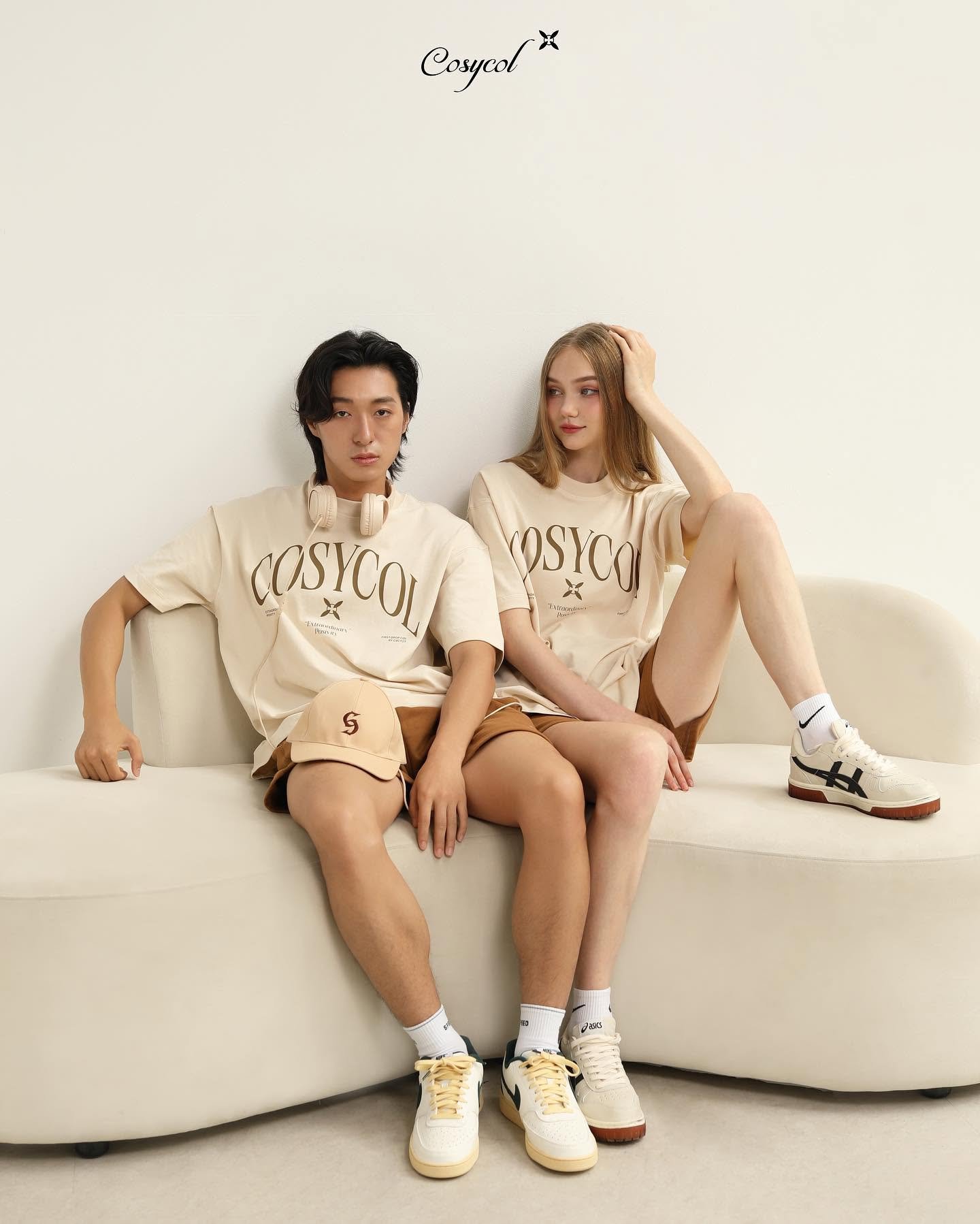
Cosycol’s coordinated tee photographs show how strongly styling can communicate a collection. A sample review has another job: identify which garment decisions are accepted and which need correction. The meeting should leave a new brand with a revised brief, not a longer folder of unstructured comments.
Prepare one current reference
Bring the measurement sheet, material code, artwork revision and sample that belong together. Mark any temporary fabric or trim so the team knows which decisions remain provisional. Use neutral front, side and back images to support the physical review. Campaign poses can help explain mood, but they should not replace an ordinary fitting record. Confirm which size and wearer reference the comments concern.

Separate corrections from design changes
For a deviation, state the target and measured result using the agreed method. For a new design request, write the revised target explicitly. Keep comments grouped by fit, material, construction and decoration. This avoids changing the pattern to hide an unsuitable material or moving a graphic before body length is settled. Ask the team to explain dependencies when one revision affects another part of the product.
Close the review with actions
List open points, the next version and what the next piece must demonstrate. Confirm sample charges and the scope of any additional work. Keep the approved observations as well as the corrections so they are not accidentally reopened. Before bulk preparation, identify the complete accepted garment reference and the written specification that matches it.
A practical development example
If the body is approved but the back print sits too low, record a placement revision from a named seam point. Keep the accepted measurements unchanged. The next review can then concentrate on artwork location instead of reassessing a different body that was never requested.
| Area | Review | Agree |
|---|---|---|
| Reference | Gather matching sample and document versions. | Which piece is being reviewed. |
| Comments | Distinguish measured deviations from redesign. | Clear revised targets. |
| Next step | Name remaining questions and scope. | What closes each approval. |
Do 1–2 sample pieces per style include unlimited revisions?
No automatic inclusion should be assumed. VIENA can review a development request for 1–2 pieces per style, with revision scope, charges and additional approvals agreed in the proposal.
Discuss your T-shirt project with VIENA
Send one organised feedback sheet with annotated images and current files. Ask VIENA to confirm the next sample’s purpose so the development cycle answers specific questions. Request a project review.