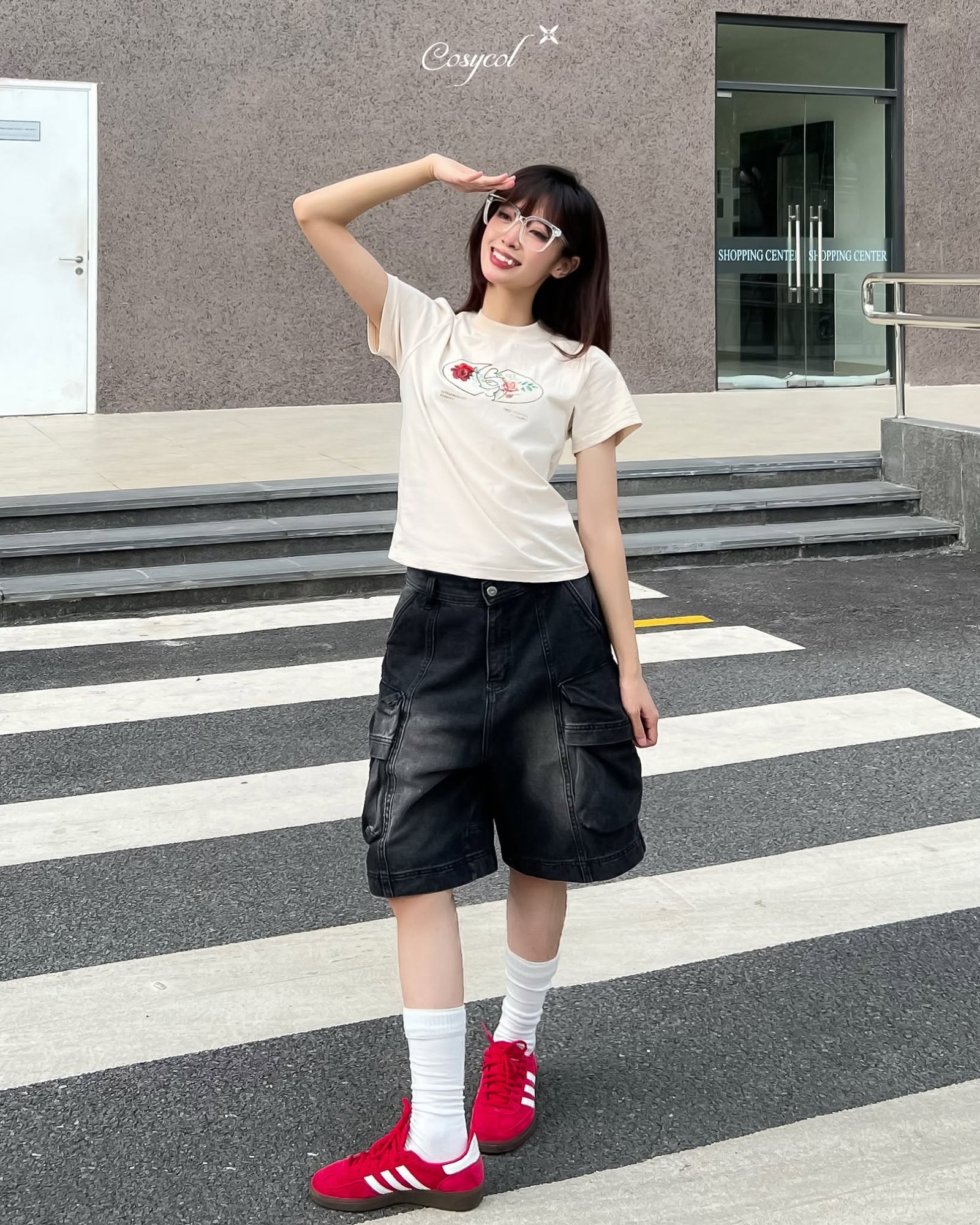
A new clothing label benefits from a production conversation built around one clear product. Cosycol’s tees demonstrate the kind of visual references a brand may bring. Supplier selection should add evidence, scope and responsibility to that visual direction before an order is confirmed.
Ask about the proposed production route
Identify who will source material, develop the pattern, decorate and inspect the garment. A relevant sample helps discuss capability but does not replace an order-specific brief. Explain the intended fit, fabric direction and original artwork. Ask the partner to identify what it can assess now and what needs sampling. A clear statement of responsibilities is more useful than a general promise to make every kind of product.

Compare communication and approvals
Look for a practical method to record sample comments and substitutions. Ask who receives the feedback and who can approve a change. Keep the current garment specification and physical references traceable. If a proposed material differs from the brief, the difference should be presented as a decision. Unrecorded changes create difficulty even when each person believes they are helping the project move faster.
Review the full commercial scope
Compare development charges, recurring garment cost, decoration, labels, packing and delivery assumptions. Confirm quantities by style and colour and the scope of revisions. VIENA develops and manufactures clothing through specialised production units in Vietnam. The agreed proposal should identify that scope accurately, including who handles approvals and issues before shipment.
A practical development example
For a new graphic tee, request a sample route that covers the selected material, fit and artwork. If a supplier offers a generic blank instead, ask whether that is a deliberate launch alternative or a different product from your custom brief. Compare the options explicitly rather than accepting a vague equivalence.
| Area | Review | Agree |
|---|---|---|
| Capability | Discuss a relevant garment and actual route. | Responsibilities at each stage. |
| Approvals | Use versioned files and physical references. | Who signs off changes. |
| Commercial scope | Compare complete proposals. | Quantity basis and exclusions. |
Does previous work for one brand prove every future product is feasible?
No. Previous work provides context, while each new design still needs material, construction, quantity and quality review. Select the route for the specific garment.
Discuss your T-shirt project with VIENA
Send your intended tee, artwork, target customer, quantity and destination. VIENA can structure the enquiry and review suitable production directions with a defined scope. Request a project review.