A white tee with a small chest mark leaves little visual distraction from the body itself. Cosycol’s clean studio styling makes the neckline, sleeves and hem easy to compare. For a new brand, that simplicity is a reason to specify those details carefully before focusing on the logo.
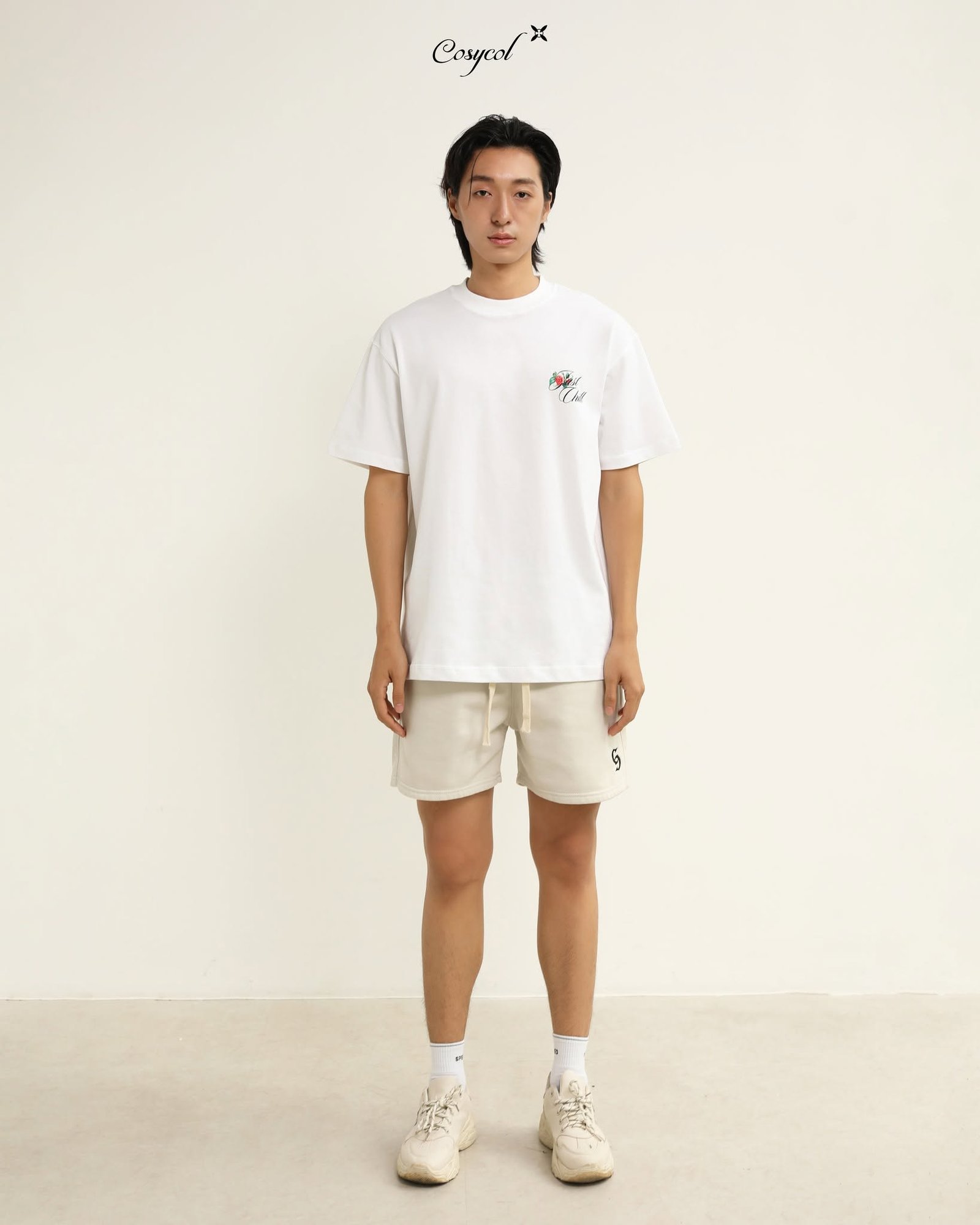
Use one neutral fit reference
Review the body with front, side and back photographs taken under comparable conditions. Record wearer measurements and the base garment size. A relaxed pose can hide a shoulder or hem issue, so include an ordinary standing view. Draw the measurement paths for chest, body length, shoulder and sleeve. When feedback arrives, separate a deviation from the current specification from a request to change the design.
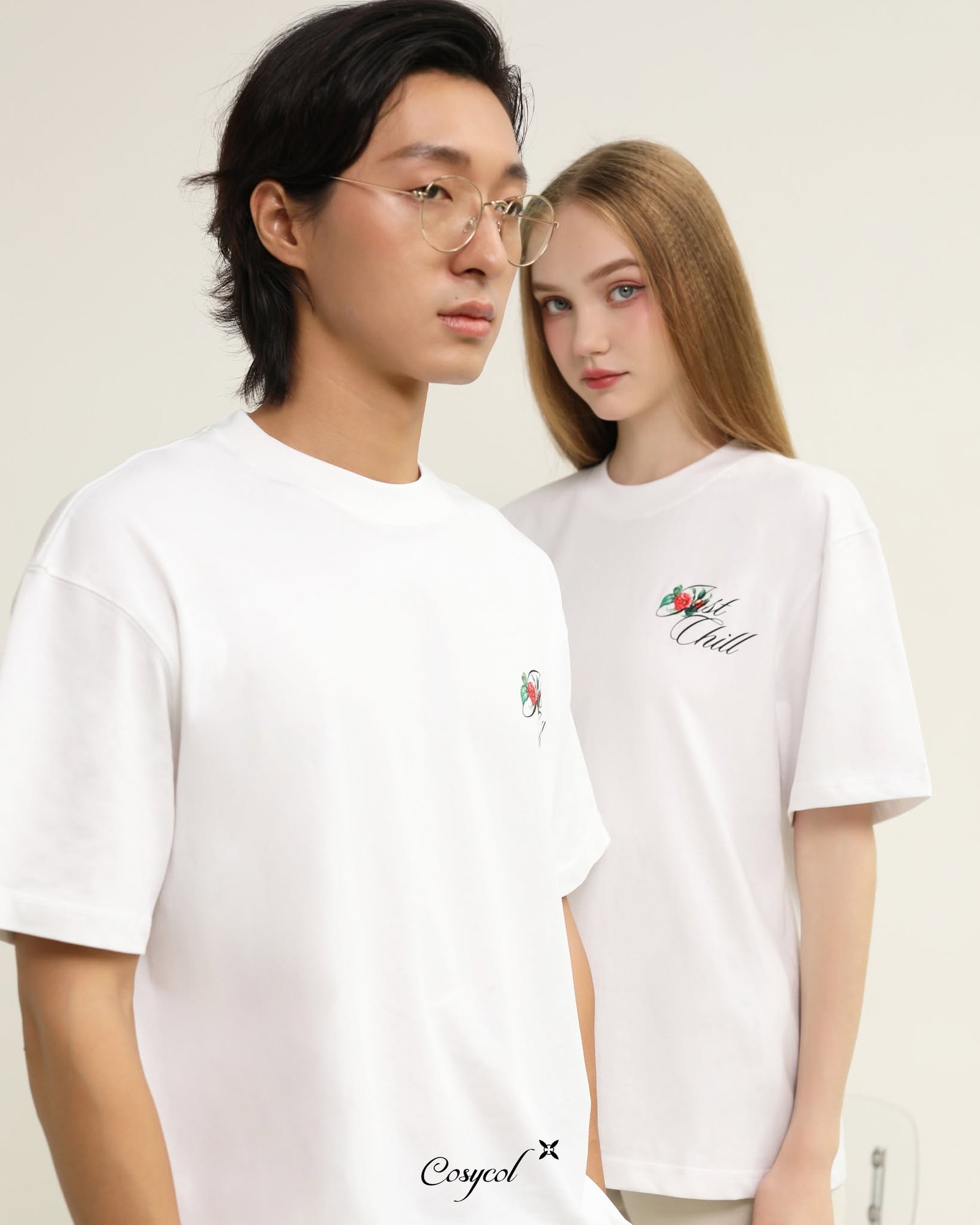
Examine the areas around the logo
A restrained chest graphic brings attention to its position relative to the neckline and sleeve. Show the intended mark at actual size, then assess it on the approved garment. Check whether the chosen decoration makes a small area unnecessarily stiff or uneven. The image alone cannot identify the process used on Cosycol’s tee. For your project, compare suitable techniques using the actual material and final artwork.
Approve white in the intended use
White should be reviewed for shade and coverage as well as surface appearance. Inspect the sample standing and moving with an appropriate underlayer and consistent lighting. A studio image cannot establish opacity in every condition. After care, check body balance, neck appearance and any colour change around decoration. Keep the whole garment as the visual reference rather than approving the body and logo as unrelated pieces.
A practical development example
A new brand may like the first sample’s fit but find the chest mark too low. Annotate the placement change from a named seam point while leaving the approved body measurements unchanged. That gives the workshop a precise correction. “Make it look more premium” would leave both the location and the reason for revision unclear.
| Area | Review | Agree |
|---|---|---|
| Base block | Compare neutral front, side and back views. | Fit measurements and wearer reference. |
| Chest mark | Place actual-size artwork on the approved body. | Position and acceptable finished feel. |
| White fabric | Review shade and coverage under stated conditions. | Physical material and care reference. |
Can a minimal tee be approved from a flat-lay photo?
A flat lay helps with dimensions and alignment. Add a worn assessment to judge movement, sleeve fall and coverage, then review the finished sample after the agreed care procedure.
Discuss your T-shirt project with VIENA
Share the intended white shade, fit reference and logo dimensions. Ask VIENA to review the body and decoration as one product rather than quoting from a logo file alone. Request a project review.