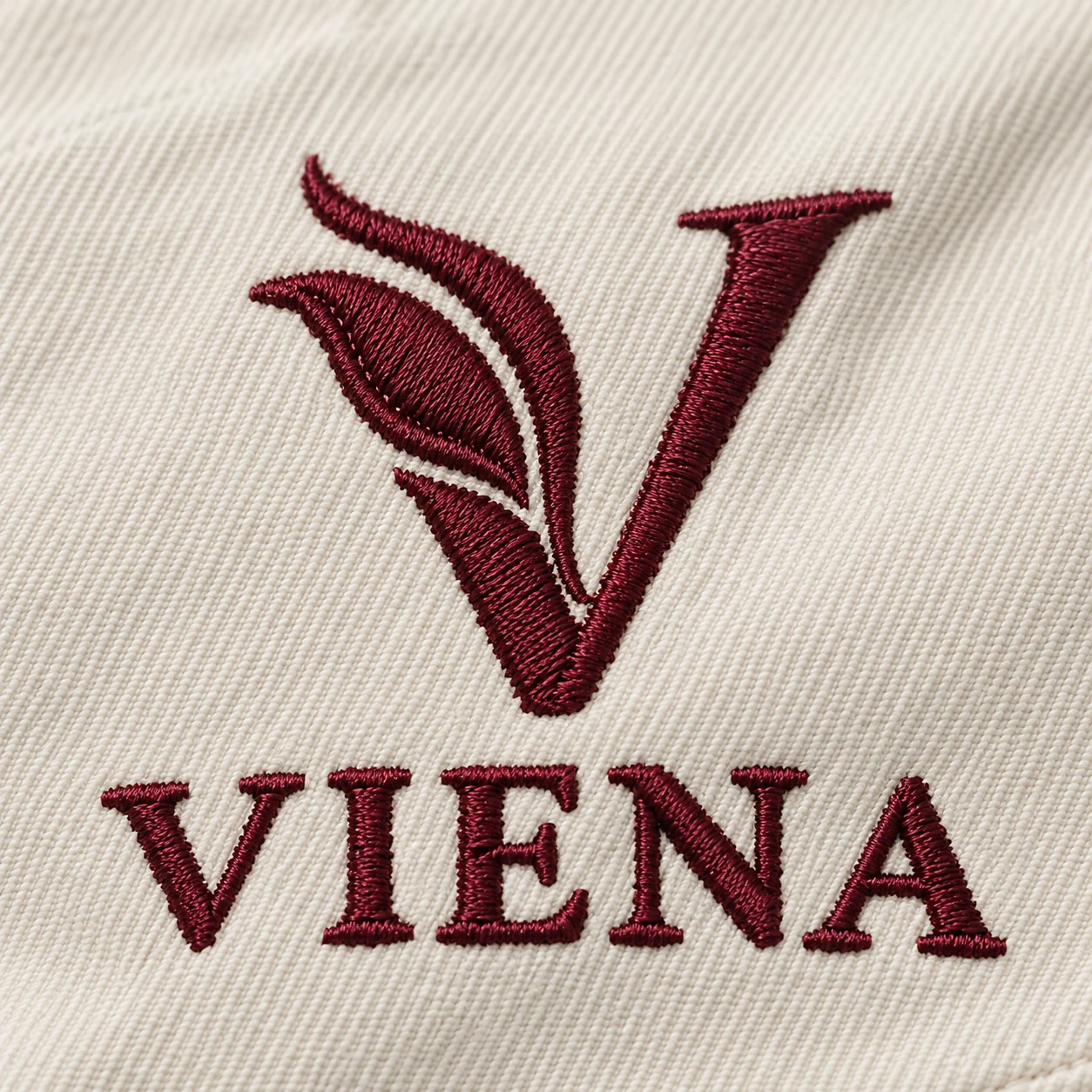
A small embroidered logo can give a 250–300 GSM cotton tee a distinct identity. Its success depends on the digitised design, fabric and support chosen by the embroidery partner, as well as the appearance of the thread itself.
Provide artwork and intended scale
Send a clear logo file with finished dimensions and placement. Ask the embroiderer to advise on fine lettering and narrow details at that size. Approve any simplification before it becomes the production version, and keep the digitised file version linked to the artwork record.
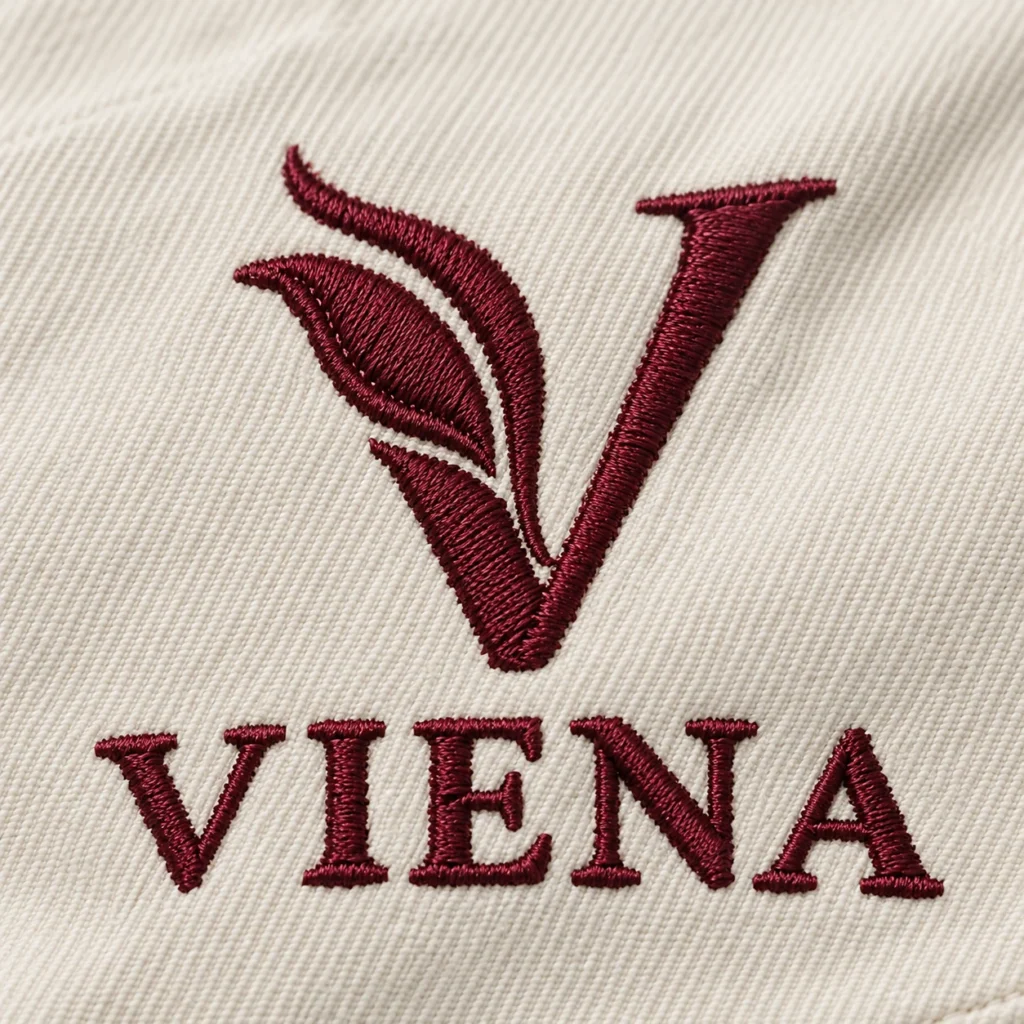
Review support and inside comfort
Ask the partner to propose a backing or stabiliser appropriate to the knit and design. Inspect the reverse of the sample as well as the front. Wear the tee and check comfort where the embroidery sits, particularly for a chest logo with direct skin contact.
Judge the finished garment
Lay the sample flat and wear it to assess distortion around the design. Review the result after the agreed care process. If the logo, size or body fabric changes, ask whether the embroidery setup needs to be adjusted and sampled again.
Your development checklist
- Finished logo size and placement
- Approved digitised design version
- Front and reverse inspected
- Comfort and care result checked
Does heavier cotton eliminate the need for stabilisation?
Do not assume so. Ask the embroidery partner to select support for the actual fabric and design.
Develop an embroidery file for the actual cotton tee
Embroidery density, thread, backing and hooping work together. Heavy cotton jersey is still a knit and can distort around a dense mark. Start with a sew-out on the proposed fabric, then place the approved logo on a garment to assess comfort and proportion. Inspect the reverse where it contacts skin. Reducing tiny text or simplifying a dense filled shape may improve the result more than adding heavier backing. Keep digitising revision and finished dimensions attached to the approval.
| Decision | What to review | What to agree |
|---|---|---|
| Fine detail | Review letters and gaps at final sewn size. | Accept a simplified mark only after brand approval. |
| Stabilisation | Choose backing with the fabric and design. | Avoid stretching the jersey excessively in the hoop. |
| After care | Inspect puckering, stiffness and reverse-side comfort. | Adjust digitising/tension rather than accepting distortion as inevitable. |
A sew-out review that protects comfort as well as the logo
Give the digitiser the final mark dimensions and the actual garment fabric. Ask for a first sew-out, then inspect small lettering, curves, filled areas and gaps. If the mark is too dense or details close up, compare an approved simplification rather than forcing ever more stitches into the same space.
Inspect the reverse side against the skin and assess how the backing is finished. For a tee, an apparently neat front may conceal an uncomfortable stiff patch. Madeira’s support guidance identifies several interacting causes of puckering, including digitising, stabilisation, hooping and tension. The practical response is to diagnose the combination on the chosen knit, not add backing indiscriminately.
Keep the final programme revision and thread/colour reference with the garment sample. Recheck if the logo changes size or moves to a different substrate. A programme proven on a jacket panel is not automatically validated for a stretchier tee. Review the washed garment before describing the embroidery as approved for bulk.
Does a high stitch count prove better embroidery?
No. Excess density can make a design stiff or distort the fabric. The appropriate programme depends on the artwork, thread and substrate.
Continue your product development
For the next decision, read Embroidery on Fleece Hoodies and Jackets, compare Combining Print and Embroidery on One Streetwear Piece, and use Graphic Cotton T-Shirts: Preparing Print Placement to complete the brief.
Discuss the next sample with VIENA FACTORY
Share your product references, target measurements, material preferences and quantity breakdown. VIENA FACTORY develops samples and manufactures clothing in Vietnam through specialised production units, with our team managing the agreed production stages. Send your project brief, or explore our streetwear references and collection development guide.
Reference images illustrate design directions and do not identify products manufactured by VIENA or imply a partnership with the pictured brand. GSM figures in this article are development targets; composition, availability and final specifications require project confirmation.
Technical background: Madeira: stabiliser selection. Process settings and project approvals should be agreed with the selected specialist.