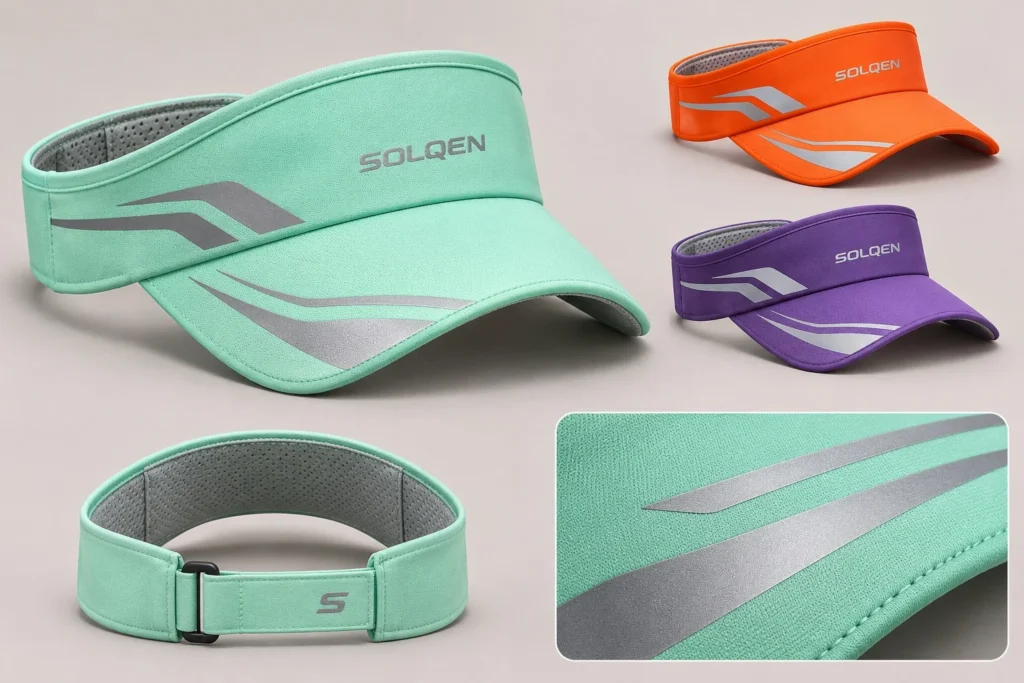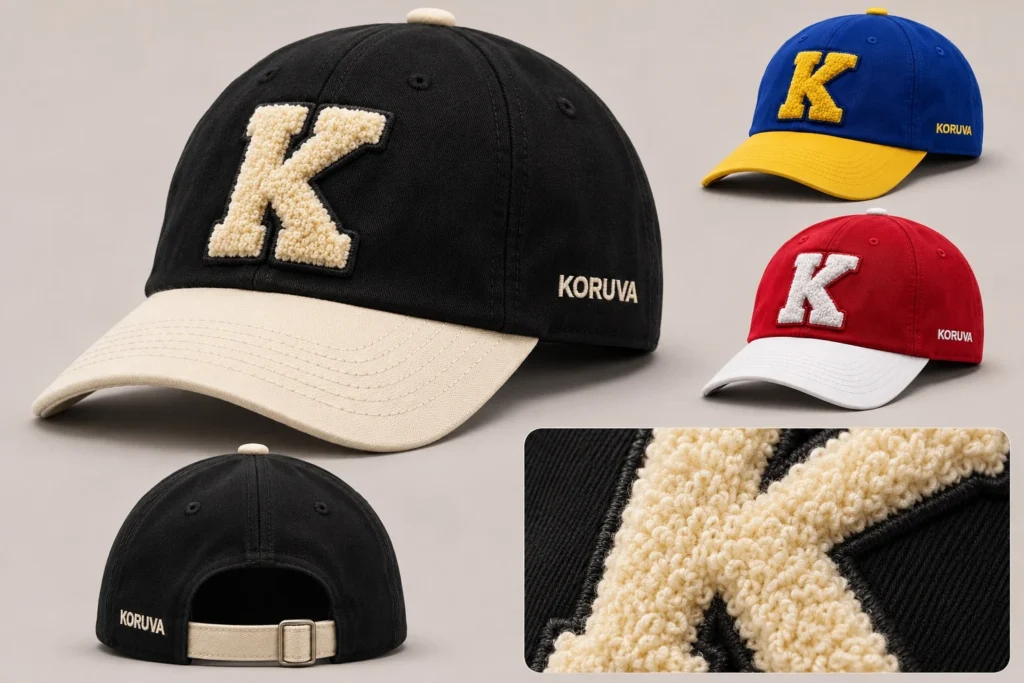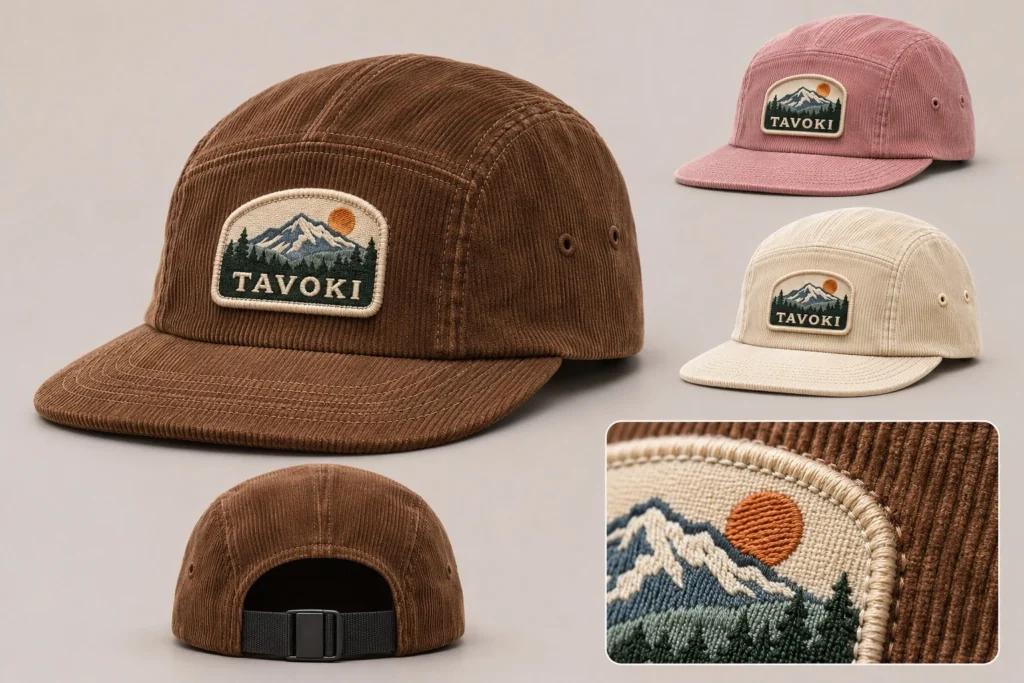
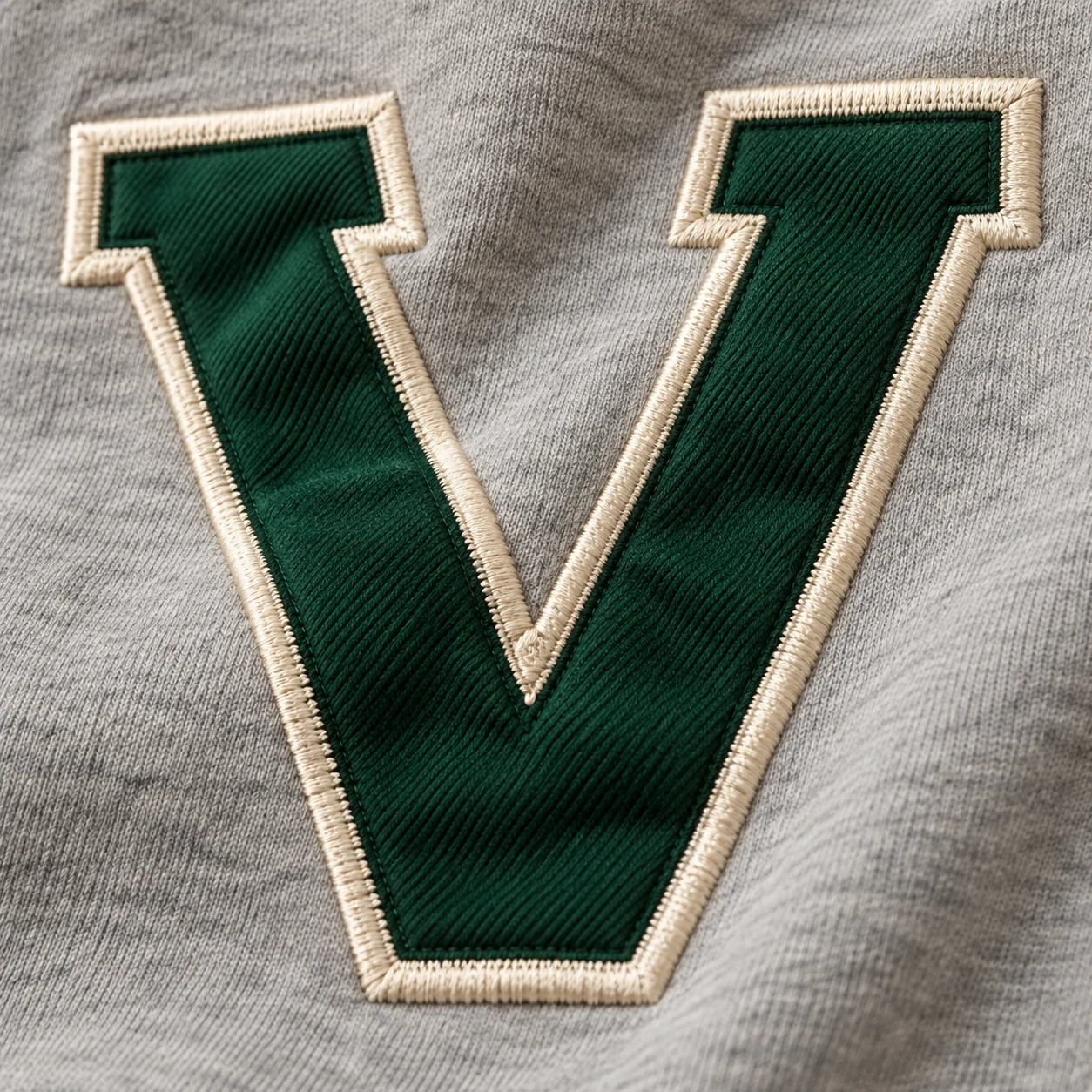
Embroidery on a 360–420 GSM fleece hoodie or jacket needs a sample on the selected material. The body’s weight does not tell you how a particular stitched design will look, feel or sit on the garment.
Choose scale and placement together
Mock up the logo on the approved fit before digitising the final version. Check its distance from zips, pockets and panel seams. A logo that works on a flat panel may need another position when the hoodie is worn or the jacket is opened.

Inspect the surface and reverse
Ask the embroidery partner to propose appropriate support for the fabric and design. Review thread appearance and the surrounding surface. Check the reverse for comfort, especially where a jacket is worn over a tee or embroidery lies near the neck.
Approve changes through another sample
Different fabric surfaces, logo sizes or stitch layouts can call for another setup review. Keep the actual decorated sample as the appearance reference and record care observations. Do not assume that a successful cotton-tee embroidery setup can be transferred unchanged to a sweatshirt.
Your development checklist
- Logo tested against seams and openings
- Support selected for the actual fabric
- Surface and reverse reviewed
- Changes sampled before bulk approval
Can a hoodie embroidery approval cover a jacket automatically?
Review the jacket placement and construction separately, particularly if seams or openings differ.
Protect fleece texture while keeping stitches readable
A raised fleece surface and a smooth cotton tee present different embroidery conditions. Ask the decorator to sample the logo on the chosen face and consider appropriate backing or topping where the surface requires it. Inspect whether small lettering sinks into texture or whether an overly dense fill creates a rigid patch. On a hoodie pocket or jacket panel, confirm hoop access before deciding the location. A sew-out on loose fabric may need a second check after assembly.
| Decision | What to review | What to agree |
|---|---|---|
| Surface texture | Assess readability of lettering and outlines. | Trial the actual fabric and appropriate stabilisation. |
| Placement/access | Check seams, zips and pocket bags around the hoop area. | Decide the production sequence before final costing. |
| Garment comfort | Inspect backing, thread ends and stiffness. | Review after washing in the intended care conditions. |
Should the same embroidery file be reused across tee and fleece?
Use the artwork as a starting point, but validate the programme on each substrate. Density, underlay and stabilisation may need revision.
Continue your product development
For the next decision, read Embroidery on Heavy Cotton T-Shirts: Logo Development, compare Combining Print and Embroidery on One Streetwear Piece, and use Fleece Jacket Manufacturing in Vietnam: The Development Brief to complete the brief.
Discuss the next sample with VIENA FACTORY
Share your product references, target measurements, material preferences and quantity breakdown. VIENA FACTORY develops samples and manufactures clothing in Vietnam through specialised production units, with our team managing the agreed production stages. Send your project brief, or explore our streetwear references and collection development guide.
Reference images illustrate design directions and do not identify products manufactured by VIENA or imply a partnership with the pictured brand. GSM figures in this article are development targets; composition, availability and final specifications require project confirmation.
Technical background: Madeira: stabiliser selection. Process settings and project approvals should be agreed with the selected specialist.