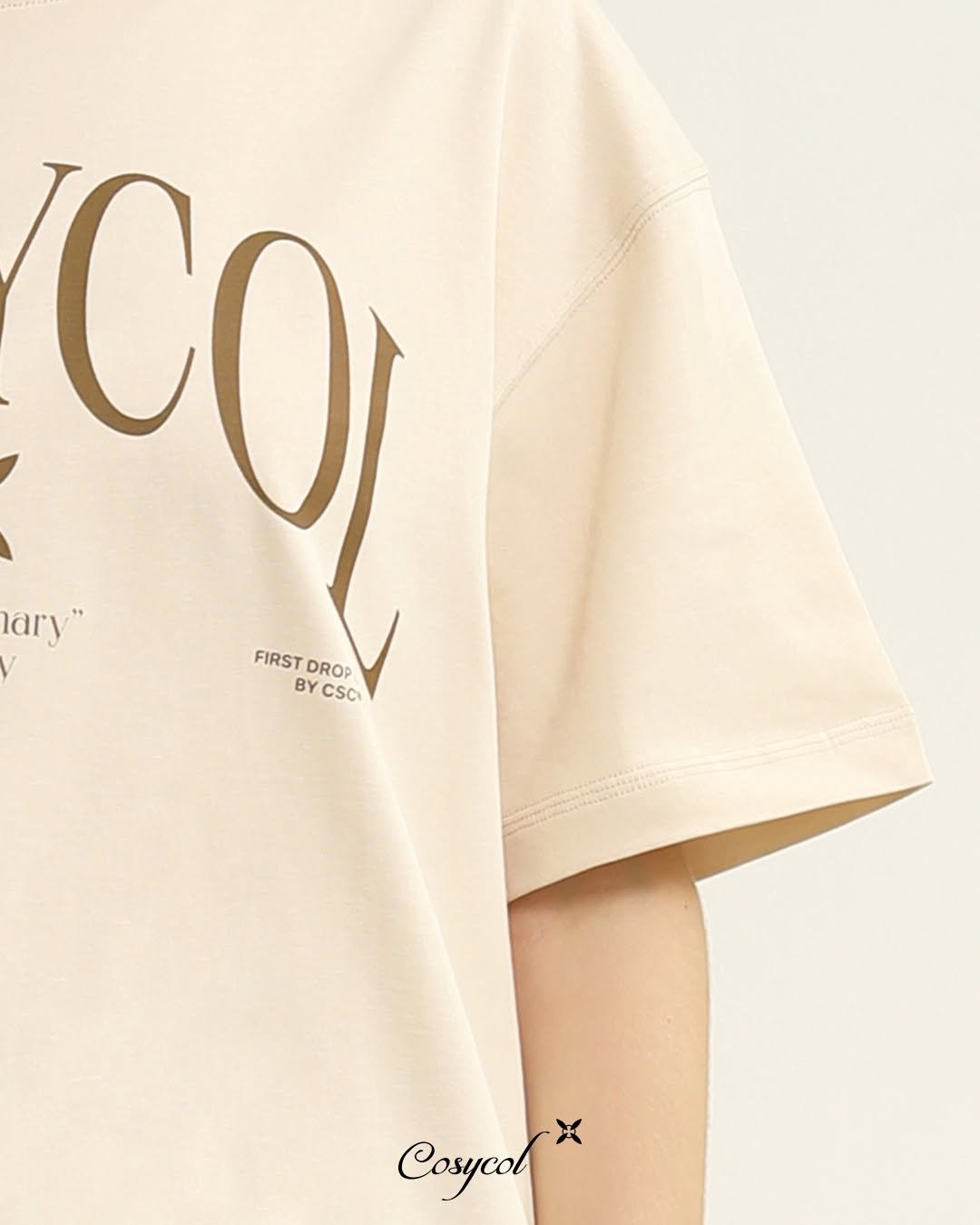
Sleeves help determine whether a tee reads as relaxed, oversized or closer fitting. Cosycol’s cream tee detail and full-body view show why sleeve length should be judged alongside shoulder placement and body width. A single isolated length measurement cannot explain the entire effect.
Name the sleeve measurement origin
State whether the length begins at a set-in shoulder seam or follows another defined path. A dropped shoulder shifts the seam outward, so a short measured sleeve can still reach far down the arm. Use a diagram and photograph the same point on the fit sample. This prevents two people from reporting different lengths while both believe they followed the specification.
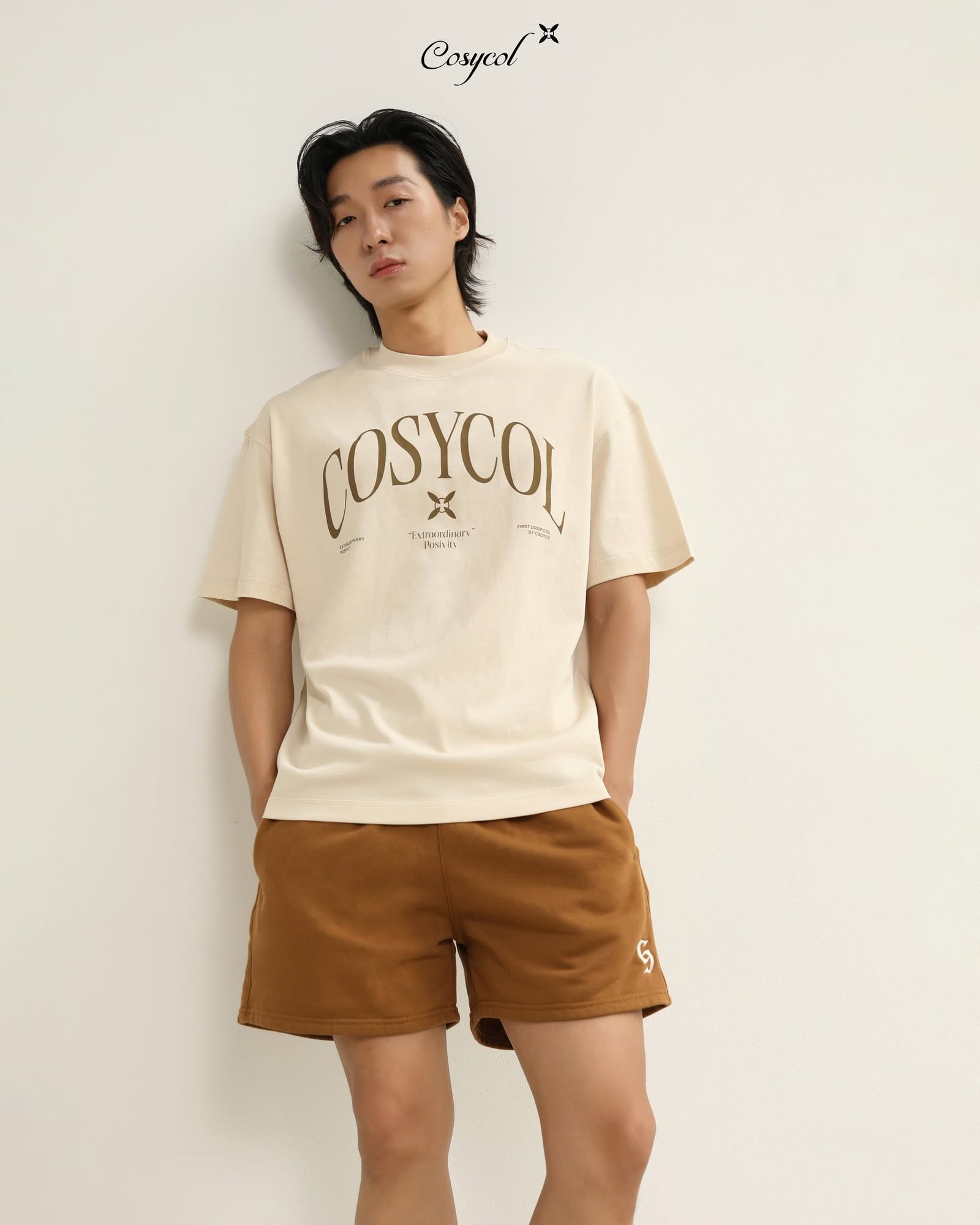
Review opening and angle together
A wide opening, narrow opening and different sleeve angle can change the look even at the same measured length. Compare front and side views with the wearer’s arms relaxed, then test normal reach. Check whether the underarm pulls or whether the sleeve creates unintended volume. Diagnose the region involved before simply adding length or enlarging the body.
Check the sleeve after care and grading
Assess the accepted sleeve on the base size and chosen boundary sizes. Review its relationship to shoulder drop across the range. After agreed care, compare the same measurement points and inspect the hem and seam appearance. If the material changes, revalidate the sleeve behaviour rather than treating the original number as proof that the revised garment will look identical.
A practical development example
A brand may request a sleeve that lands higher on the arm while keeping a relaxed shoulder. Shorten the defined sleeve segment and assess the opening and angle on the wearer. Avoid pulling the shoulder seam inward unless the intended shoulder design is also changing. Keep the revision specific enough for the next sample to answer that one fit question.
| Area | Review | Agree |
|---|---|---|
| Measurement | Draw the exact start and end points. | One consistent method. |
| Worn shape | Compare opening, angle and shoulder together. | Front/side silhouette and movement. |
| Size range | Check base and boundary sizes. | Graded sleeve relationships. |
Can a sleeve measurement be copied between two tee blocks?
Use it as a reference only. Shoulder position, armhole and intended fit can differ. Validate the sleeve on the actual block and selected fabric.
Discuss your T-shirt project with VIENA
Share a front and side sleeve reference with your measurement diagram. Ask for fit comments that distinguish length, opening and shoulder position rather than one broad oversized instruction. Request a project review.