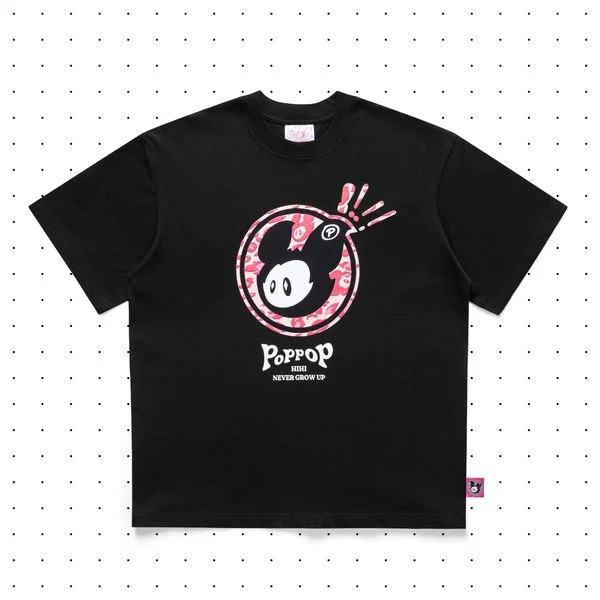
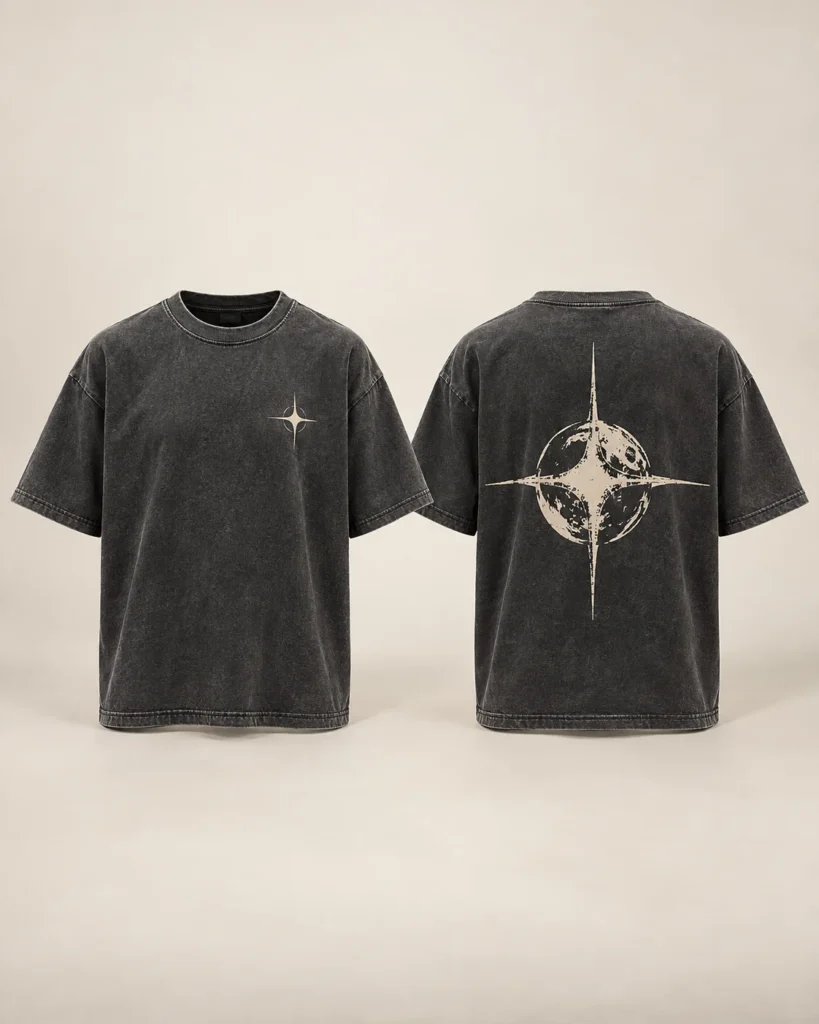
A boxy tee is a proportion decision, not simply a regular T-shirt made wider. When developing a 250–300 GSM cotton style with a Vietnam manufacturing partner, define how width, body length and sleeve volume should work together before adding graphics.
Draw the silhouette from three views
Show the front, side and back on your reference board. Mark where the hem should sit and how far the shoulder should extend. Decide whether the sleeve finishes close to the upper arm or hangs wider. These choices help distinguish an intentional boxy fit from a garment that merely looks oversized.
Review balance on a person
A flat garment can look symmetrical while wearing differently across the chest and back. During the fitting, check the hem level, neckline and the way the fabric sits at the underarm. Ask the wearer to lift and lower their arms, then see whether the tee returns to the intended position.
Position the graphic after fit review
A chest graphic placed on a regular block may appear too high or too small on a wide cropped body. Evaluate a paper artwork mock-up on the approved sample. Record placement from an agreed reference point and confirm whether it remains fixed or changes across sizes.
Your development checklist
- Target body length relative to the waistband
- Chest width and shoulder extension
- Sleeve opening and sleeve length
- Graphic placement checked on the worn sample
Should a boxy tee always be cropped?
No. Define the intended length explicitly. Boxy describes an overall proportion, and different brands may interpret that proportion differently.
Distinguish a boxy block from simply widening a tee
Boxy describes a relationship between width and length. Adding chest width without reviewing the shoulder drop, armhole and sleeve opening can produce a large regular tee rather than the intended square silhouette. Annotate a front and side view with the hem position on the wearer. Compare the sleeve against the body width so it reads as part of the same design. Jersey can change dimensions during care, so approve the proportion again after the agreed wash rather than compensating by guessing a shorter pattern. If a graphic is central to the design, evaluate it on the revised block rather than a standard blank.
| Decision | What to review | What to agree |
|---|---|---|
| Chest-to-length relationship | Record both measurements together and photograph the worn hem position. | Ask for a base-size pattern revision rather than scaling every measurement. |
| Dropped shoulder | Check sleeve angle with arms relaxed and raised. | Reject a comfortable flat measurement if the underarm pulls when worn. |
| Wide hem | Check the side view for unwanted flare or twisting. | Compare the washed sample with the original measurement sheet. |
Should a boxy tee use the same length grading as a regular tee?
Only if the intended fit across sizes supports it. Check the smallest and largest sizes on suitable wearers instead of applying one proportion mechanically.
Continue your product development
For the next decision, read Oversized Cotton Tees: A Sample Approval Checklist, compare Cotton Tee Size Grading for a Streetwear Collection, and use 250 vs 270 vs 300 GSM Cotton Tees: How to Choose to complete the brief.
Discuss the next sample with VIENA FACTORY
Share your product references, target measurements, material preferences and quantity breakdown. VIENA FACTORY develops samples and manufactures clothing in Vietnam through specialised production units, with our team managing the agreed production stages. Send your project brief, or explore our streetwear references and collection development guide.
Reference images illustrate design directions and do not identify products manufactured by VIENA or imply a partnership with the pictured brand. GSM figures in this article are development targets; composition, availability and final specifications require project confirmation.