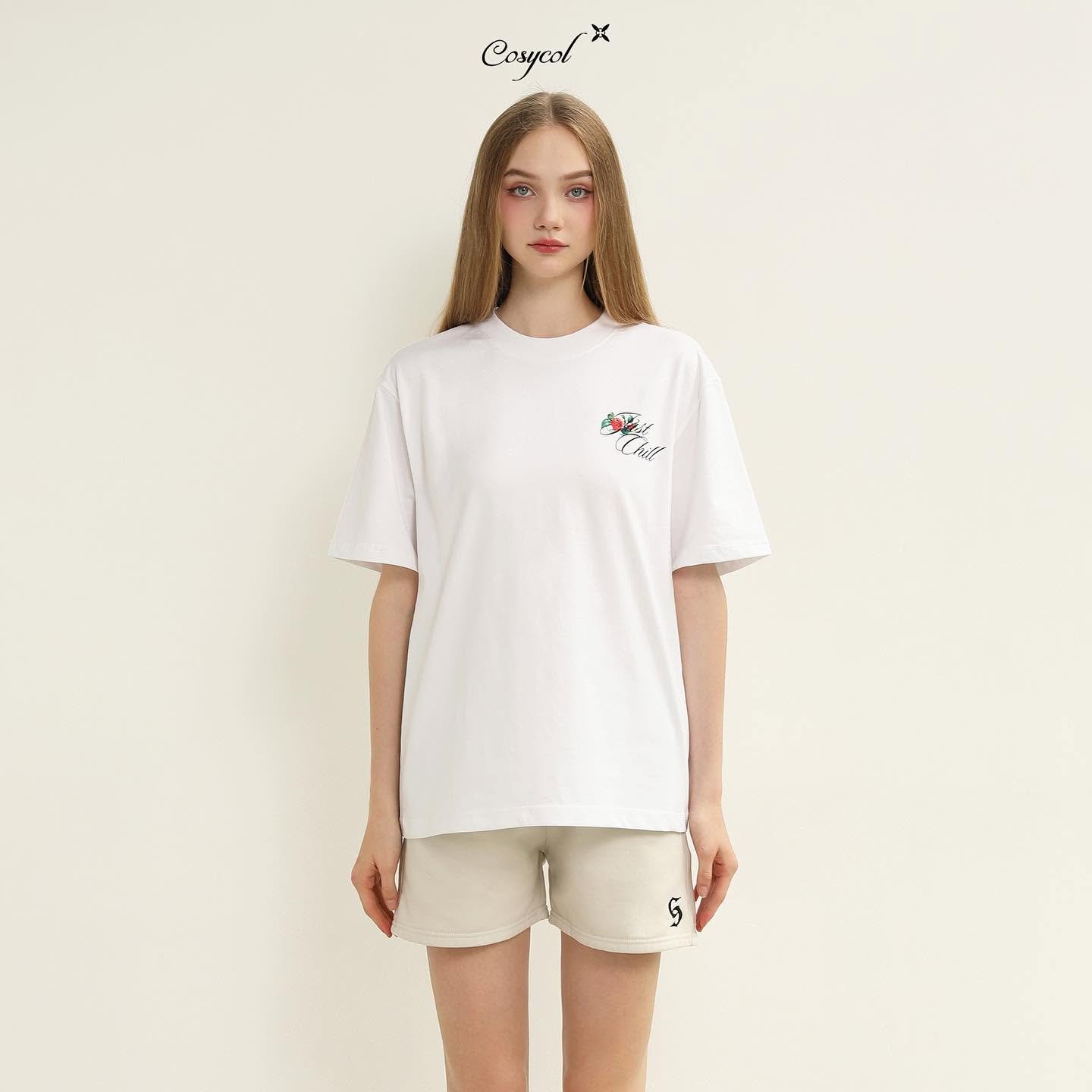
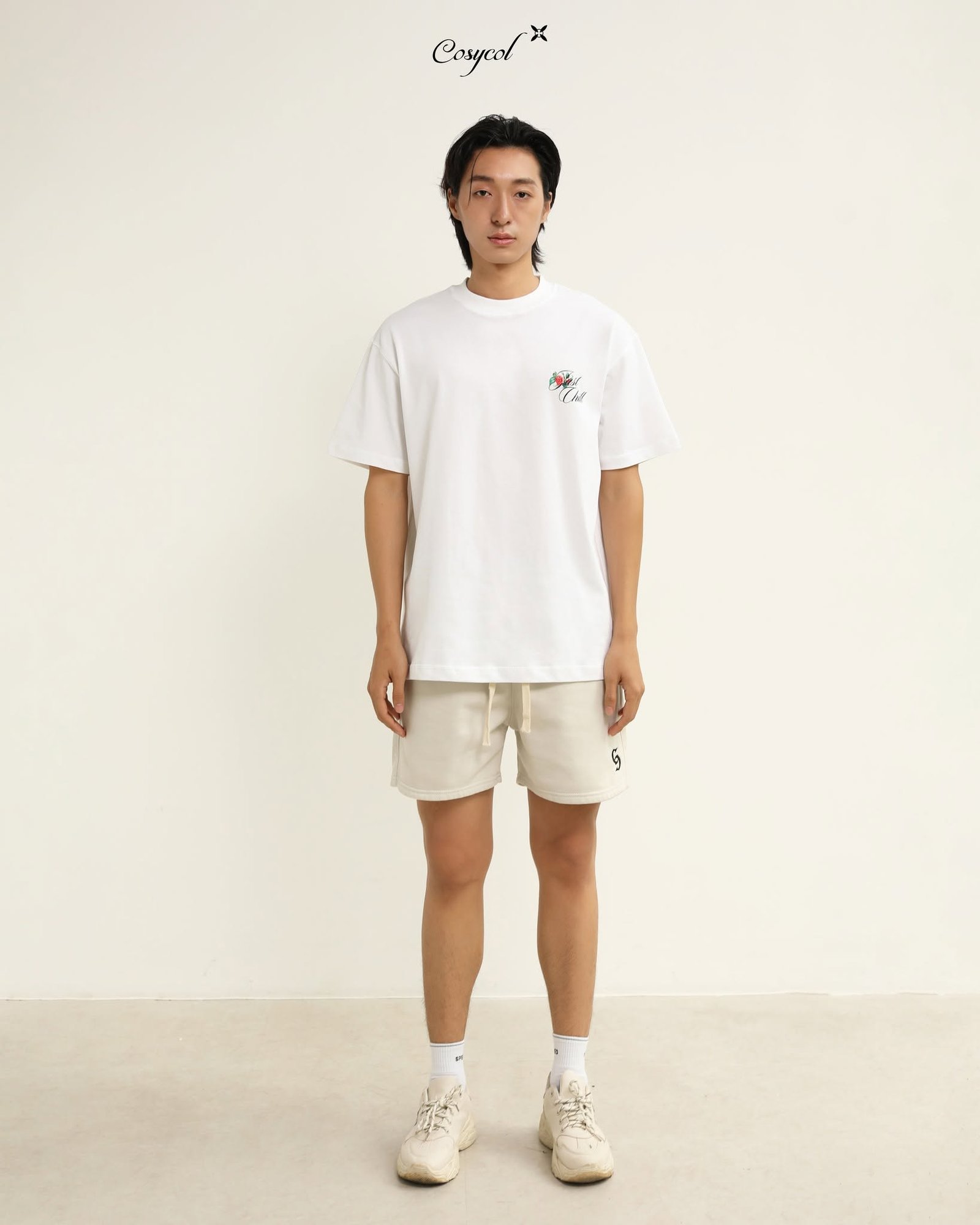
Cosycol’s relaxed white tee shows how shoulder position, sleeve volume and body length combine into one silhouette. For a new T-shirt range, choosing a wide chest measurement is only the beginning. The sample has to explain how that width hangs on the intended wearer.
Establish the shoulder direction
Mark the desired shoulder seam position on a neutral front and back view. A dropped shoulder changes where the sleeve begins, so record sleeve measurements using the same diagram. Compare the base-size sample on a wearer with known measurements. A loose outline should be deliberate. Check whether the shoulder line supports the intended tee rather than simply adding more width whenever a reference looks relaxed.
Keep width and length connected
Show the desired hem position alongside chest and shoulder measurements. A wider body at an unchanged long length can read differently from a compact relaxed tee. Review the side view and the sleeve opening as well as the front. If a design revision changes length, revisit the graphic placement and the relationship to shorts or trousers. Keep the approved proportions in one versioned measurement sheet.
Check normal movement
Ask the wearer to reach forward, sit and return to a relaxed stance. Inspect pulling at the armhole and unwanted hem lift. Then compare the garment after the agreed care process. A tee that appears balanced in one styled photograph still needs a practical fit assessment. Record the specific region requiring correction so the next sample does not become an indiscriminate increase in every dimension.
A practical development example
A first sample might have the right chest but sleeves that extend farther than intended because the shoulder seam sits low. Review the shoulder and sleeve relationship before shortening the sleeve alone. Document the chosen correction and recheck the side silhouette. This keeps a controlled relaxed block instead of producing a succession of unrelated oversized samples.
| Area | Review | Agree |
|---|---|---|
| Shoulder | Mark seam position on the wearer. | Intended drop and measurement origin. |
| Proportion | Review chest, length and sleeve together. | One accepted silhouette. |
| Movement | Check reach and seated fit. | Specific correction points. |
Can a regular tee become relaxed by increasing the chest only?
That can be a starting trial, but the shoulder, armhole, sleeve and length need review together. Approve the actual block rather than relying on one enlarged measurement.
Discuss your T-shirt project with VIENA
Include wearer measurements and neutral front/back references in the brief. Ask VIENA to review the shoulder, body and sleeve as one fit system before adding more colourways. Request a project review.