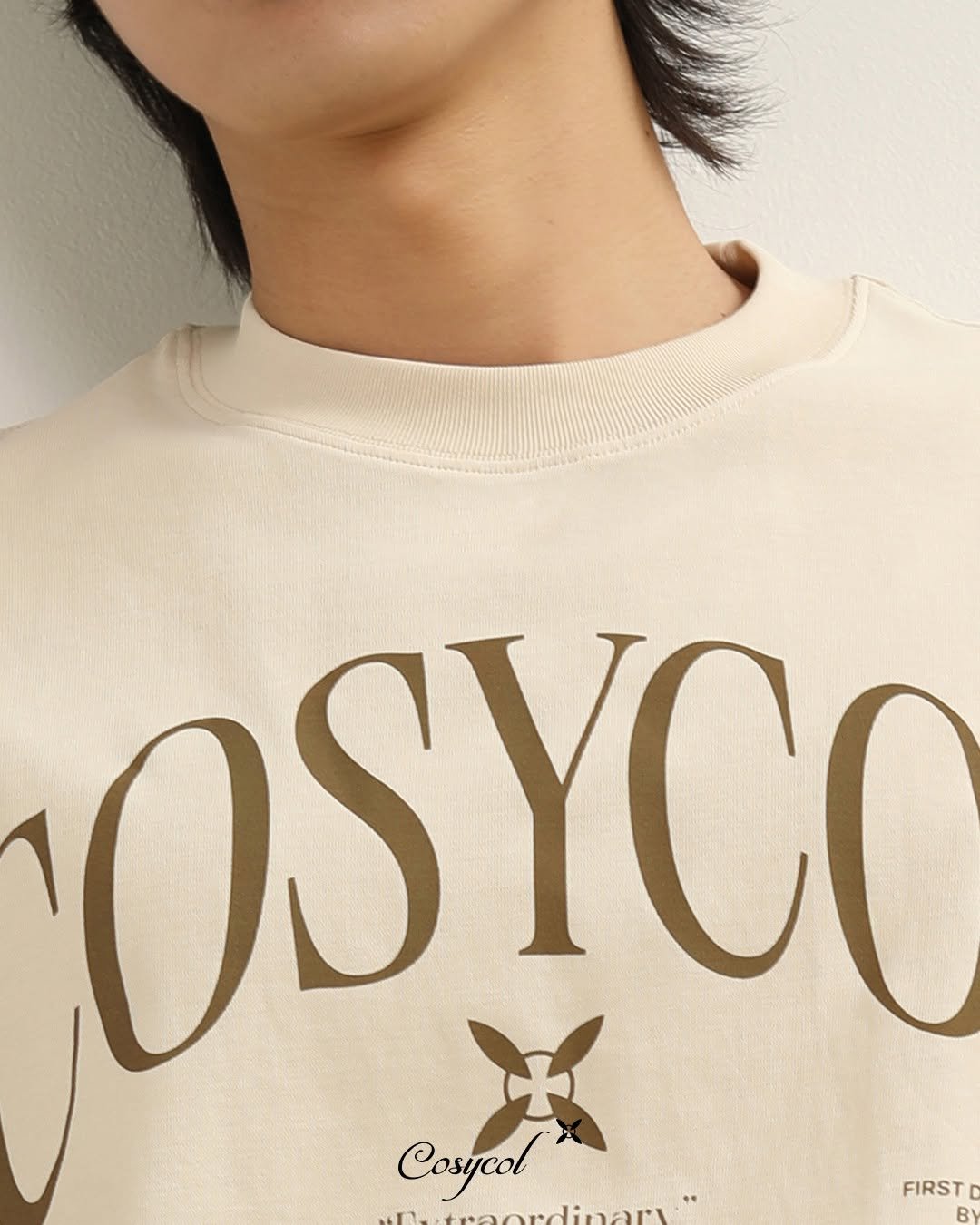
Cosycol’s cream logo tee presents a clear graphic-and-body relationship. When developing a new cotton collection in that broad product category, fabric weight is one useful comparison point. It should be evaluated alongside construction, finish and the way the approved pattern wears.

Keep weight separate from garment mass
GSM expresses fabric mass per unit area. It does not state the total mass of a tee, which also depends on pattern consumption, trims and decoration. If comparing 250–300 GSM candidates for a new brief, ask for measured fabric information and the state in which it was measured. Those figures are development directions here, not specifications assigned to Cosycol’s photographed garment.
Hold the comparison steady
Use one accepted fit reference and make material differences visible in the review. A fabric that feels substantial on the table may hang differently once a large graphic is added. Compare standing and seated drape, sleeve fall, neck support and hand feel. Record shade and finish alongside weight. If construction changes as well, report that openly instead of describing the entire difference as a GSM effect.
Cost the accepted product
Request a quotation for the selected material and garment scope, then compare an alternative with the changed assumptions identified. The price difference will not necessarily match the percentage difference in fabric weight. Consumption, preparation, quantity and decoration can all affect the proposal. Use the material comparison to choose a product the customer will wear, then price that specific product.
A practical development example
At equal fabric area, changing from 250 to 300 GSM increases fabric mass by 20%. That is an illustrative arithmetic relationship, not a prediction that the tee will cost 20% more. Review the actual material and garment consumption before drawing a commercial conclusion from the weight range.
| Area | Review | Agree |
|---|---|---|
| Fabric mass | Request a measured weight and defined fabric state. | Target and agreed measurement basis. |
| Silhouette | Compare materials on one fit reference. | Drape, sleeve and neck behaviour. |
| Price | Compare complete garment scopes. | Which material and process assumptions change. |
Should the heaviest available cotton always be selected?
Choose from the intended customer use and physical sample. A heavier option may suit one silhouette and be unnecessary for another. Weight alone does not define product quality.
Discuss your T-shirt project with VIENA
Ask VIENA to compare suitable cotton directions against your pattern and graphic rather than quote by GSM alone. Include the target quantity, size mix and preferred finished feel. Request a project review.
Related manufacturing guides
- 250 vs 270 vs 300 GSM Cotton Tees: How to Choose
- GSM Tolerances: Agreeing a Fabric Weight Specification
- Quoting a Streetwear Drop: Tees, Hoodies and Fleece Sets
Technical reference
ASTM: textile standards directory. Public guidance supports the discussion; no test result or production specification is inferred for the photographed Cosycol products.