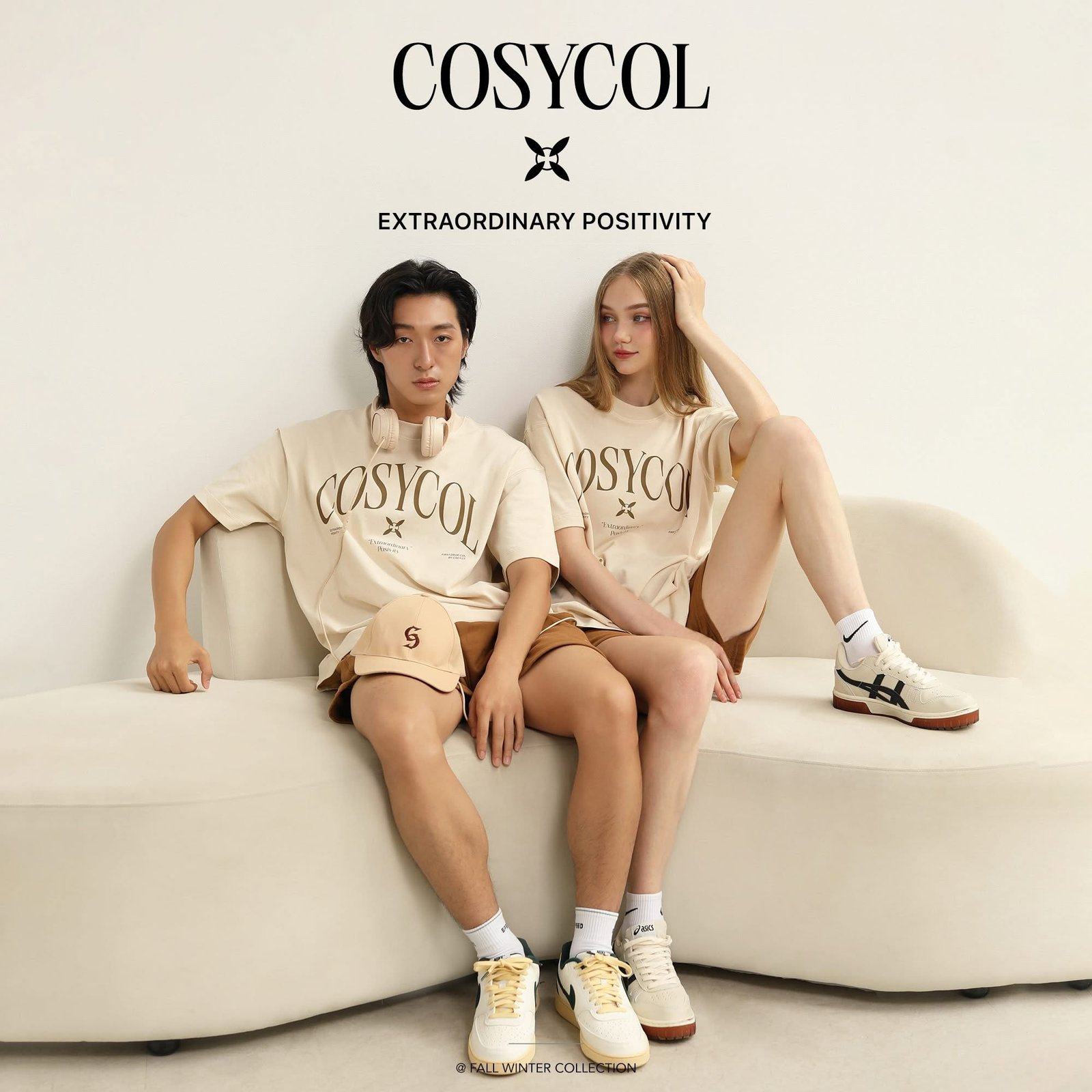
A recognisable T-shirt range can grow from a small number of well-resolved products. Cosycol’s photography brings together cream statement tees, restrained white graphics and closer-fitting silhouettes. Looking across that range is useful when deciding what a new clothing brand should develop first, and which details need separate approval.
Read the collection as a product system
Cosycol is a brand VIENA has worked with. The photographs used here are shared with permission. They show visible design decisions, including graphic scale, sleeve proportions and coordinated outfits. They do not supply the production specification for each item. A new project should translate its own references into measurable requirements rather than copying a photographed garment. Start with the customer, intended fit and the role each tee plays in the range.

Choose a shared foundation and deliberate differences
Decide which garments can share a fabric direction, neck treatment or size system, then identify the styles that genuinely need another block. The fitted white tee and the relaxed cream tee communicate different proportions. Giving both one measurement chart would hide those differences. A common brand identity can remain through artwork, colours and labels while the garment patterns remain distinct. Record the reason for every added variation so the first order stays manageable.
Approve the whole garment before expanding
Treat fabric, fit and decoration as connected approvals. A print position approved on an earlier body length may sit differently after a pattern change. Compare the final piece standing, seated and after the agreed care process. Keep the accepted swatch, measurement sheet and artwork revision together. When the range expands, those records let the team distinguish a deliberate new style from an accidental change to an approved product.
A practical development example
For an illustrative first drop, a brand might prioritise one relaxed logo tee and one fitted graphic tee. Review one base-size piece for each block before adding more colours. The second sample decision should address the largest unresolved issue, such as neck comfort or artwork coverage. This is a planning example, not a report of Cosycol’s order quantities, fabric weight or development sequence.
| Area | Review | Agree |
|---|---|---|
| Range role | Name the customer and fit purpose of each style. | One clear reason for each separate block. |
| Shared components | List body fabric, neck rib, labels and packing. | Which components can genuinely be shared. |
| Approval record | Keep dated material, pattern and artwork references. | Which version is ready for a quotation. |
Can VIENA develop a similar type of tee for a new brand?
Share original artwork and a clear design brief. Our VIENA team develops and manufactures the garment, with material, fit, quantity and decoration requirements confirmed for the order. Feasibility and commercial terms are confirmed for the proposed project.
Discuss your T-shirt project with VIENA
Send the two or three strongest references from your own brand direction, the intended customer, quantity by style and destination. Mark the fit and fabric decisions you still need help resolving. Request a project review.