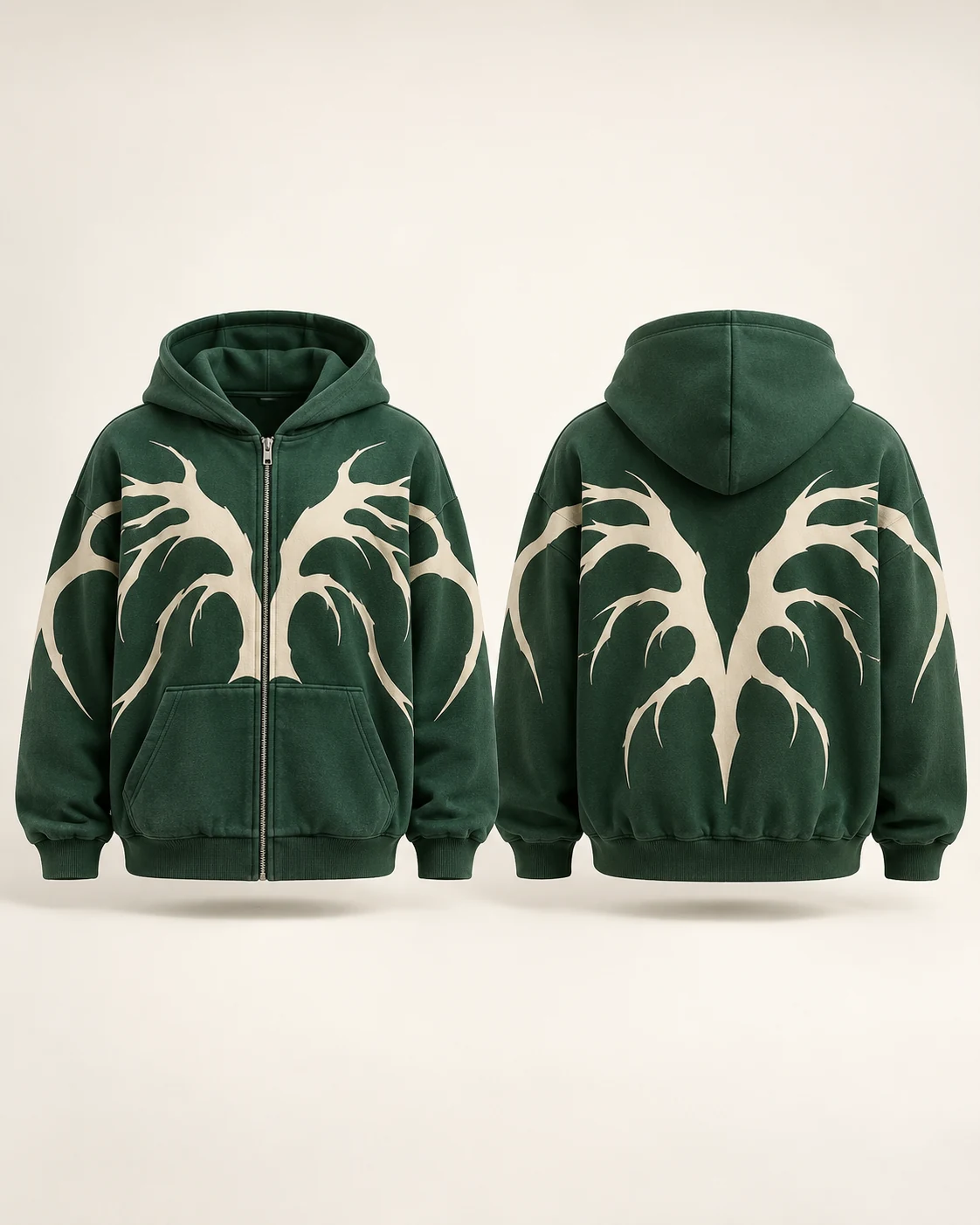
For a hoodie developed around 400 GSM French terry, the sample needs to answer a simple question: does this particular fabric support the shape your brand wants? The GSM target belongs in the brief, alongside composition, construction and finish.
Make hood shape a development priority
Compare the hood standing, worn up and resting on the back. Decide whether it should frame the face closely or sit more generously. Review the proposed layers and seams with the pattern team; a reference image cannot specify the bulk at the neck by itself.

Inspect areas where layers meet
Look at the pocket corners, underarm, cuffs and hem. Ask the wearer to move naturally and check whether these areas feel comfortable. For a zip style, assess the front both open and closed. Record any unevenness with photos and measurements before requesting a revision.
Lock the actual material
A nominal 400 GSM from another source may not reproduce the approved result. Keep the swatch code and finish details with the sample record. Ask how bulk material will be checked against this reference, and agree what happens if the proposed fabric differs.
Your development checklist
- Hood reviewed up and down
- Layered areas checked for bulk
- Front balance assessed on a person
- Approved swatch linked to the sample
Does a 400 GSM target specify the fibre content?
No. State composition separately and confirm it for the material being offered.
Assess a 400 GSM hoodie as an assembled product
A 400 GSM target is useful only alongside the finished garment requirements. A double-layer hood adds material in a region already carrying seams, and a large kangaroo pocket changes the front’s feel. Ask whether the proposed terry is the same construction and finish as the approved swatch. Review hood rest, shoulder balance and neckline comfort on a wearer, then repeat the assessment after the agreed care. A heavy swatch cannot show how the garment moves, and increasing body weight does not automatically solve a hood that pulls backwards.
| Decision | What to review | What to agree |
|---|---|---|
| Hood layers | Compare self-lined and alternative lining options if available. | Choose from worn comfort and seam bulk, not appearance alone. |
| Seam intersections | Inspect hood/neck joins and pocket corners. | Check the actual machines can produce a tidy approved seam. |
| Packing | Weigh and measure a packed finished sample. | Keep shipping estimates separate from fabric GSM arithmetic. |
Can 400 GSM be substituted with a nearby stocked weight?
Only with approval. Compare the proposed construction, finish and garment result, then document the accepted specification instead of silently changing the target.
Continue your product development
For the next decision, read Hood Construction for Heavy French Terry and Fleece, compare Hoodie Pockets: Placement, Comfort and Finishing, and use GSM Tolerances: Agreeing a Fabric Weight Specification to complete the brief.
Discuss the next sample with VIENA FACTORY
Share your product references, target measurements, material preferences and quantity breakdown. VIENA FACTORY develops samples and manufactures clothing in Vietnam through specialised production units, with our team managing the agreed production stages. Send your project brief, or explore our streetwear references and collection development guide.
Reference images illustrate design directions and do not identify products manufactured by VIENA or imply a partnership with the pictured brand. GSM figures in this article are development targets; composition, availability and final specifications require project confirmation.