Cosycol’s fitted white script tee shows a compact body and a prominent front graphic. A baby-tee development brief should define how those proportions sit on the intended wearer. Simply shortening a regular tee can leave the sleeve, neckline and artwork working against the new silhouette.
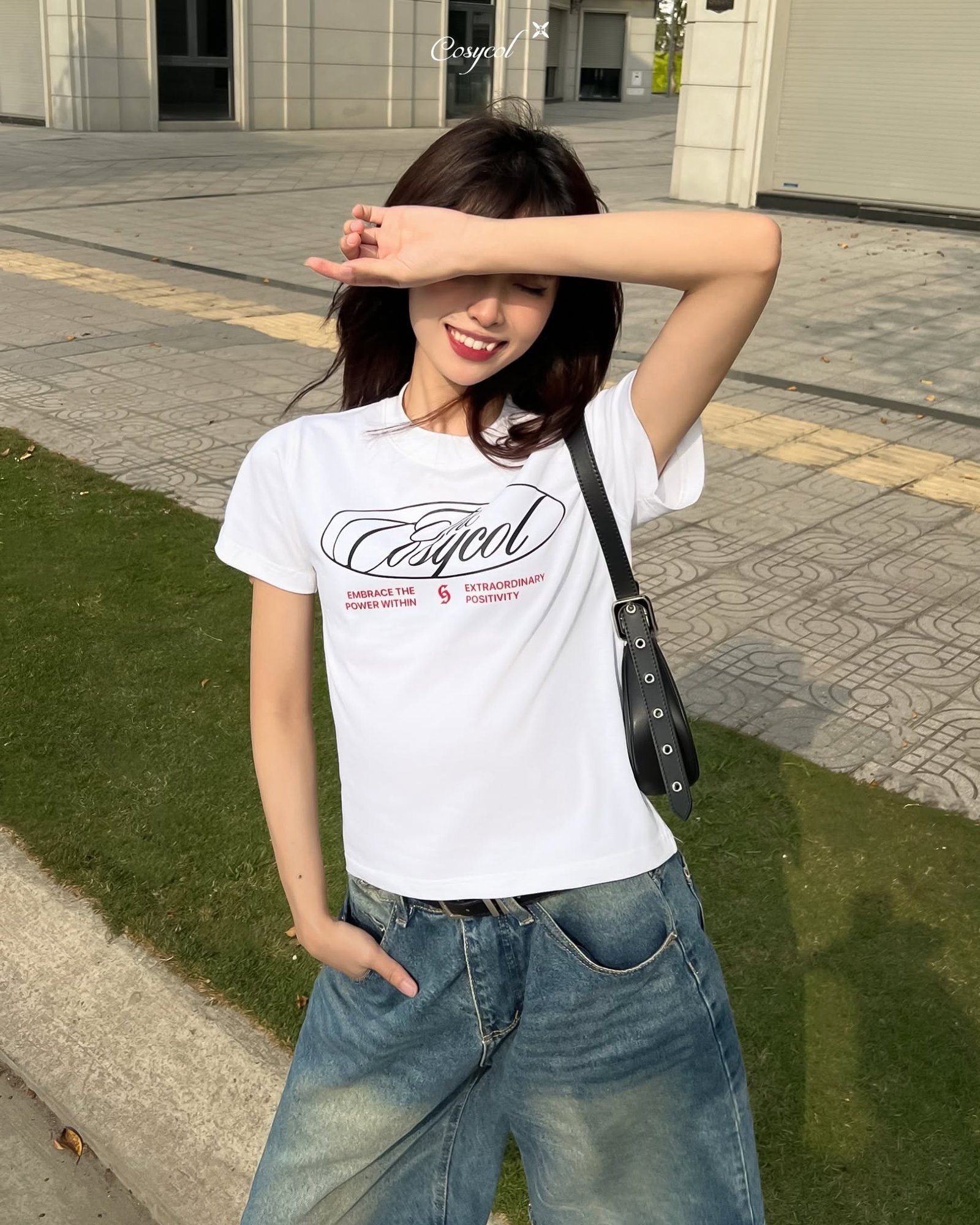
Define the worn hem position
Record where the hem should fall relative to the intended waistband. Name the body-length measurement origin and take a neutral front and side view. Check sitting and ordinary arm movement before making another length reduction. A photograph taken with the wearer leaning or raising an arm should be treated as an additional view, not the sole fit standard. Record the intended amount of ease instead of relying on a size name.

Keep the graphic inside the usable panel
Provide artwork at its finished dimensions and mark its position from stable seams. A compact body reduces the uninterrupted area available for large script or lettering. Review the graphic on the smallest offered size and check its relationship to the neckline and hem. If the body length changes after fitting, revisit placement before ordering transfers or preparing screens for the full run.
Review recovery and care on the sample
Specify the proposed fabric and finish, then judge the actual worn garment. For a close-fitting tee, the fabric’s behaviour and seam comfort matter alongside measurements. After the agreed wash and drying process, refit the piece and inspect the graphic area. Do not compensate for an unresolved material change by repeatedly adjusting the pattern. Keep fit comments, material observations and artwork comments in separate sections of the review.
A practical development example
Imagine a first sample with the correct chest fit but an unexpectedly high hem when seated. Record the waistband position and body-length change you want, then assess how it affects the script placement. This makes the second sample a controlled correction. It avoids increasing every measurement and losing the closer-fitting character that made the original direction useful.
| Area | Review | Agree |
|---|---|---|
| Length | Mark the hem on the intended wearer. | Standing and seated coverage. |
| Graphic | Check artwork at final size on the shortest body. | Seam references and usable area. |
| Material | Review movement and after-care fit. | Approved fabric and permitted changes. |
Must a baby tee use the same fabric as a relaxed tee?
No. Select and sample a material appropriate to the intended fit. The photographs do not identify the fibre blend or stretch specification of Cosycol’s pictured tee.
Discuss your T-shirt project with VIENA
Send your intended body length, size range, artwork and wearer reference. A focused sample brief helps VIENA review a fitted tee without turning every revision into a new design. Request a project review.