
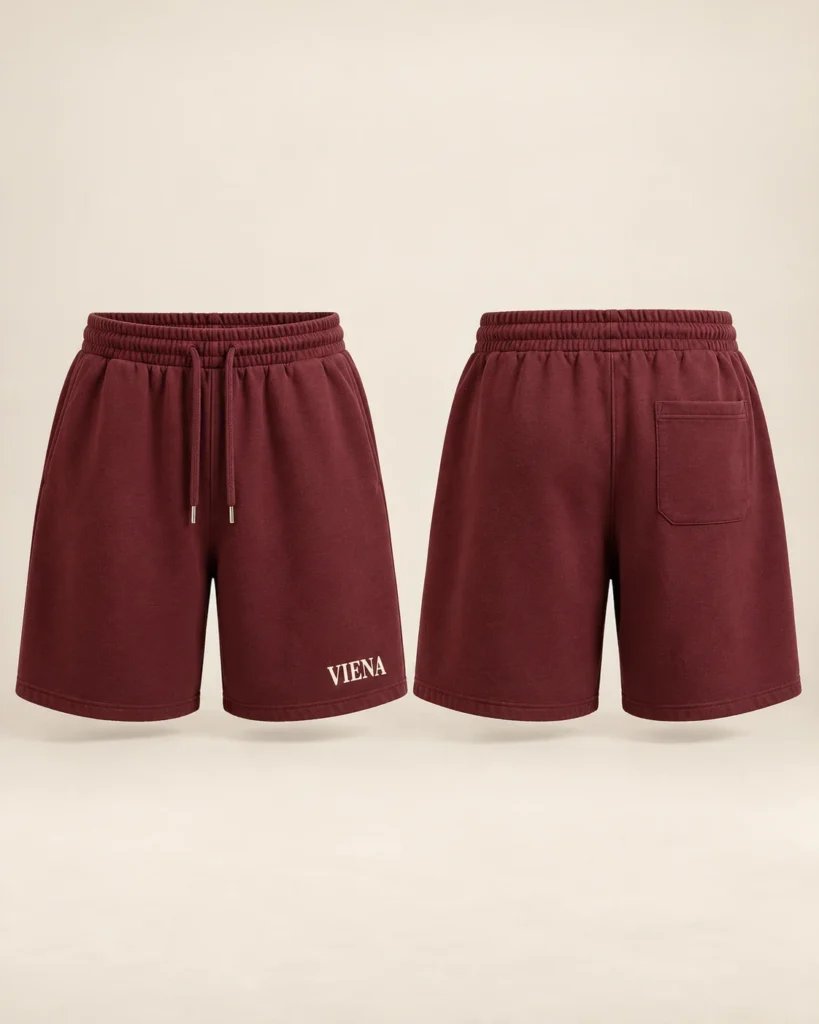
Waistband comfort can decide whether a pair of streetwear sweatpants is worn often. For 360–420 GSM fleece or French terry, develop the elastic, casing and drawcord as a working assembly rather than a list of loose components.
State how the waist is measured
Agree relaxed and extended measurements and the measuring method. Identify the intended fit on the body and where the waistband should sit. This gives the pattern team a clearer brief than requesting a standard elastic waist with no dimensions.
Review comfort in motion
Try sitting, walking and bending in the sample. Check whether the casing twists, the cord is awkward to use or the elastic feels uneven. Inspect the inside finish where it touches the skin. Record observations without inventing a universal elastic specification for every customer.
Approve visible details together
Check cord colour, length, exit position and ends against the rest of the garment. Decide whether hardware should be discreet or part of the branding. Include the final components in the quotation and check the assembly again after the agreed care process.
Your development checklist
- Relaxed and extended waist dimensions
- Waistband position on the wearer
- Cord and elastic tested as an assembly
- Approved hardware and care result recorded
Can a waistband be approved from its relaxed width alone?
No. Review the agreed extension, construction and comfort on the intended wearer as well.
Specify waist comfort in relaxed and extended states
An elastic waist needs more than one circumference. Record the relaxed garment waist and describe a repeatable method for checking its extended state, without treating maximum forced extension as a comfortable fit. State elastic width, casing construction, drawcord position and any securing stitches. Test pocket access while seated because a comfortable waistband can still sit badly with the rise. Review the assembled waist after care; elastic, shell, rib and drawcord may behave differently.
| Decision | What to review | What to agree |
|---|---|---|
| Elastic | Compare comfort, recovery and twisting inside the casing. | Approve the actual component rather than a width description only. |
| Drawcord | Define route, exit positions, ends and finished length. | Check operation and secure finishing on the sample. |
| Attachment | Inspect gathers and any topstitching through the elastic. | Check that the waist remains functional after washing. |
Should all sizes use one elastic length?
Only if fit development supports that choice. Document the size-specific waist requirements and test boundary sizes rather than relying on the size label.
Continue your product development
For the next decision, read Fleece Joggers: Cuffs, Rise and Everyday Comfort, compare Wide-Leg Sweatpants Manufacturing in Vietnam, and use Rib Trims for 360–420 GSM Sweatshirt Fabrics to complete the brief.
Discuss the next sample with VIENA FACTORY
Share your product references, target measurements, material preferences and quantity breakdown. VIENA FACTORY develops samples and manufactures clothing in Vietnam through specialised production units, with our team managing the agreed production stages. Send your project brief, or explore our streetwear references and collection development guide.
Reference images illustrate design directions and do not identify products manufactured by VIENA or imply a partnership with the pictured brand. GSM figures in this article are development targets; composition, availability and final specifications require project confirmation.