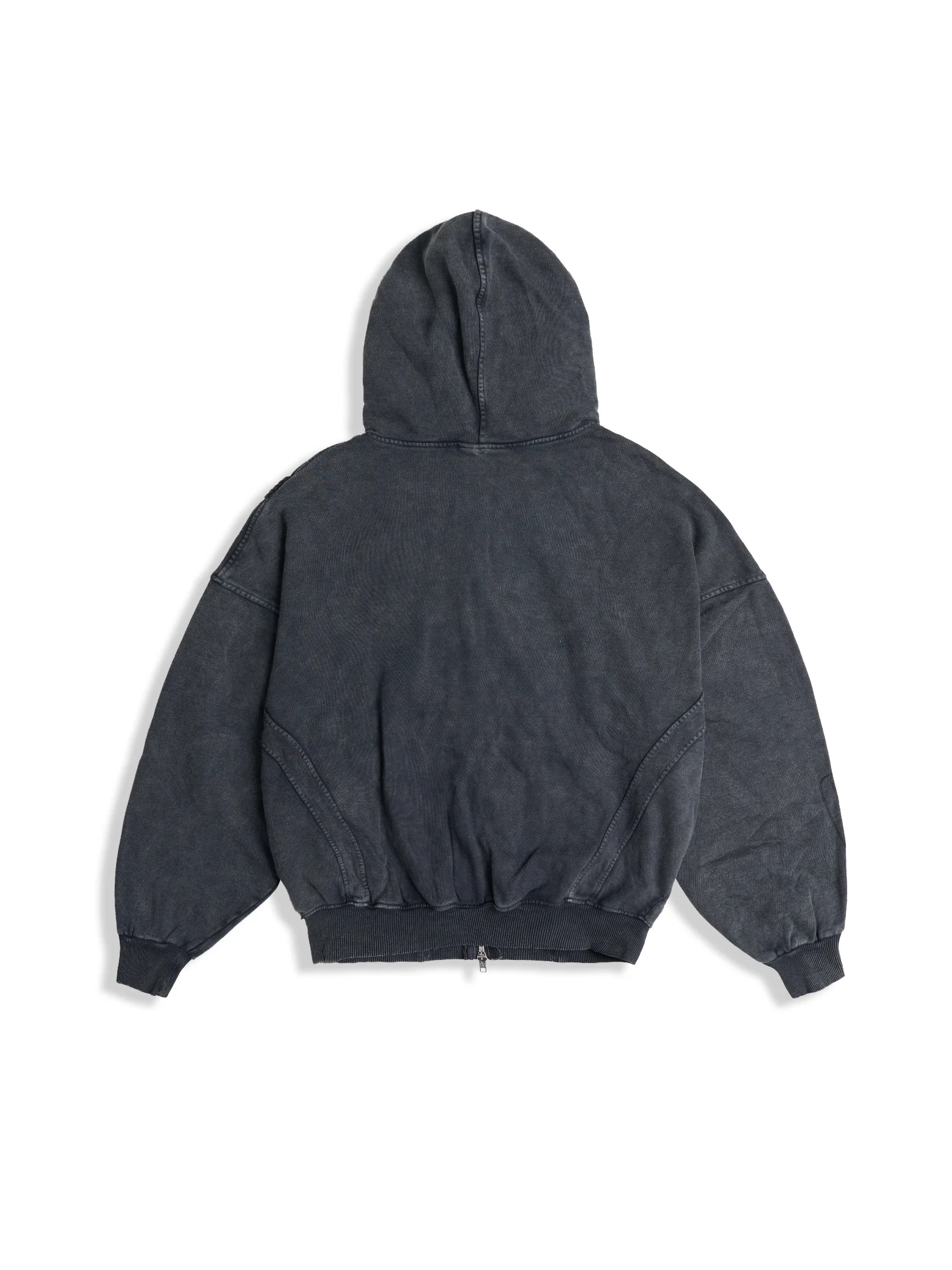
Heavy sweatshirt fabric and rib trim need to work together. For a 360–420 GSM hoodie, pants or half-zip project, specify the finished appearance of cuffs and waistbands rather than assuming the shell fabric determines the correct rib.
Describe the shape you want
A close rib hem can gather the body into a rounded silhouette; a more open finish can sit straighter. Show the intended appearance on a worn reference and provide finished measurements. Ask the development partner to propose the rib and attachment needed to achieve it.

Check recovery in the sample
Try the garment on and move naturally, then inspect how the cuff or hem returns. Review comfort at the wrist and waist. Assess the rib after the agreed care process as well, and record visible distortion separately from dimensional changes.
Coordinate the trim specification
Keep rib composition, colour, visible height and construction reference with the shell approval. A substitute rib should be reviewed as a change, especially when it alters the way the body hangs. Make sure the quotation includes the approved trim rather than an unnamed standard option.
Your development checklist
- Finished cuff and hem measurements
- Rib colour approved against the shell
- Comfort and recovery reviewed
- Trim reference included in the costed specification
Should rib weight match shell weight?
Ask the partner to select a suitable trim for the construction and appearance. Equal GSM is not a complete compatibility rule.
Match rib behaviour to a heavyweight body
Rib performs a job: it controls an opening while remaining comfortable and recovering after use. A heavy sweatshirt does not automatically need an equally heavy rib or the same fibre blend. Compare finished cuff and hem widths, stretch direction and recovery on a sewn sample. A tight hem can lift a cropped body, while a loose hem changes the intended blouson shape. Keep the approved rib specification distinct from the body so the sourcing partner cannot replace it with a similar-looking stock trim without review.
| Decision | What to review | What to agree |
|---|---|---|
| Cuff | Try hand entry and check whether the cuff returns to its shape. | Approve circumference and finished depth together. |
| Waist rib | Observe the body while sitting and raising the arms. | Choose the amount of gathering from the intended silhouette. |
| Care balance | Compare rib/body size change and shade after washing. | Revise the component or attachment method if the join distorts. |
Is elastane essential for every sweatshirt rib?
No. The decision depends on the structure, required recovery and design. Compare the actual offered rib rather than treating one blend as a universal solution.
Continue your product development
For the next decision, read Cotton Tee Neck Ribs: Details to Approve Before Bulk, compare French Terry vs Brushed Fleece for Streetwear, and use Sweatpant Waistbands and Drawcords: A Buyer’s Guide to complete the brief.
Discuss the next sample with VIENA FACTORY
Share your product references, target measurements, material preferences and quantity breakdown. VIENA FACTORY develops samples and manufactures clothing in Vietnam through specialised production units, with our team managing the agreed production stages. Send your project brief, or explore our streetwear references and collection development guide.
Reference images illustrate design directions and do not identify products manufactured by VIENA or imply a partnership with the pictured brand. GSM figures in this article are development targets; composition, availability and final specifications require project confirmation.