Nỉ chân cua and nỉ bông describe different inside-surface directions for a sweatshirt project: French terry has a loopback appearance, while brushed fleece has a raised inside surface. Within a 360–420 GSM development range, compare actual swatches before choosing a hoodie, pants or shorts fabric.
Start with the inside surface
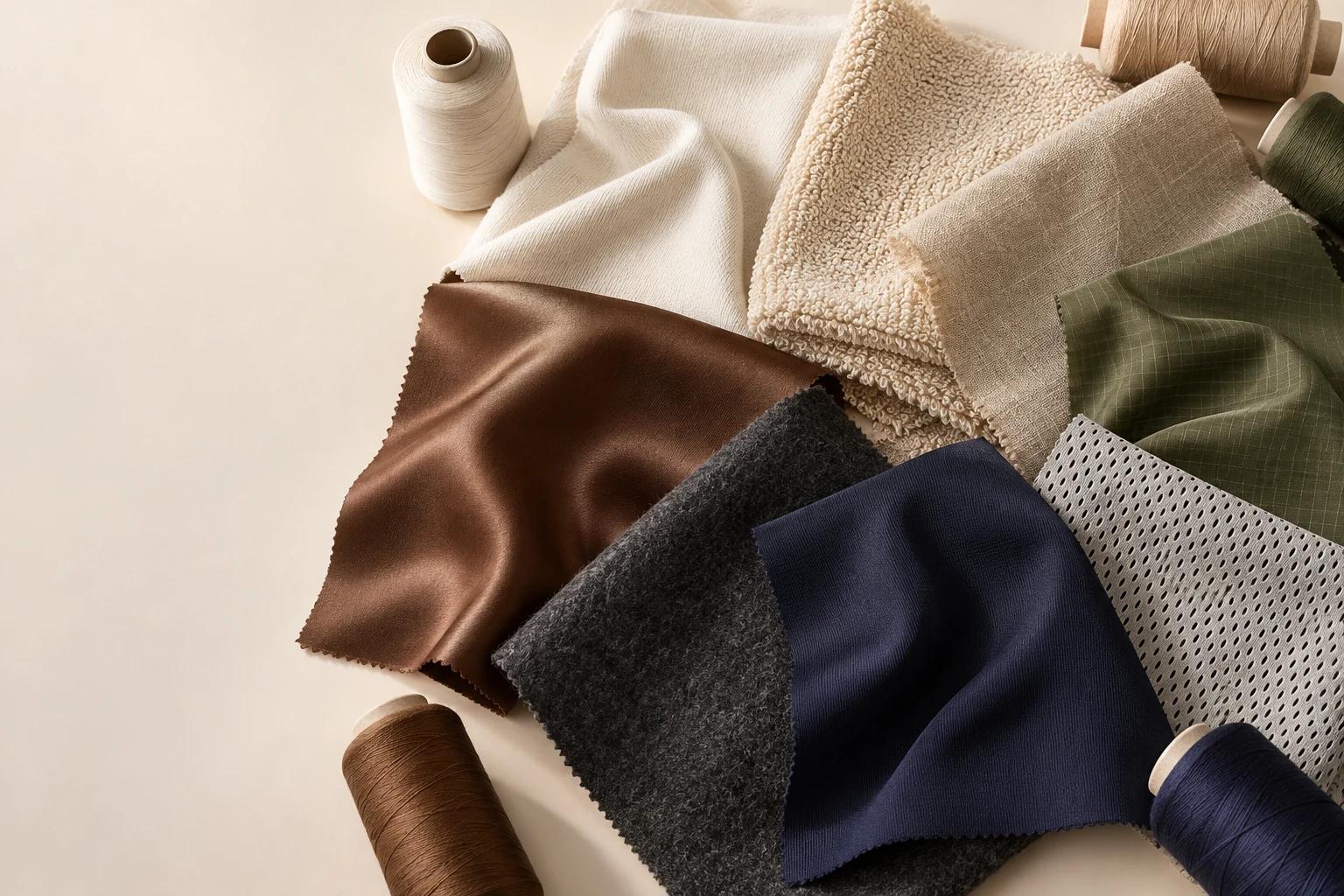
Turn each swatch over and inspect it as carefully as the outside. Note whether the loopback or brushed surface matches the customer experience you want. Ask for the exact composition and construction instead of assuming that either fabric name means 100% cotton. Keep a labelled cutting of the approved material.

Review the garment rather than the swatch alone
The same nominal weight does not guarantee the same drape, thickness or hand feel. Make the silhouette you intend to sell and assess it in use. For a set, try the top and bottom together. Look at waistband bulk, pocket behaviour and how the fabric gathers at cuffs.
Confirm the finished specification
Ask when weight is measured in the finishing sequence and what variation can be agreed. Review care performance and surface appearance with the selected partner. If a brushed option is replaced by loopback during sourcing, treat that as a material change requiring approval.
Your development checklist
- Inside surface and composition recorded
- Target finished weight between 360 and 420 GSM
- Garment comfort and silhouette reviewed
- No unapproved switch between fleece and loopback
Can I choose by weight and ignore the inside surface?
No. Ask for both the intended construction and the finished weight, then approve the actual fabric.
Choose loop-backed terry or brushed fleece for the use case
Look at the reverse side before choosing by a sweatshirt’s name. A loop-backed French terry and a brushed-back fleece can share a similar face while feeling different against the skin. Brushing creates a raised back surface; GSM and fibre content are separate specifications. In a 360–420 GSM development brief, compare samples made to a similar fit and identify whether the customer wants an unbrushed interior or a softer raised surface for layering. Inspect the face for print suitability and the reverse for shedding or surface change after care. “Heavyweight” does not identify the construction or prove a thermal performance claim.
| Decision | What to review | What to agree |
|---|---|---|
| French terry direction | Review loop size, reverse texture and snagging concerns. | Assess the actual garment’s drape and layering comfort. |
| Brushed fleece direction | Review raised back, shedding and surface change. | Agree care checks and any formal pilling assessment needed. |
| Both constructions | Specify composition, finish, usable width and rib separately. | Make a comparable sample before selecting the bulk material. |
Compare terry and fleece using one decision sequence
First identify the reverse surface and composition. In common sweatshirt constructions, an unbrushed looped back and a brushed raised back describe different finish directions. Ask for face and reverse photographs plus physical swatches. Do not use a supplier’s colour photo to infer a cotton percentage, weight or napping treatment. Keep rib and pocket materials separate on the component list.
Second compare the garment in the intended use. For a relaxed set, check how the trouser bends at the knee and how the top rests above the waistband. For a layering hoodie, compare hood weight and the feel against the underlayer. These are development observations, not quantified warmth or moisture-management claims. If a performance claim matters, choose an appropriate assessment rather than importing a general statement about the fabric category.
Third review care and surface durability. Look at size change, shade, loose fibres and the face/back appearance. Pilling is not the same property as abrasion resistance or seam strength. If a laboratory assessment is needed, select the method suited to the material and agree the result required. A method name printed in a blog is not evidence that VIENA or a partner tested that fabric.
Finally compare the complete quote, including any finish, rib, decoration and packing. The preferred material is the one that satisfies the approved product brief at an acceptable total cost. The choice should remain traceable to the sample and fabric code so a reorder can be assessed consistently.
Can French terry and brushed fleece use one identical pattern?
Use the same starting reference if helpful, then validate each material. Thickness, stretch, relaxation and seam bulk can require different pattern or construction decisions.
Continue your product development
For the next decision, read 400 GSM French Terry Hoodies: Fabric to First Sample, compare 380 GSM Brushed Fleece: A Streetwear Sampling Guide, and use Rib Trims for 360–420 GSM Sweatshirt Fabrics to complete the brief.
Discuss the next sample with VIENA FACTORY
Share your product references, target measurements, material preferences and quantity breakdown. VIENA FACTORY develops samples and manufactures clothing in Vietnam through specialised production units, with our team managing the agreed production stages. Send your project brief, or explore our streetwear references and collection development guide.
Reference images illustrate design directions and do not identify products manufactured by VIENA or imply a partnership with the pictured brand. GSM figures in this article are development targets; composition, availability and final specifications require project confirmation.
Technical background: CottonWorks: cotton fabric collections. Process settings and project approvals should be agreed with the selected specialist.