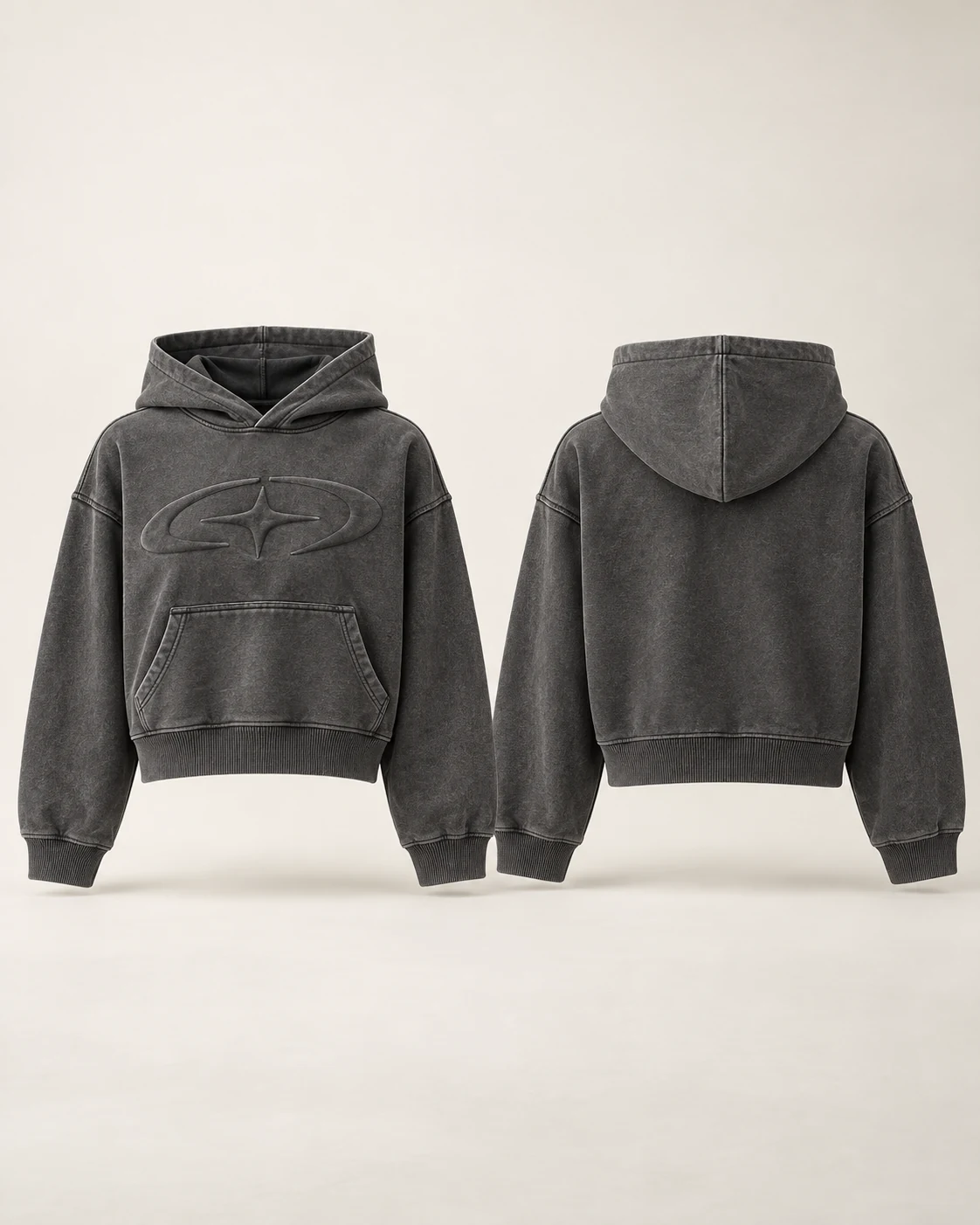
If your collection brief sits between 360 and 420 GSM, a 380 GSM brushed fleece proposal deserves the same scrutiny as any other fabric. Its suitability depends on the finished surface, composition and silhouette you approve, not its position in the weight range.
Request a meaningful fabric comparison
Ask the partner to identify the proposed 380 GSM material and any alternatives. Compare them side by side with clear labels. Record colour, finish and composition so a softer swatch is not mistaken for an otherwise identical option when several variables have changed.

Sample the garment with the most demanding details
If the collection includes a hoodie and pants, start with the piece whose construction is most important to the brand. Review pockets, cuffs or the hood on that sample, then check the matching piece. Shared fabric does not eliminate the need to approve both patterns.
Document the decision
Explain why the selected sample works: perhaps the sleeve shape, inside feel or overall drape is closer to the brief. Store that reasoning with the physical reference. It helps a partner evaluate substitutions later without reducing the approval to a GSM number.
Your development checklist
- Every swatch linked to a material code
- Differences beyond weight recorded
- Key construction details sampled
- Selection reasons stored with the approval
Should the middle weight be the default choice?
No. Select the option that meets your product brief and validate it with a garment sample.
Specify what “brushed” should feel and look like
Brushing describes the treatment of the reverse surface, not a universal softness grade. For a 380 GSM development sample, retain a reference for pile character and assess whether the back sheds onto a contrasting layer. Examine the garment after care rather than approving only an untouched swatch. A printed front and a brushed reverse also create two different surfaces to evaluate. Record whether the proposed composition and finish are the same across colours; a visually similar substitute should be treated as a new approval.
| Decision | What to review | What to agree |
|---|---|---|
| Reverse surface | Compare pile appearance and loose fibres on a contrasting cloth. | Record the observation method so samples can be compared. |
| After care | Inspect surface change, size and seam appearance together. | Agree any formal test requirement with a laboratory. |
| Trim comfort | Review cuff and waist rib against the fleece thickness. | Wear the sample rather than judging softness by hand alone. |
Is brushed fleece necessarily 100% cotton?
No. Brushed fleece may use different fibre blends. State the required composition independently and request material documentation for the proposed fabric.
Continue your product development
For the next decision, read Cotton Content in Fleece: Questions for a Supplier, compare French Terry vs Brushed Fleece for Streetwear, and use French Terry Wash Samples: What to Record to complete the brief.
Discuss the next sample with VIENA FACTORY
Share your product references, target measurements, material preferences and quantity breakdown. VIENA FACTORY develops samples and manufactures clothing in Vietnam through specialised production units, with our team managing the agreed production stages. Send your project brief, or explore our streetwear references and collection development guide.
Reference images illustrate design directions and do not identify products manufactured by VIENA or imply a partnership with the pictured brand. GSM figures in this article are development targets; composition, availability and final specifications require project confirmation.