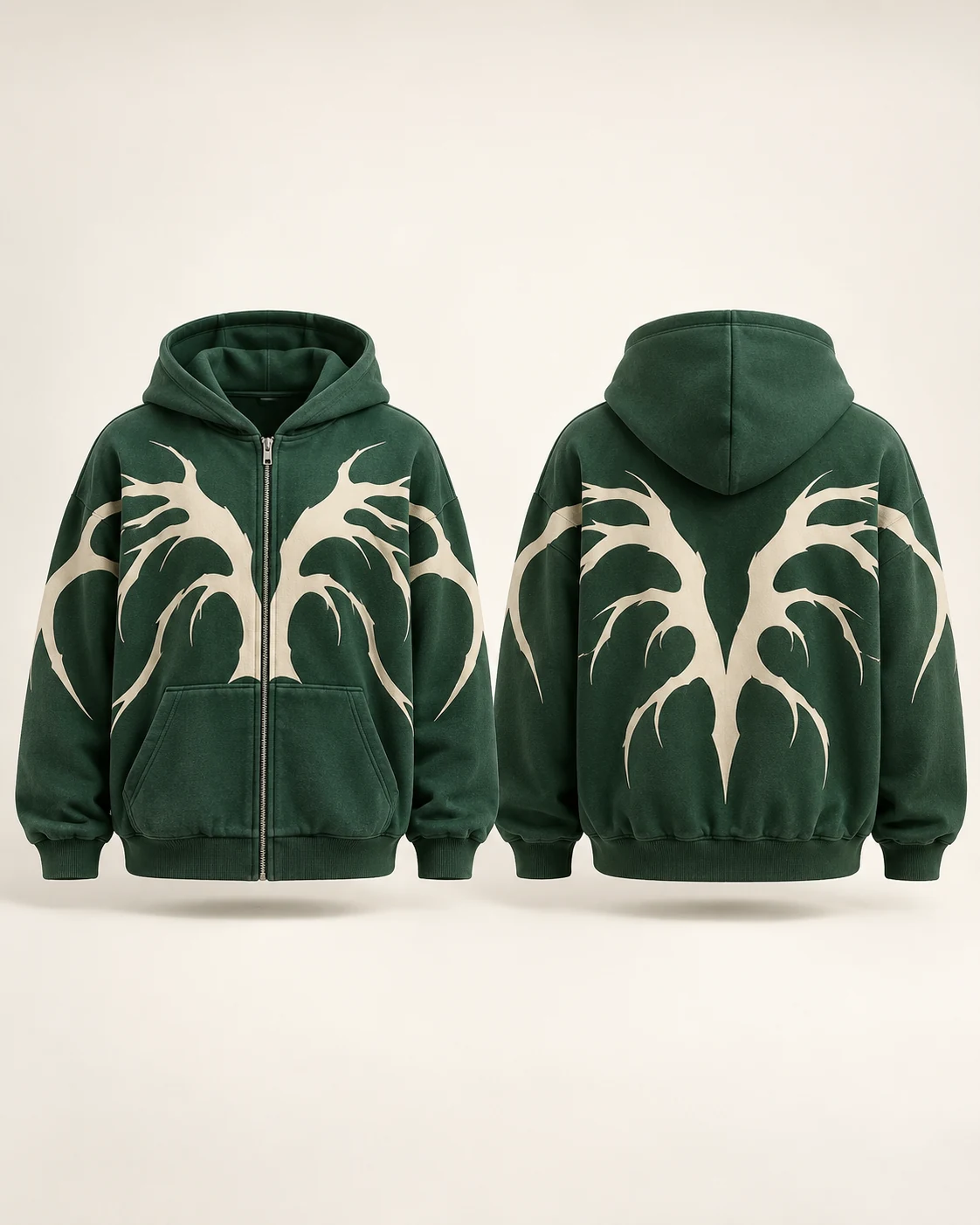
The hood can define a streetwear hoodie’s silhouette even when it is down. For a 360–420 GSM development, give the pattern team a clear view of the shape, coverage and finish you want before approving the first sample.
Describe shape from the side
Provide a side-view reference and identify the desired depth, front opening and crown shape. Explain whether the hood should stand away from the head or sit closer. Discuss layers and seam arrangements with the partner as construction choices, not assumptions based on a photograph.

Check the neck connection
Review the hood-to-body seam, drawcord area if used, and comfort at the throat. Wear the hoodie with the hood down and see whether the neck is pulled away from its intended position. Check the sample in the actual shell fabric, because a substitute can change the result.
Approve practical details
Confirm eyelets, cords, ends and any internal finish as part of the trim package. Assess them on the garment rather than on a component card alone. Ask the partner to identify any intended-market requirements relevant to your product, particularly if developing for children.
Your development checklist
- Side-view hood shape supplied
- Neck comfort checked with hood up and down
- Actual fabric used for final approval
- Cords and hardware included in trim review
Is adding a lining always an upgrade?
Not automatically. Review the extra layers against the intended shape, comfort and product brief.
Test hood shape, layers and the attachment point
A hood that looks generous in a flat photo may restrict vision or collapse when worn. Record depth, height, opening and panel layout using a diagram, then review the profile on the fit wearer. A double-layer self-fabric hood adds weight as well as a clean inside surface. Ask for a comparable alternative if the back pulls on the neckline. Keep seam bulk away from uncomfortable contact points and check the hood-to-neck join after care. Drawcords and eyelets, if specified, need their own placement and security review.
| Decision | What to review | What to agree |
|---|---|---|
| Raised hood | Turn the head and inspect the opening/profile. | Check coverage without assuming a bigger hood fixes every fit issue. |
| Resting hood | Observe fold and neckline balance. | Assess lining choice with the body fabric. |
| Attachment | Inspect seam bulk and reinforcement where required. | Review the washed assembly before final approval. |
Is a three-panel hood always better than a two-panel hood?
No. Panel layout is a design and fit tool. Choose from the intended shape, sewing capability and sample result rather than treating panel count as a quality grade.
Continue your product development
For the next decision, read Pullover Hoodie Manufacturing: A Streetwear Fit Brief, compare 400 GSM French Terry Hoodies: Fabric to First Sample, and use Zip Hoodie Development: Front Balance and Hardware to complete the brief.
Discuss the next sample with VIENA FACTORY
Share your product references, target measurements, material preferences and quantity breakdown. VIENA FACTORY develops samples and manufactures clothing in Vietnam through specialised production units, with our team managing the agreed production stages. Send your project brief, or explore our streetwear references and collection development guide.
Reference images illustrate design directions and do not identify products manufactured by VIENA or imply a partnership with the pictured brand. GSM figures in this article are development targets; composition, availability and final specifications require project confirmation.