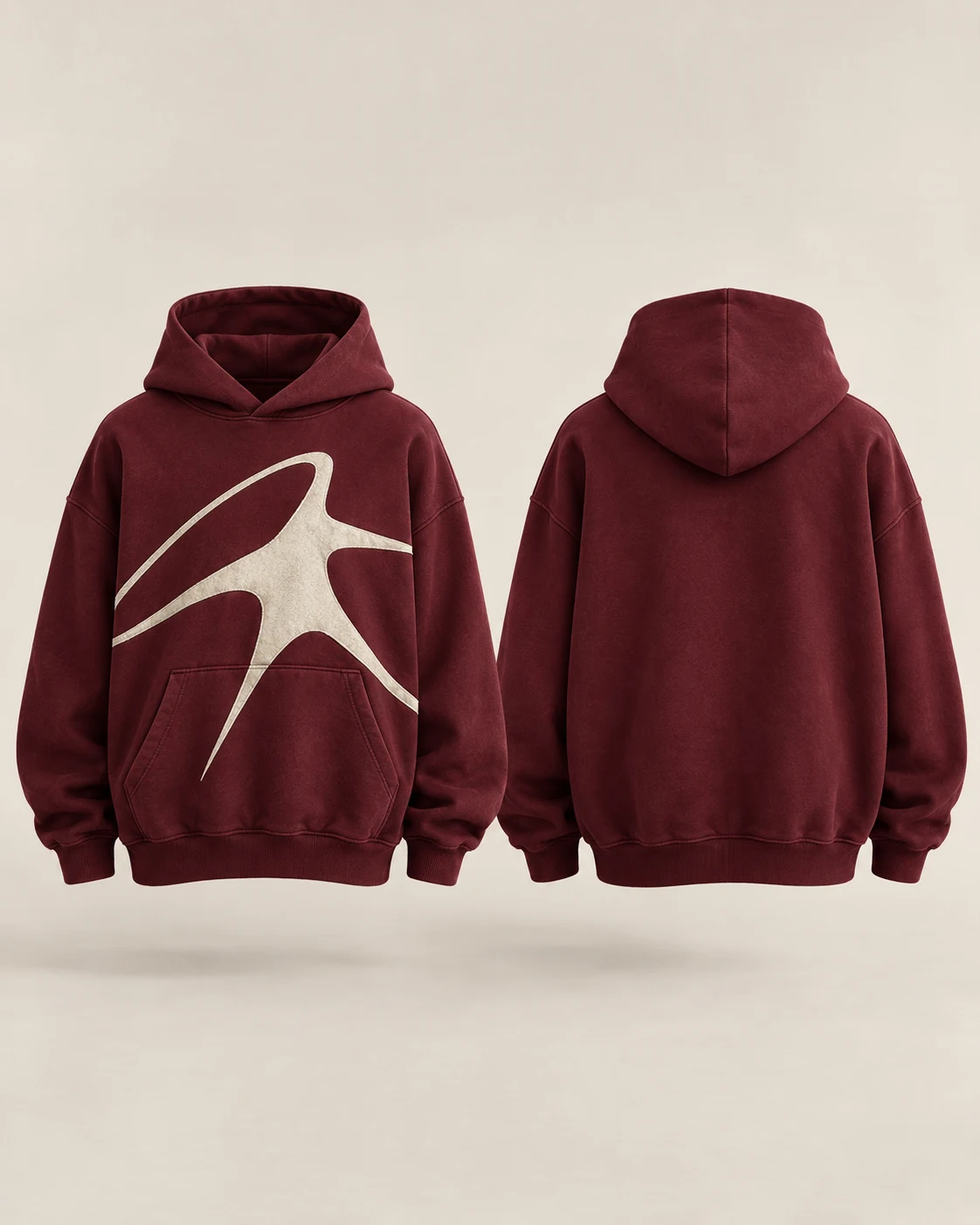
A pullover hoodie needs a clear relationship between hood, body and sleeves. For 360–420 GSM French terry or brushed fleece development in Vietnam, begin with those proportions before deciding where the logo goes.
Choose the body outline
Define whether the hem should gather at the waist or hang straighter. Show the intended body length and chest width on a measurement diagram. Review the side view too: a generous front without enough consideration of the back can miss the relaxed shape you want.

Test the hood in normal use
Try the hood up, turn the head and then let it rest on the back. Check neckline comfort and the way its weight affects the garment. Ask for changes to the shape or layers through the pattern team rather than describing every issue as needing a bigger hood.
Approve construction before graphics
Inspect pocket edges, cuffs and the join at the hem. Review the sample after agreed care testing. Once the body is approved, mock up artwork on the worn garment so the placement follows the final proportions instead of an earlier pattern.
Your development checklist
- Body length and hem silhouette defined
- Hood tested up and resting down
- Pocket and cuffs reviewed for comfort
- Graphics checked on the approved fit
Can a T-shirt size chart be reused for a hoodie?
Use it only as context. A hoodie needs its own measurements, construction details and fit approval.
Resolve pullover hood balance before decoration
A pullover hoodie combines several fit systems: the body, sleeves, neck opening and hood. Test the hood both raised and resting behind the neck. If it pulls the front neckline backwards, identify whether hood shape, weight or the neck attachment needs revision. Increasing the chest may hide that issue in a photograph while worsening the silhouette. For a heavyweight sample, wear it with the intended underlayer and check the pocket position in motion. The artwork should be fitted to the approved garment, after these structural decisions have settled.
| Decision | What to review | What to agree |
|---|---|---|
| Neck entry | Check comfortable head entry without stressing the seam. | Record the opening definition and the selected hood lining. |
| Hood rest | Observe front neckline and shoulder balance with hood down. | Compare a pattern revision before changing body weight. |
| Movement | Raise arms and use the pocket with the intended layer. | Review sleeve reach and hem lift together. |
A sample plan for a new heavyweight hoodie
Begin with a fit-development piece in the intended fabric where available. Review the body without treating temporary artwork as final. Record chest, body length, shoulder, sleeve and the hood dimensions using diagrams. Wear it with the intended tee, assess arm movement and observe the neckline with the hood resting. List fit changes separately from sewing corrections.
Use the next stage to resolve the hood, rib and pocket details. A double-layer hood may suit the design, but check the weight at the back neck and the seam stack at the join. A large pocket needs comfortable entry and sufficient space for the approved graphic. If the first material is provisional, carry the open material decisions forward explicitly rather than declaring the garment ready.
Then approve decoration on the selected surface. Screen printing, DTF and embroidery involve different development questions, so include the final artwork size and position. Inspect the complete decorated assembly after the agreed care. Keep the signed reference and record any permitted bulk differences. A request for 1–2 development pieces per style does not automatically include every size, every graphic trial or unlimited revisions; confirm that scope in the proposal.
Should we approve the hoodie with its final graphic?
Approve body fit first, then review the final decoration on that approved material and construction. A print can affect feel and placement, so it still needs its own sample check.
Continue your product development
For the next decision, read Hood Construction for Heavy French Terry and Fleece, compare Hoodie Pockets: Placement, Comfort and Finishing, and use French Terry vs Brushed Fleece for Streetwear to complete the brief.
Discuss the next sample with VIENA FACTORY
Share your product references, target measurements, material preferences and quantity breakdown. VIENA FACTORY develops samples and manufactures clothing in Vietnam through specialised production units, with our team managing the agreed production stages. Send your project brief, or explore our streetwear references and collection development guide.
Reference images illustrate design directions and do not identify products manufactured by VIENA or imply a partnership with the pictured brand. GSM figures in this article are development targets; composition, availability and final specifications require project confirmation.