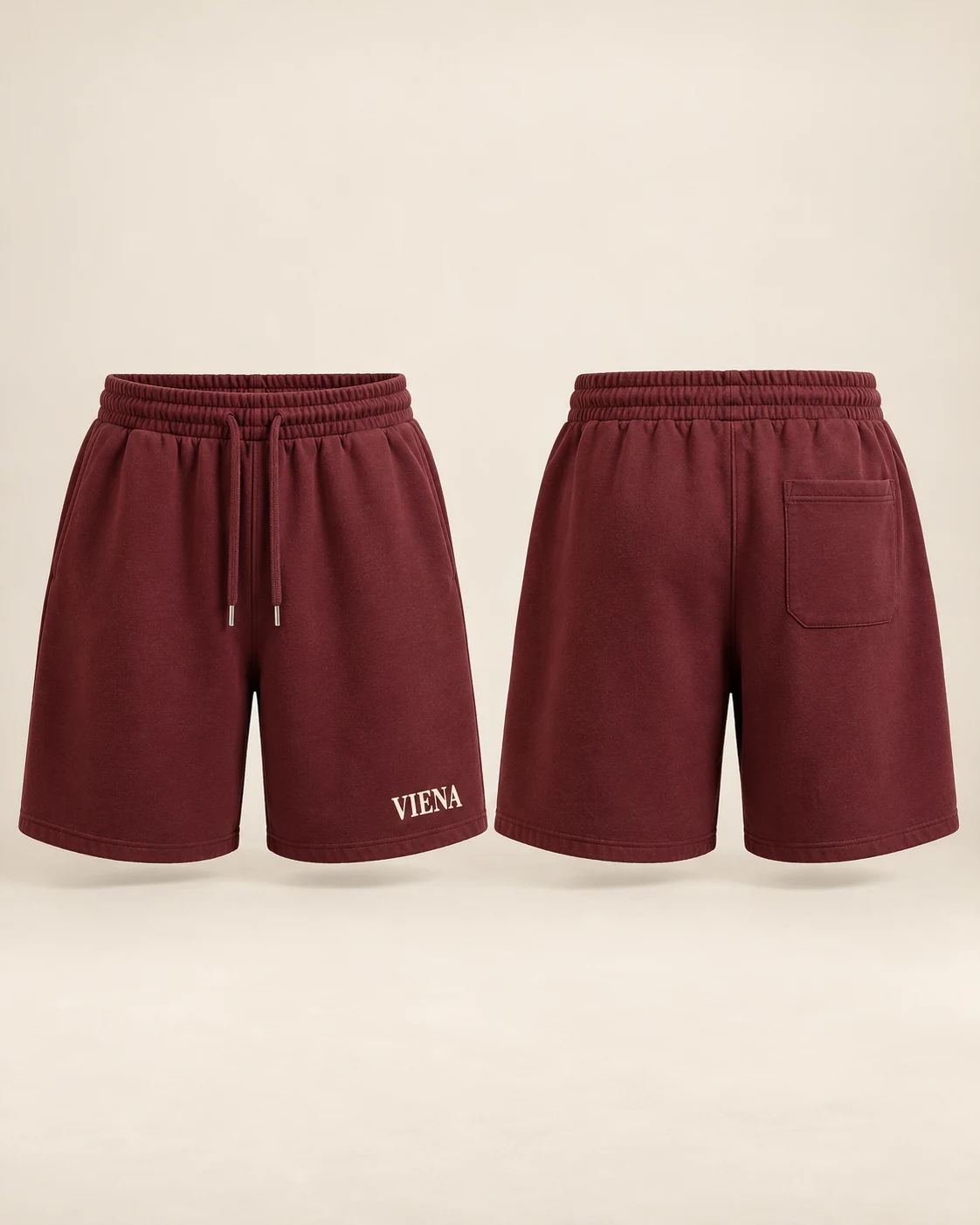
Brushed fleece shorts in the 360–420 GSM development range need a deliberate product brief. Their success depends on the inside feel, silhouette and details a customer uses, not simply a heavy fabric description.
Decide the silhouette before the finish
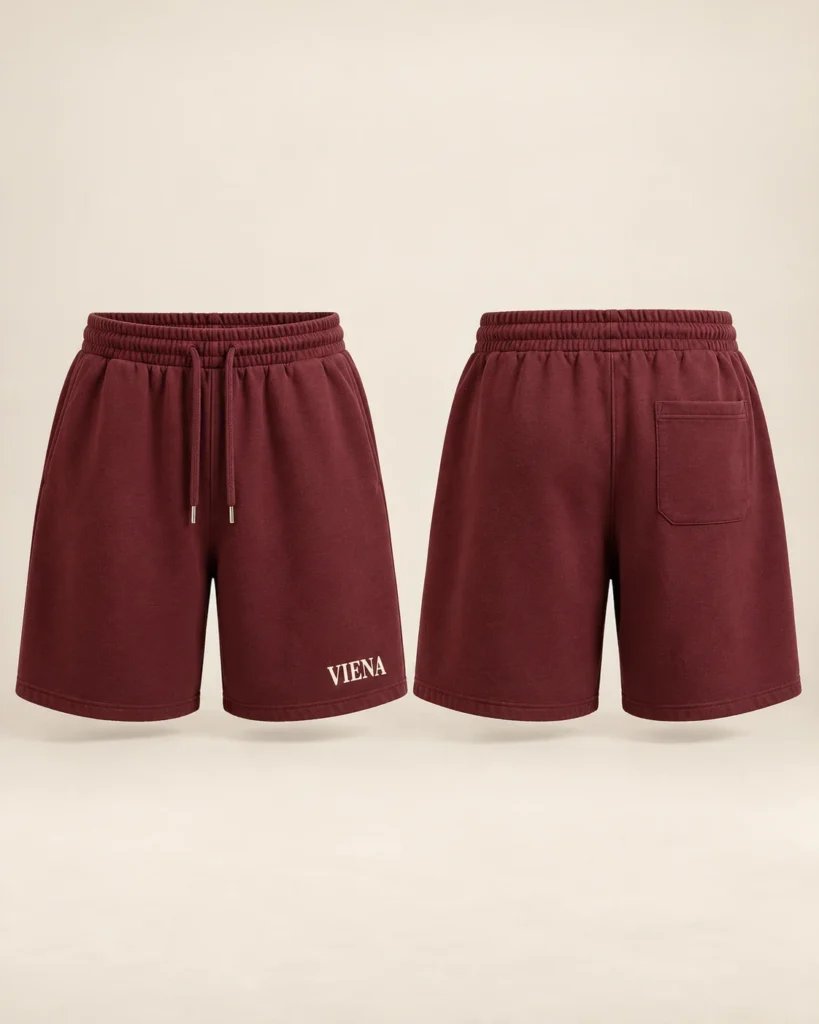
Specify body rise, seat volume, inseam and hem opening. Show the desired outline with a sketch or an approved reference. Try the first sample with the kind of top intended for the collection, because an oversized hoodie and a cropped tee create different proportions.
Inspect layered areas
Review the waistband, pocket corners and seams for comfort and bulk. Ask the wearer to sit and move normally. If the fabric is brushed on the inside, check how that surface and the pocketing feel together rather than judging only the outer face.
Choose a hem that fits the concept
Discuss a clean sewn hem or another proposed construction with the partner. If a raw-looking edge is part of the design, ask how it will behave and be controlled. Review the result after agreed care testing before presenting the finish as a repeatable production standard.
Your development checklist
- Silhouette measured before styling approval
- Inside feel checked at pockets and seams
- Hem construction explicitly identified
- Care sample reviewed for the chosen finish
Can a raw-looking finish be left unspecified?
No. Describe the desired result and approve the construction and expected variation with the partner.
Review brushed shorts beyond their outside appearance
The raised inside surface of brushed fleece contacts the skin and can behave differently from loop-backed terry. Compare the actual reverse, seam allowances and pocket area during wear. A dense layered waistband can feel much heavier than the flat fabric suggests. If the product is intended for warm-weather streetwear, test that use case instead of assuming a short inseam makes any fleece comfortable. Review loose fibres and surface change after care before approving the finish.
| Decision | What to review | What to agree |
|---|---|---|
| Inside surface | Assess feel and shedding against a contrasting layer. | Retain the approved reverse-side reference. |
| Waist layers | Inspect casing, elastic and drawcord exit bulk. | Choose construction based on comfort and recovery. |
| Hem opening | Check flare and seated movement. | Agree stitch finish on the actual brushed fabric. |
Are nỉ bông and nỉ chân cua interchangeable in a quote?
No. They describe different reverse-surface directions. Any change should be sampled and recorded with composition, weight and finish.
Continue your product development
For the next decision, read French Terry Shorts: Developing a Streetwear Summer Set, compare 380 GSM Brushed Fleece: A Streetwear Sampling Guide, and use French Terry vs Brushed Fleece for Streetwear to complete the brief.
Discuss the next sample with VIENA FACTORY
Share your product references, target measurements, material preferences and quantity breakdown. VIENA FACTORY develops samples and manufactures clothing in Vietnam through specialised production units, with our team managing the agreed production stages. Send your project brief, or explore our streetwear references and collection development guide.
Reference images illustrate design directions and do not identify products manufactured by VIENA or imply a partnership with the pictured brand. GSM figures in this article are development targets; composition, availability and final specifications require project confirmation.