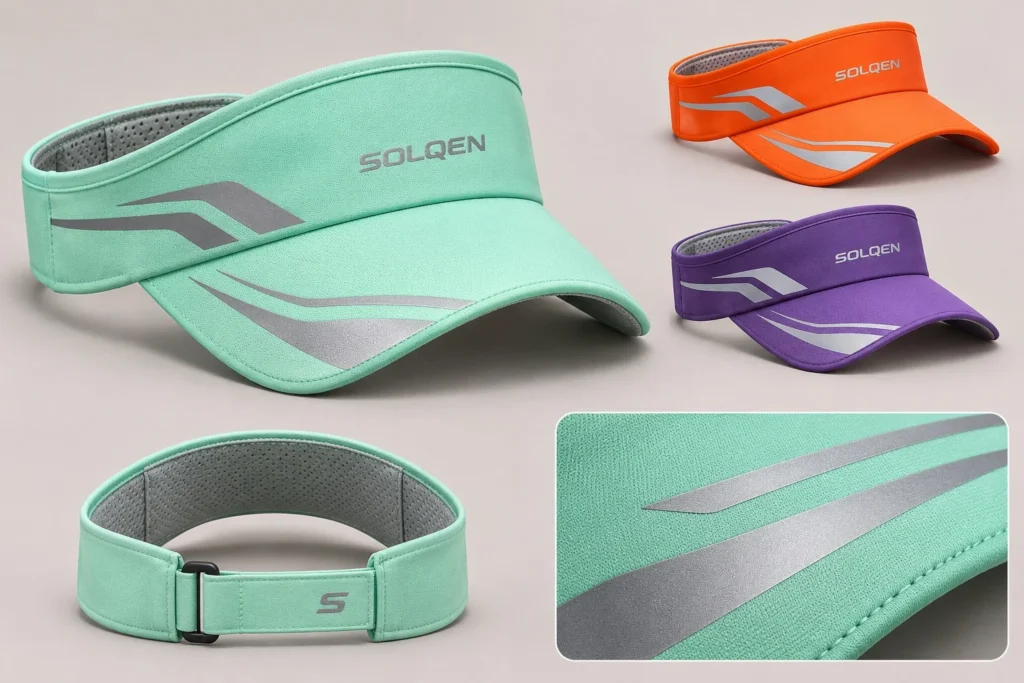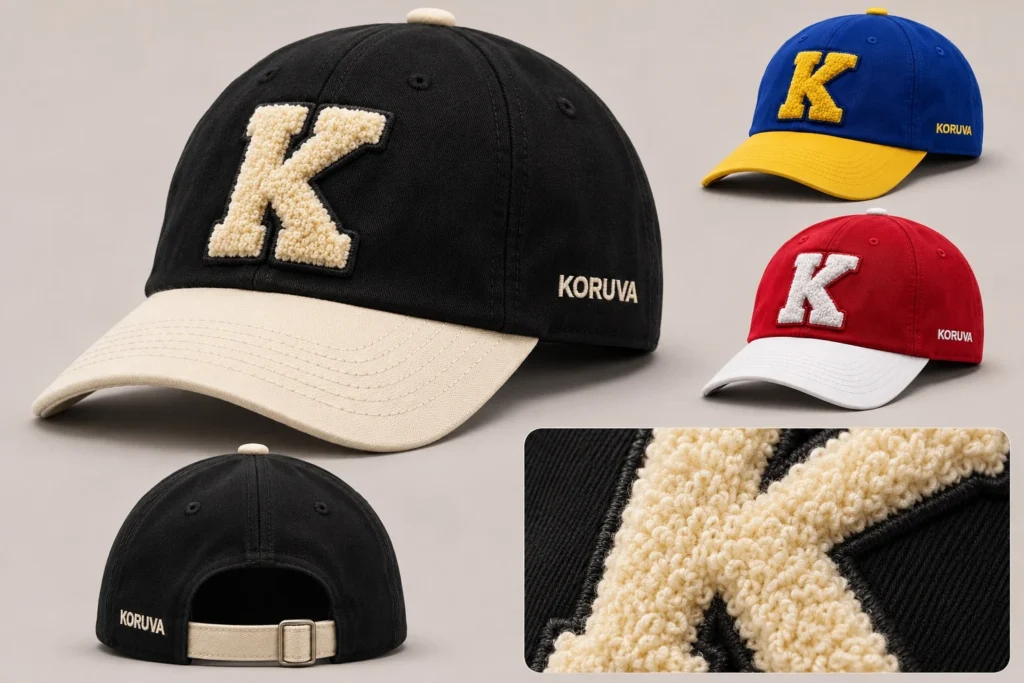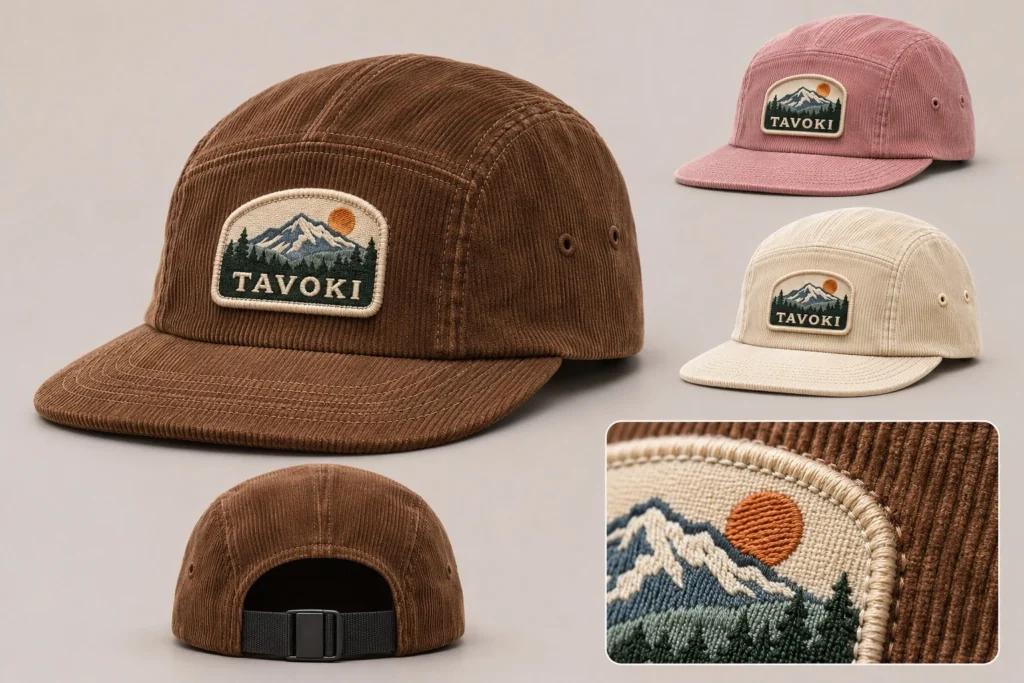
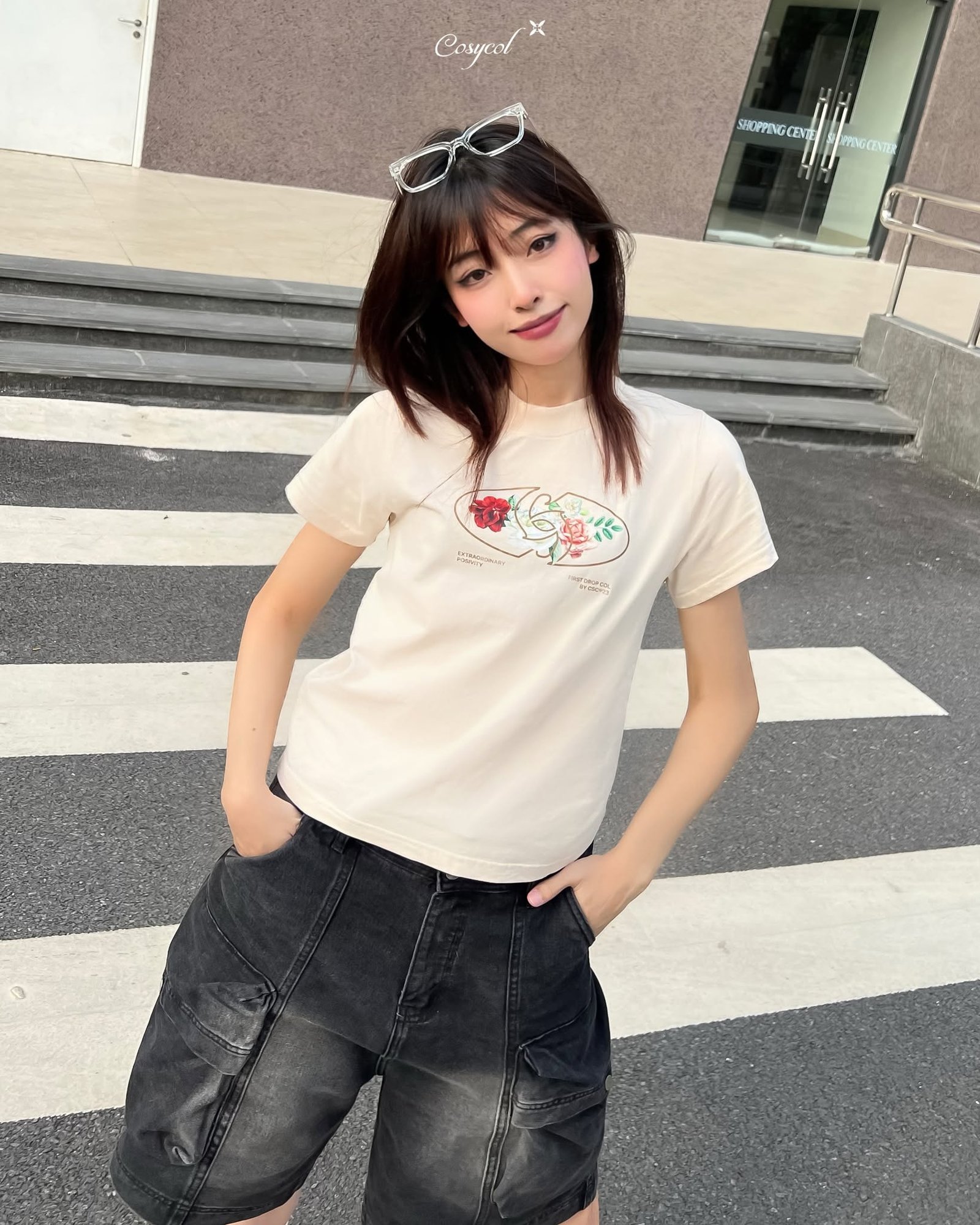
Cosycol’s small chest graphics illustrate how a restrained brand mark can sit within a simple tee. The photographs do not establish which technique was used. A new brand can use that visual scale to compare suitable printing and embroidery options on its own selected material.
Start from the final mark
Give the decorator the original artwork, finished dimensions and position. Identify fine lettering or gaps that must remain readable. Keep those requirements consistent when comparing techniques. A tiny embroidery trial and a larger printed version cannot provide a fair visual comparison. Use the actual proposed jersey and garment colour, because a result on a different substrate may not answer the project’s question.
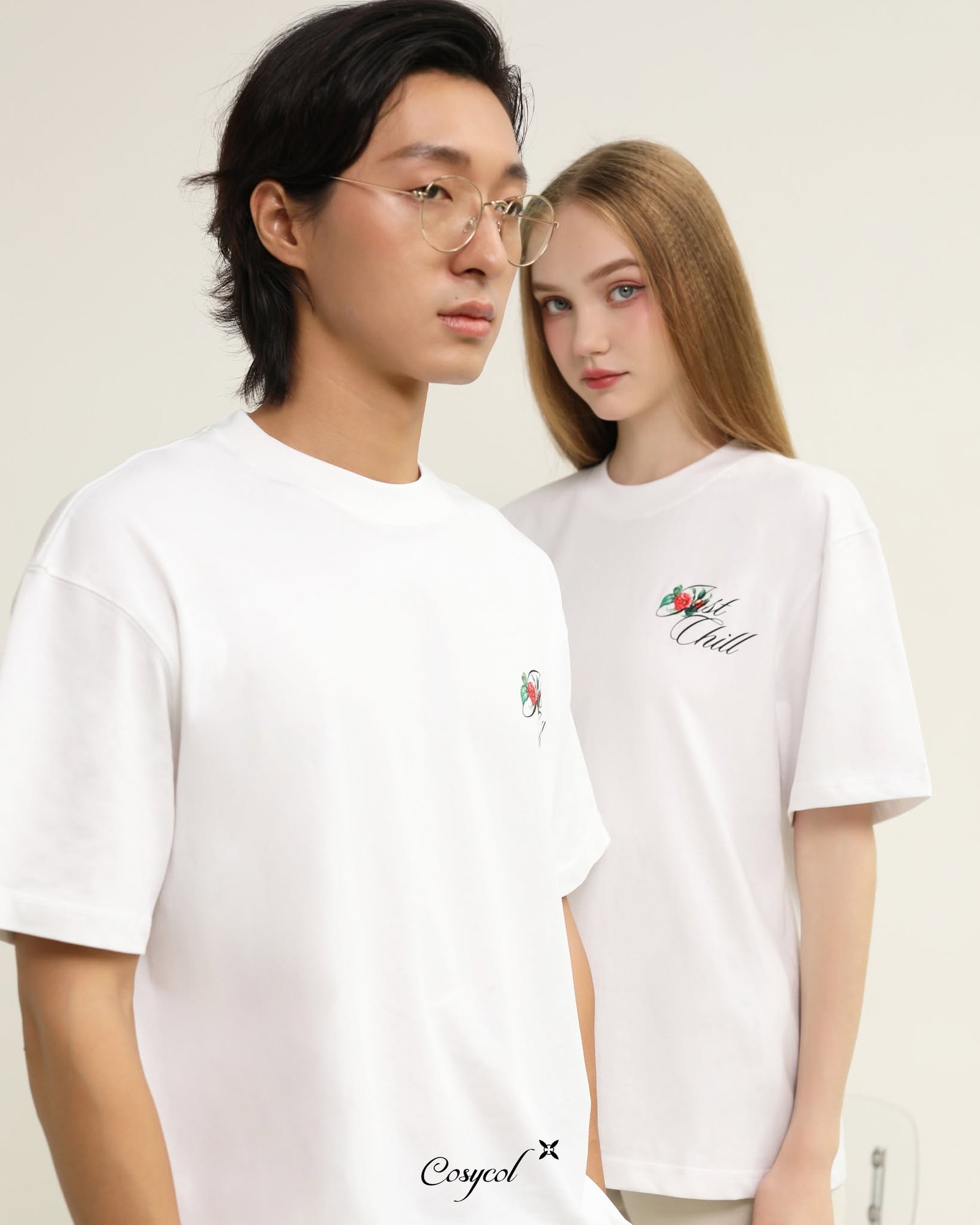
Assess front and reverse
For embroidery, inspect readability, surrounding distortion, backing and skin contact. Madeira’s guidance explains that digitising, stabilisation, hooping and tension interact. For printing or transfers, inspect edges, colour and the feel of the decorated area. The useful choice is the accepted garment result, not the process name alone. Ask the decorator to explain any artwork adjustment required by a proposed system.
Approve care and commercial scope
Review the finished trials after the agreed care process and keep the accepted versions. Compare preparation charges and unit costs against the same order quantity and positions. If one technique requires an artwork revision, obtain brand approval before treating it as equivalent. Record the final programme or artwork revision so a repeat order can use the same accepted specification.
A practical development example
A brand comparing a small wordmark could request one print trial and one sew-out at the intended dimensions. Evaluate them at normal wearing distance, then inspect comfort closely. If one version needs a simplified detail, document that as a design decision. The supplier should not silently change the mark merely to make the method work.
| Area | Review | Agree |
|---|---|---|
| Artwork | Keep dimensions and position comparable. | Critical readable features. |
| Comfort | Inspect hand, reverse and distortion. | Accepted garment feel. |
| Cost | Separate preparation and repeat units. | Equal quantity and position scope. |
Is embroidery always more premium than printing?
The right result depends on the artwork, material and intended product. A well-resolved print may suit one tee better than a dense embroidered mark. Compare physical trials.
Discuss your T-shirt project with VIENA
Ask VIENA for a decoration comparison using your actual chest artwork and material direction. State whether softness, fine detail or a textured finish is the priority. Request a project review.
Related manufacturing guides
- Embroidery on Heavy Cotton T-Shirts: Logo Development
- Screen Printing on Cotton Tees: A Brand’s Approval Guide
- Screen Print or DTF? Comparing a Streetwear Graphic
Technical reference
Madeira: embroidery support FAQ. Public guidance supports the discussion; no test result or production specification is inferred for the photographed Cosycol products.