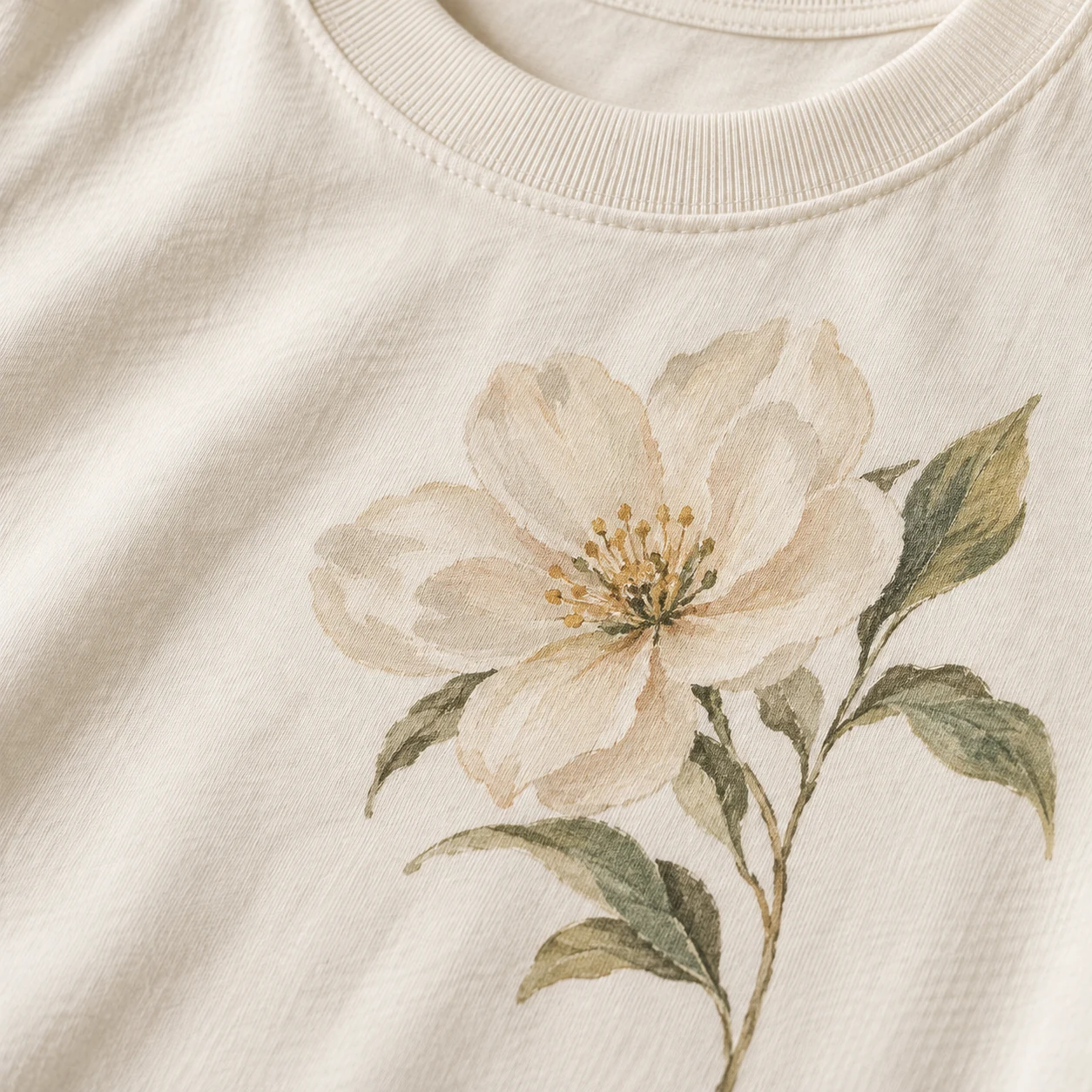
Screen printing and DTF should be compared against the same design brief. For a cotton tee or fleece collection, the useful question is which proposed result meets the artwork, feel, quantity and budget requirements of your project.
Keep the comparison fair
Provide the same final-size artwork, garment colour and quantity breakdown for both proposals. Ask what is included in setup, sampling and repeat orders. If one proposal simplifies the artwork or changes its dimensions, record that difference before comparing totals.
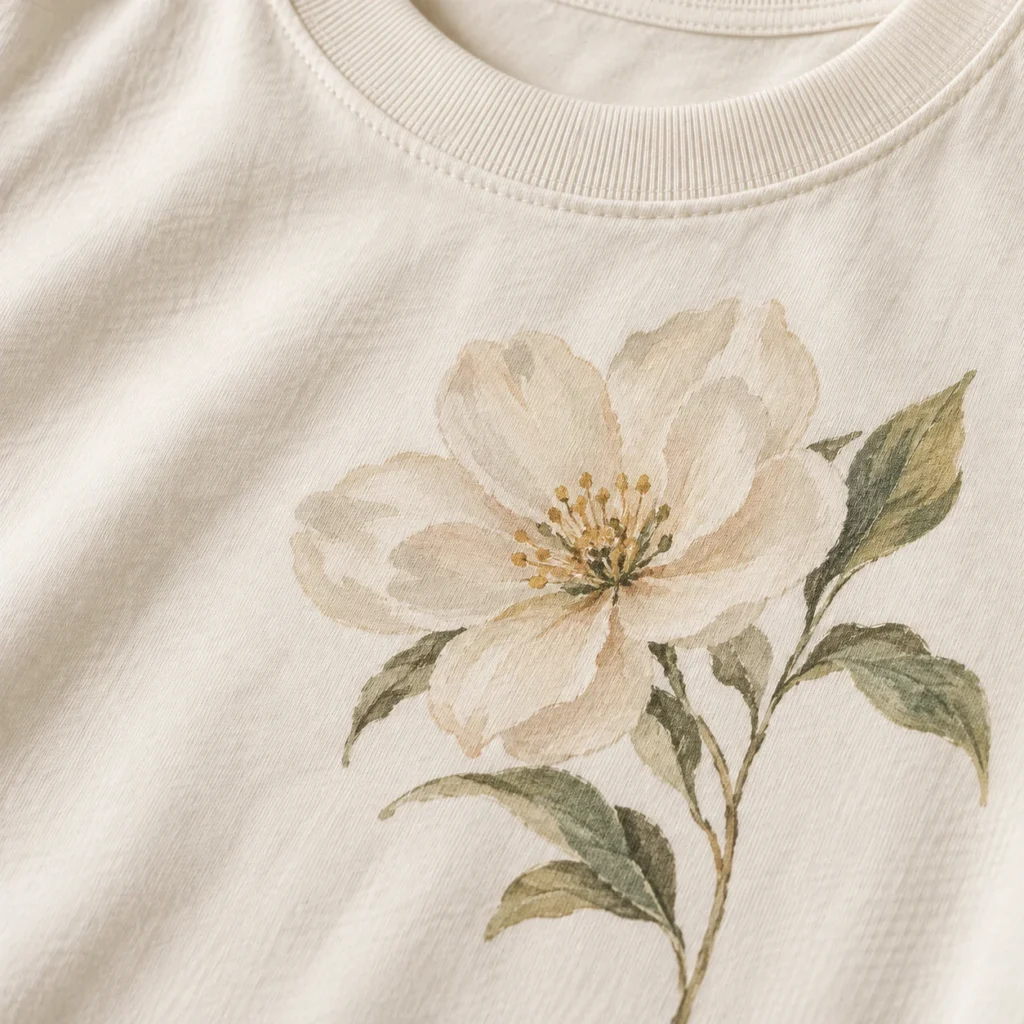
Wear both samples
Review colour, edges and the feel of the graphic on the actual fabric. For a large design, assess whether the decorated area supports the garment’s drape and comfort. Invite feedback from someone who represents the intended customer rather than judging only a flat product photograph.
Choose with evidence
Compare the samples after the agreed care procedure and review the supplier’s production assumptions. A smaller order may have a different cost structure from a larger one, but ask for project quotations rather than applying a universal break-even number. Store the selected process with the artwork approval.
Your development checklist
- Identical artwork size and garment specification
- Setup and repeat-order costs separated
- Physical samples reviewed for hand feel
- Care performance checked before selection
Is one process always the premium option?
No. Approve the result that suits the design, garment and commercial brief.
Compare decoration methods using one controlled brief
A fair comparison fixes the garment, graphic size, artwork, quantity and positions. Request separate setup and repeat-unit charges where relevant. Screen printing may suit repeat spot-colour graphics, while DTF can simplify full-colour artwork without a screen for each colour; neither is automatically the right choice. Ask for samples with similar coverage on the same fabric, then compare hand, appearance and care behaviour. If the design uses halftones, discuss them explicitly rather than assuming all gradients force a transfer process.
| Decision | What to review | What to agree |
|---|---|---|
| Few spot colours | Compare setup plus run cost at the intended quantity. | Ask what underbase and colour matching are included. |
| Full-colour small run | Compare DTF detail and surface coverage on the body. | Check compatibility and feel before choosing on price. |
| Special texture | Name the intended raised, reflective or other effect. | Treat it as a separate system needing its own approval. |
What is the cheapest method for 100 pieces?
There is no universal answer. Provide final artwork, print positions and fabric so the decorator can quote the actual job; compare the full landed garment cost.
Continue your product development
For the next decision, read Screen Printing on Cotton Tees: A Brand’s Approval Guide, compare Halftone Screen Printing: Preparing Trame Artwork, and use PET and DTF Transfers for Streetwear Graphics to complete the brief.
Discuss the next sample with VIENA FACTORY
Share your product references, target measurements, material preferences and quantity breakdown. VIENA FACTORY develops samples and manufactures clothing in Vietnam through specialised production units, with our team managing the agreed production stages. Send your project brief, or explore our streetwear references and collection development guide.
Reference images illustrate design directions and do not identify products manufactured by VIENA or imply a partnership with the pictured brand. GSM figures in this article are development targets; composition, availability and final specifications require project confirmation.