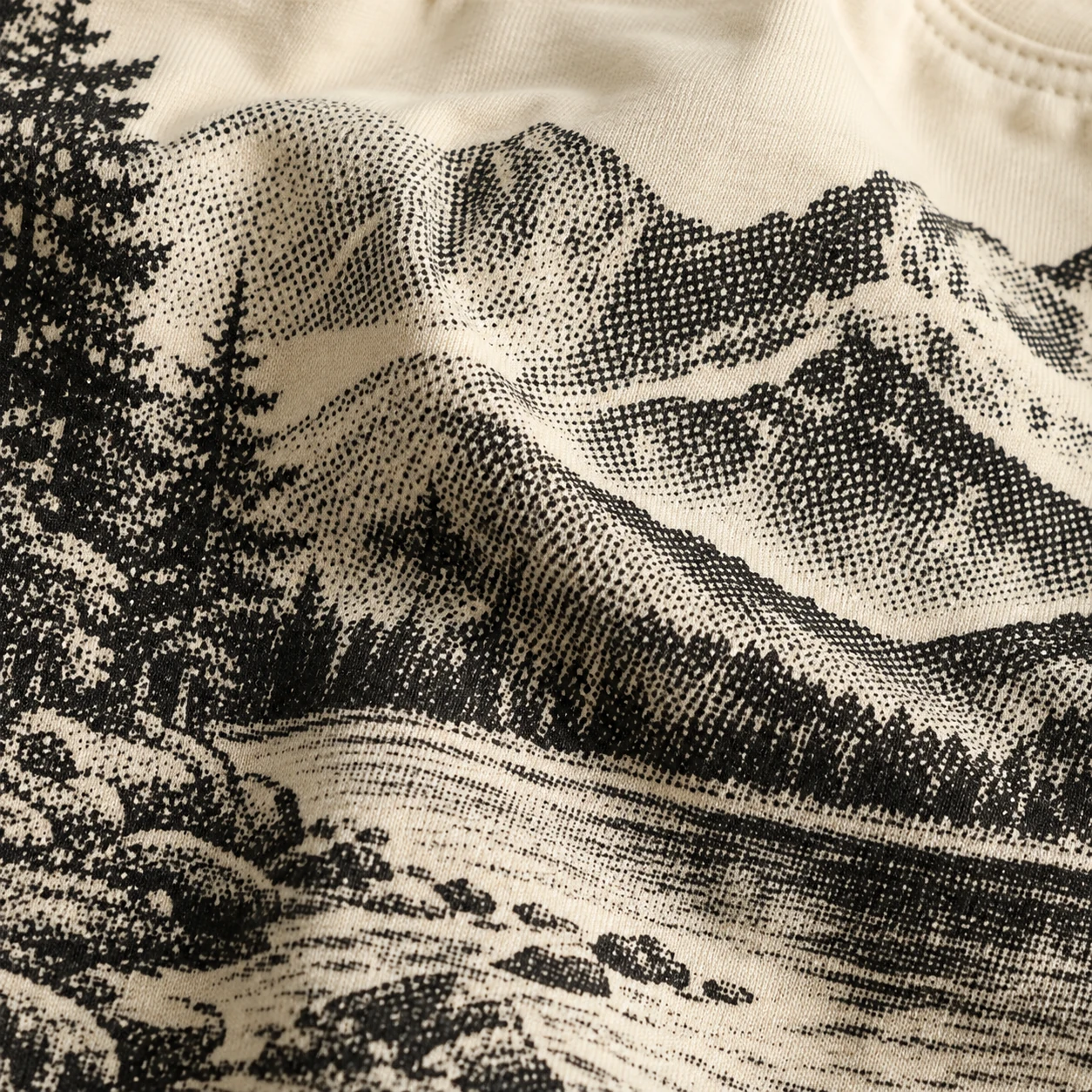
In trame lụa uses a halftone approach to represent tonal detail through a printed dot pattern. For streetwear artwork, the important approval is the printed result at the intended size, not a close-up of the file on a monitor.
Share the original artwork first
Send the printer the best available source image and the intended print dimensions. Explain which tonal areas must remain visible. Ask the production team to prepare or verify the separation for its equipment, rather than imposing dot settings copied from an unrelated job.
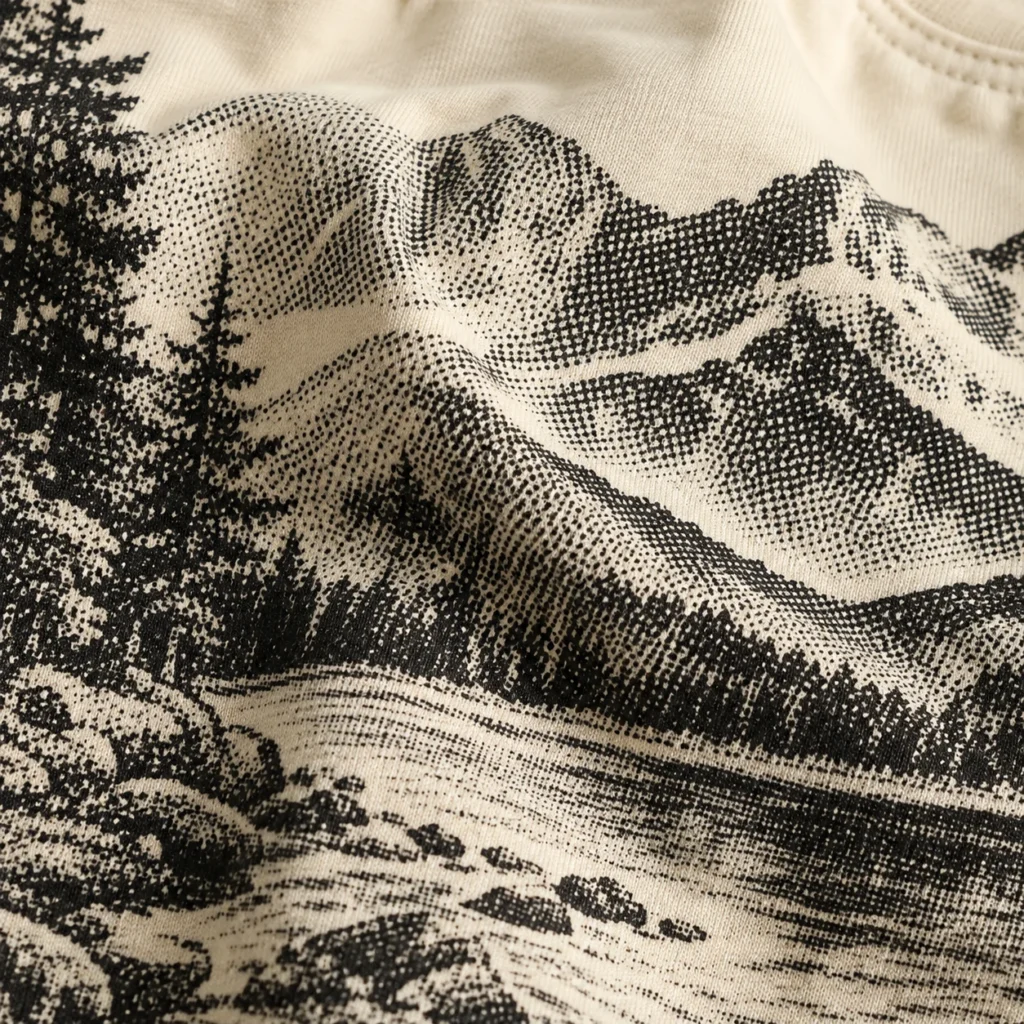
Judge tones on the chosen fabric
A transition that looks smooth on screen may print differently on the garment. Request a strike-off or decorated sample on the intended cotton or sweatshirt fabric. Review light areas, shadows and important edges from a normal viewing distance as well as close up.
Keep an approved print reference
Record the artwork version, size, garment colour and approved physical result. If the printer needs to alter the separation, ask for a new proof when the appearance changes. Avoid describing an ordinary digital image as a proven halftone production file before the printer has checked it.
Your development checklist
- High-quality source artwork supplied
- Final print size agreed
- Light and dark areas checked physically
- Separation changes tracked by version
Should I specify a universal halftone dot setting?
No. Ask the selected printer to propose settings for its process, fabric and artwork, then approve the result.
Keep halftone artwork reproducible on the chosen press
Halftone dots create the impression of tones or gradients using printed dot patterns. The workable line frequency depends on separations, mesh, ink, exposure and the fabric surface. A screenprinting supplier’s tutorial may show one successful combination; it is not a universal setting for a heavy cotton tee. Send the original artwork and agree who prepares separations. Ask the printer to show a strike-off containing the darkest shadow, finest highlight and small text so you can see where detail fills in or disappears.
| Decision | What to review | What to agree |
|---|---|---|
| Tone range | Include the lightest and darkest useful areas in the approval sample. | Reject a proof that hides difficult detail. |
| Mesh/LPI | Have the printer propose a compatible process setup. | Do not prescribe a high LPI solely because it sounds more detailed. |
| Fabric/underbase | Review on the actual body colour and surface. | Check dot appearance and hand after curing and care. |
An approval strip for difficult trame artwork
Ask the printer to include a small representative strip containing highlight dots, midtones, shadows, fine text and any sharp transitions from the real design. It should use the planned separations and production fabric. This makes the risk visible before the entire artwork is produced on garments.
If highlights disappear or shadows fill in, review the combined separation/exposure/mesh/ink process with the printer. Increasing line frequency is not a universal remedy: smaller dots may be harder to reproduce on the selected surface. A dark garment and its underbase can require a different separation decision from a white tee. Approve the actual result rather than prescribing a tutorial’s settings as a production guarantee.
Keep the final separation revision and approved strip alongside the artwork. If the fabric finish or print size changes, recheck the detail. The useful customer decision is whether the intended image remains readable and wearable at its final size, not whether a particular mesh number appears more premium.
Can screen printing reproduce gradients?
Yes, appropriate halftone or process separations can create tonal effects. The result depends on the artwork and production setup; it is not equivalent to printing a continuous photographic tone.
Continue your product development
For the next decision, read Screen Printing on Cotton Tees: A Brand’s Approval Guide, compare Screen Print or DTF? Comparing a Streetwear Graphic, and use Graphic Cotton T-Shirts: Preparing Print Placement to complete the brief.
Discuss the next sample with VIENA FACTORY
Share your product references, target measurements, material preferences and quantity breakdown. VIENA FACTORY develops samples and manufactures clothing in Vietnam through specialised production units, with our team managing the agreed production stages. Send your project brief, or explore our streetwear references and collection development guide.
Reference images illustrate design directions and do not identify products manufactured by VIENA or imply a partnership with the pictured brand. GSM figures in this article are development targets; composition, availability and final specifications require project confirmation.
Technical background: Ryonet: designing for screen printing. Process settings and project approvals should be agreed with the selected specialist.