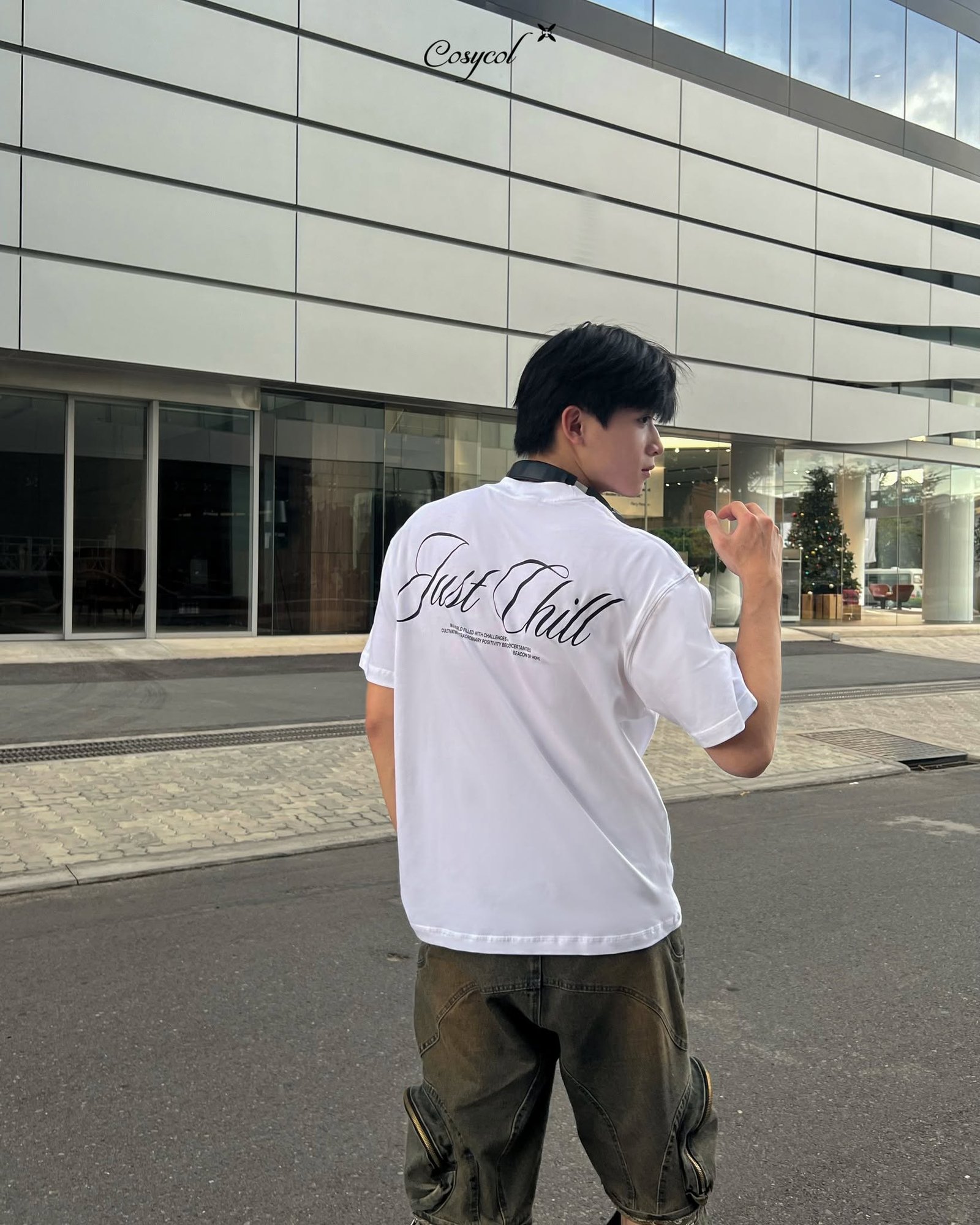
Cosycol’s white graphic tee pairs a small chest motif with a large script back. Those two positions serve different visual roles. A new brand should develop them as one garment while specifying their sizes, locations and approval requirements separately.

Give each position its own specification
List front and back artwork as separate files with final dimensions and named placement references. A chest motif usually sits in a smaller usable area than a back design, so a single “logo size” instruction is inadequate. State whether the artwork stays one size across the range. Review the smallest offered body so the back graphic does not approach seams or the hem unexpectedly.
Judge balance on the wearer
Compare ordinary front and back views of the approved sample. The two graphics do not need identical scale to feel connected, but their relationship should be intentional. If the back script is central to the design, inspect it with the tee worn and moving rather than only flat. Check whether folds, shoulder position or body length interrupt the lettering. Keep any placement revision tied to the current pattern version.
Cost both operations accurately
Ask the decorator to identify preparation and application for each position. A quote for one chest mark should not be compared with a quote including a large back graphic. Request a trial on the selected white fabric and review the complete decorated garment after care. The visual reference does not reveal the original production method, so choose the system from your own artwork and material requirements.
A practical development example
For a planning comparison, request the same tee in three scopes: blank, chest mark only, and chest plus back artwork. Keep fabric, quantity and packing identical. The difference then explains the added decoration scope without confusing it with a changed garment. This comparison is more informative than asking for a generic “two-sided tee price”.
| Area | Review | Agree |
|---|---|---|
| Front | Specify chest-art dimensions and seam references. | Position on the approved base size. |
| Back | Check script at final size across the range. | Clearance from seams and hem. |
| Quotation | Separate blank and each decoration scope. | Equal material and quantity assumptions. |
Should the back graphic be approved before the tee pattern?
Use early mockups to explore direction, but freeze final placement against the accepted body. A later length or shoulder change can alter the way the back design sits.
Discuss your T-shirt project with VIENA
Send both artwork files and identify the primary visual feature. VIENA can review a comparable garment-and-decoration brief instead of leaving the second print position to be interpreted later. Request a project review.
Related manufacturing guides
- Graphic Cotton T-Shirts: Preparing Print Placement
- Screen Printing on Cotton Tees: A Brand’s Approval Guide
- Screen Print or DTF? Comparing a Streetwear Graphic
Technical reference
STAHLS’: decoration-method comparison. Public guidance supports the discussion; no test result or production specification is inferred for the photographed Cosycol products.