A script back graphic needs to remain legible on a garment that folds and moves. Cosycol’s outdoor white tee photographs show the design from several rear angles. Those views are useful for discussing placement, but a production brief still needs the original artwork and a controlled sample review.
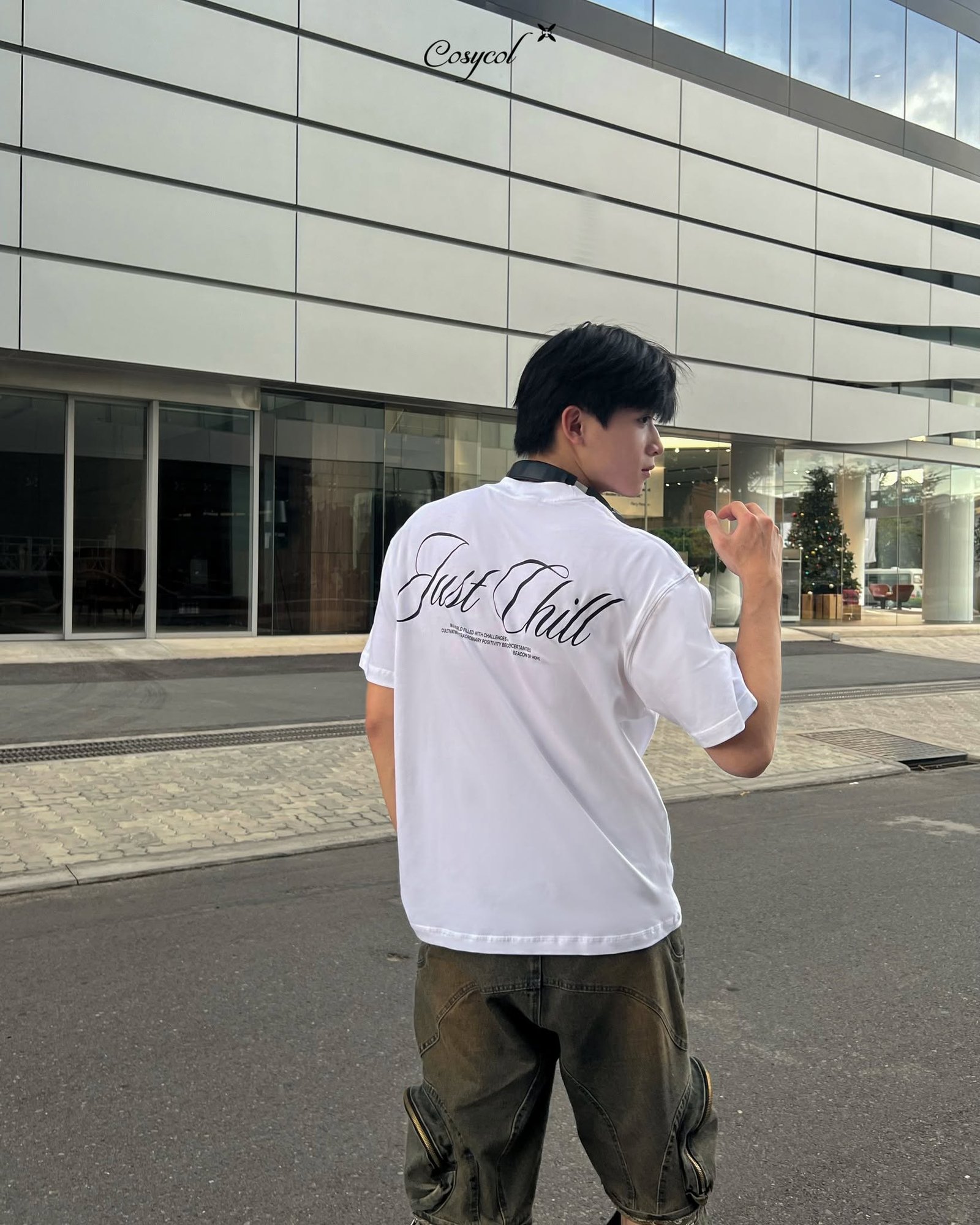
Prepare the letterforms at final size
Send the original artwork rather than a cropped campaign image. Identify the intended print width, fine strokes and gaps that matter to the brand. Ask the decorator to review difficult areas before production preparation. If the graphic changes size, recheck those features. A reduction that looks harmless on screen may make narrow details more difficult to reproduce on the chosen surface.
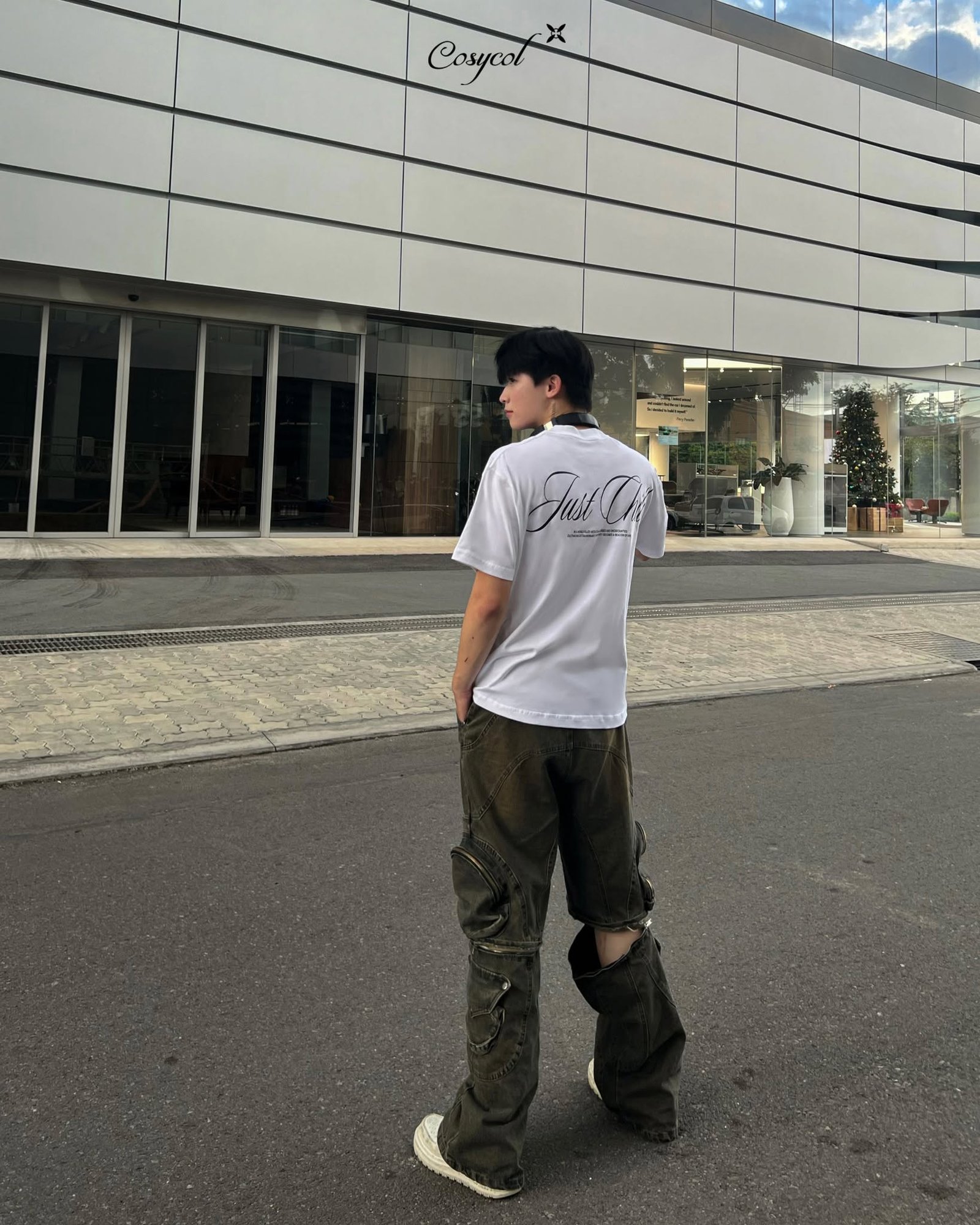
Map the design to the shoulder and back
Measure placement from named garment points and define the centre line. Review the tee on a wearer with arms resting naturally. Check how shoulder drop and fabric folds affect the lettering, then compare another normal movement position. The objective is an intentional worn result, not a graphic that appears straight only when the shirt is stretched flat.
Keep artwork and body revisions connected
If the fit sample is widened, shortened or altered at the shoulder, check the back design again. Preserve the accepted artwork revision and placement sheet with the final block. Review the decorated garment after agreed care. The photo is a visual reference; it does not establish a particular print system or its durability. Choose those requirements through the actual development process.
A practical development example
For a script with delicate connecting strokes, ask for an actual-size approval containing the complete word rather than only a thick central letter. Inspect fine ends, gaps and the interaction with the fabric texture. Keep this approved trial with the placement reference so the bulk review can compare the whole design, not just its overall width.
| Area | Review | Agree |
|---|---|---|
| Artwork | Supply original final-size letterforms. | Critical fine strokes and gaps. |
| Back placement | Check the design on a neutral worn body. | Centre and vertical seam references. |
| Revision control | Link artwork and pattern versions. | Which combination is approved. |
Can a back print be reproduced accurately from a social-media photo?
A photo helps describe scale and mood, but it is not a production artwork file. Provide original brand-approved artwork and measurements for a reliable decoration enquiry.
Discuss your T-shirt project with VIENA
Send your script file and a back-view fit reference. Highlight the letter details that must remain intact so VIENA can review a suitable production route before the first run. Request a project review.
Related manufacturing guides
- Graphic Cotton T-Shirts: Preparing Print Placement
- Halftone Screen Printing: Preparing Trame Artwork
- Screen Printing on Cotton Tees: A Brand’s Approval Guide
Technical reference
STAHLS’: decoration-method comparison. Public guidance supports the discussion; no test result or production specification is inferred for the photographed Cosycol products.