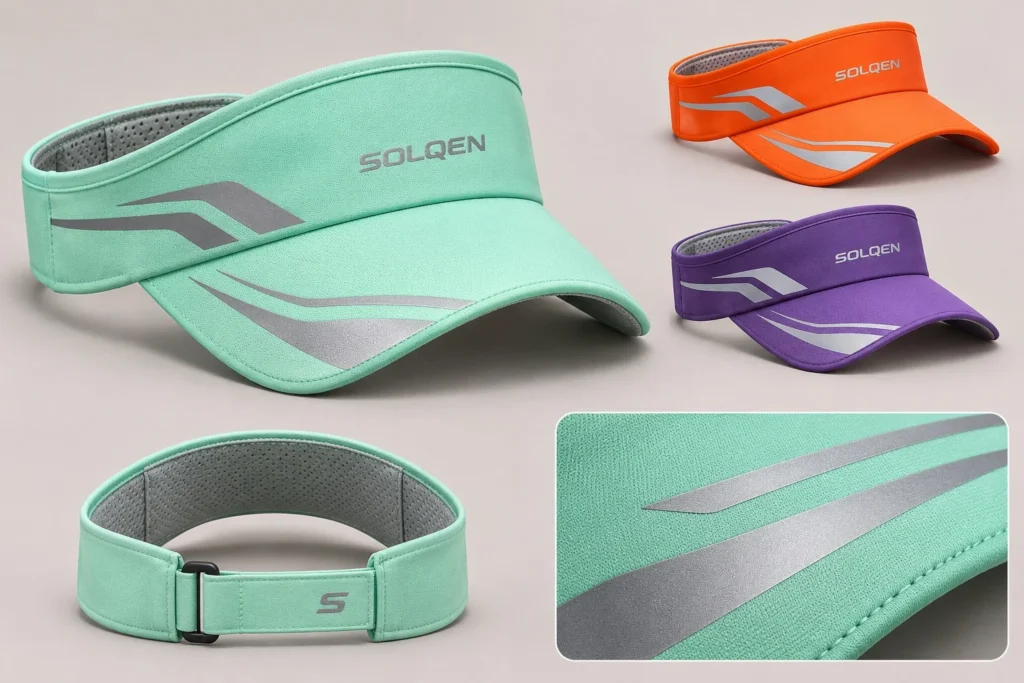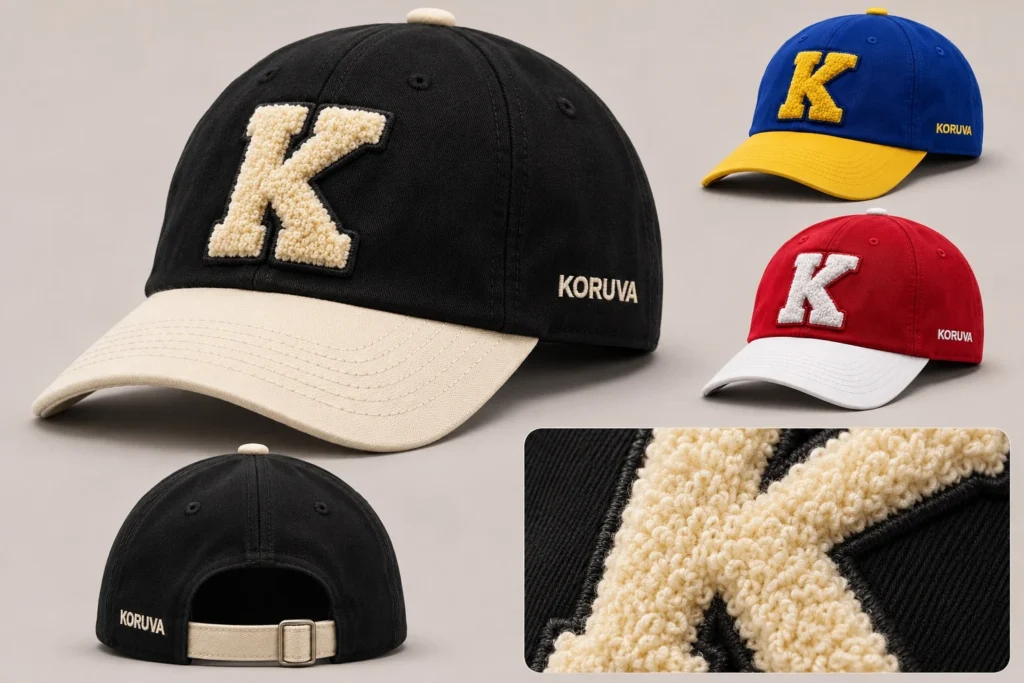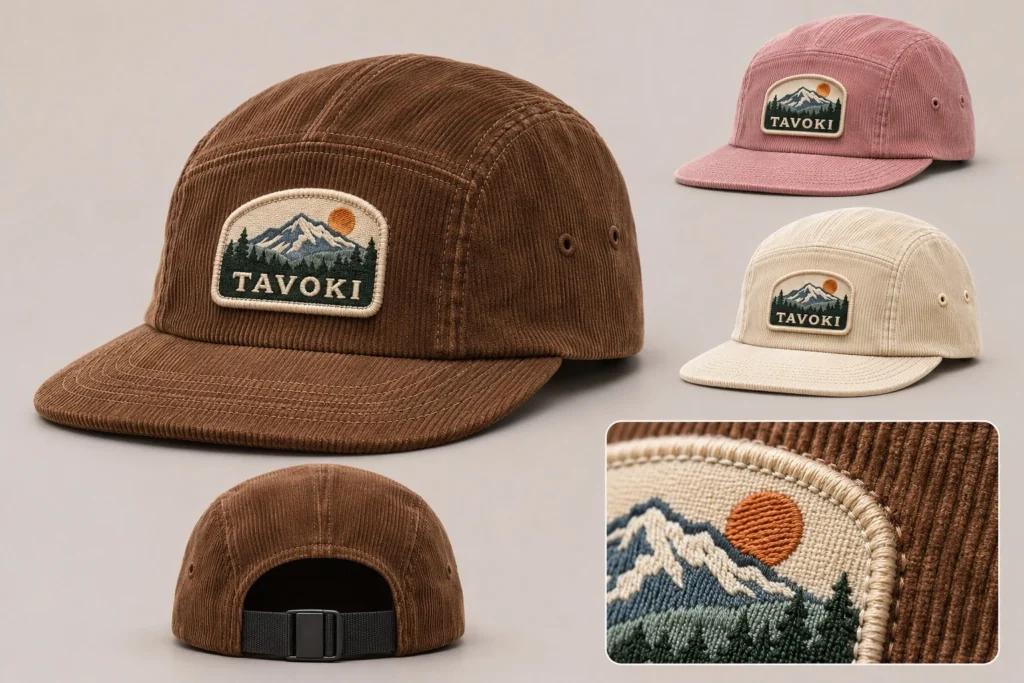

In dập can describe several raised, recessed or heat-applied branding effects. For a fleece streetwear project, first show the intended result and ask the partner to name the proposed embossing, debossing or other process. Feasibility must be checked on the actual material.
Define the effect clearly
Explain whether you want a raised mark, a recessed impression or an applied dimensional element. Provide size, position and a visual reference. These effects should not be treated as equivalent just because the same Vietnamese shorthand is used for them.
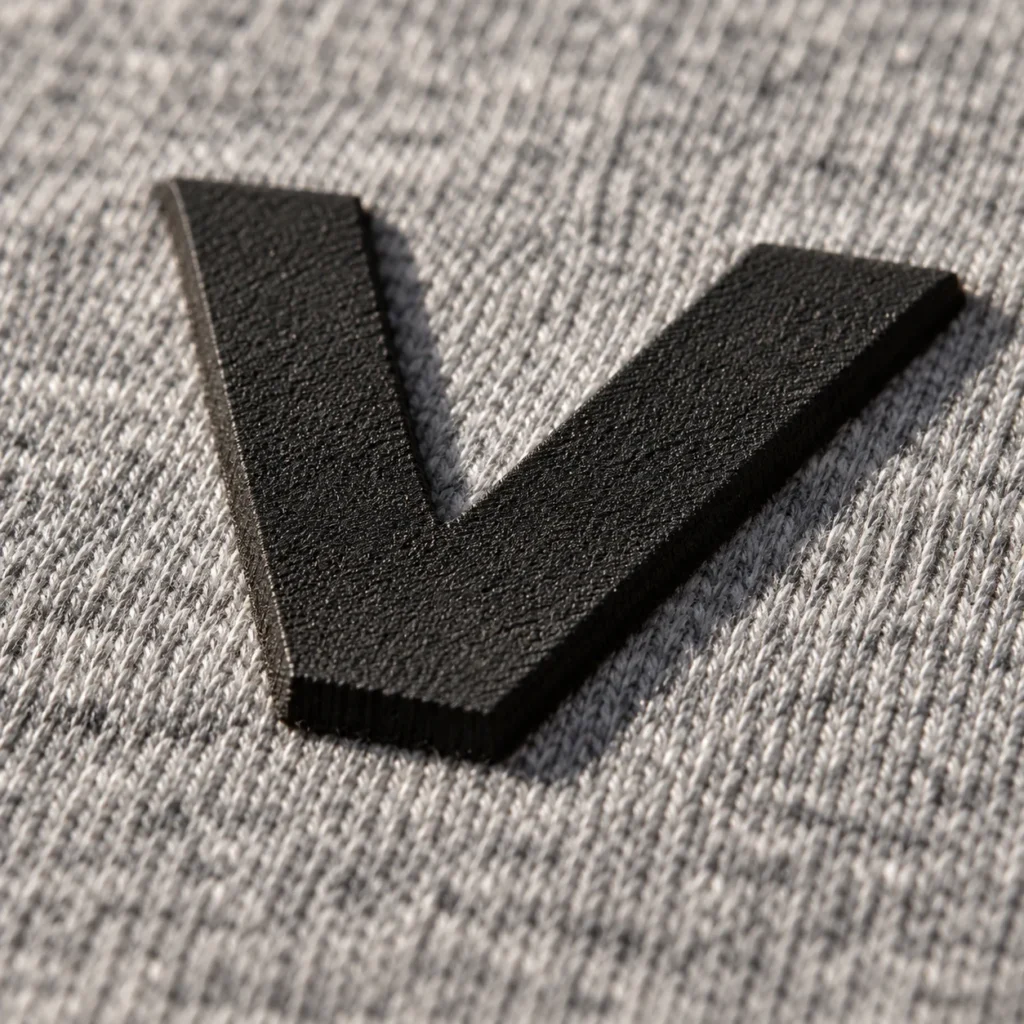
Request a material trial
For a 360–420 GSM French terry or brushed fleece proposal, ask the specialist to trial the chosen construction and finish. Review the face, reverse and surrounding surface. Let the process provider determine suitable tooling and application parameters rather than using an unverified generic recipe.
Review the effect after care
Compare depth or relief, edge definition and any visible change to the garment surface before and after the agreed care process. Ask what consistency can be expected in bulk and approve a realistic reference. Do not promise a permanent sculpted effect without evidence from the selected process.
Your development checklist
- Raised, recessed or applied effect identified
- Actual fabric trial completed
- Face and reverse inspected
- Bulk consistency and care appearance agreed
Can every fleece fabric be embossed in the same way?
No assumption should be made. Confirm feasibility and approve a trial for the selected fabric and effect.
Name the raised or recessed effect before tooling
Embossing, debossing, a raised transfer and high-density ink can look similar in a small photograph but involve different constructions. Describe whether the fabric itself is formed or a separate material is applied. Request a physical effect sample before making a full garment. For a pressure/heat-formed proposal, ask what material support or treatment is required and how the effect changes with stretching and care. A digital concept cannot establish achievable depth or permanence. Keep tooling charges and any artwork restrictions separate in the quotation.
| Decision | What to review | What to agree |
|---|---|---|
| Effect identity | Specify raised/recessed direction and whether extra material is added. | Agree the actual process with the decorator. |
| Tooling/artwork | Review edge radius, small details and minimum workable features. | Approve a trial before committing to production tooling. |
| Retention | Compare the effect before and after the agreed care/stretch check. | Set a project-specific visual acceptance reference. |
Can every cotton fleece hold a permanent embossed logo?
Do not assume that. Feasibility depends on the material and proposed process; require a sample demonstrating the intended retained effect.
Continue your product development
For the next decision, read Puff and Raised Prints for Streetwear Hoodies, compare Screen Print or DTF? Comparing a Streetwear Graphic, and use Embroidery on Fleece Hoodies and Jackets to complete the brief.
Discuss the next sample with VIENA FACTORY
Share your product references, target measurements, material preferences and quantity breakdown. VIENA FACTORY develops samples and manufactures clothing in Vietnam through specialised production units, with our team managing the agreed production stages. Send your project brief, or explore our streetwear references and collection development guide.
Reference images illustrate design directions and do not identify products manufactured by VIENA or imply a partnership with the pictured brand. GSM figures in this article are development targets; composition, availability and final specifications require project confirmation.