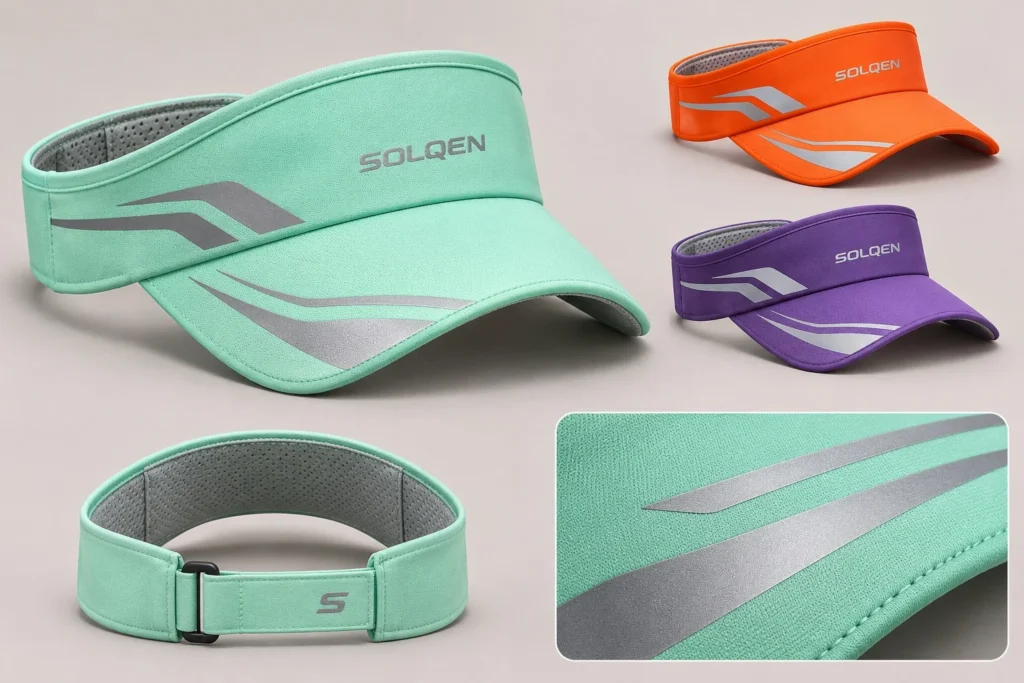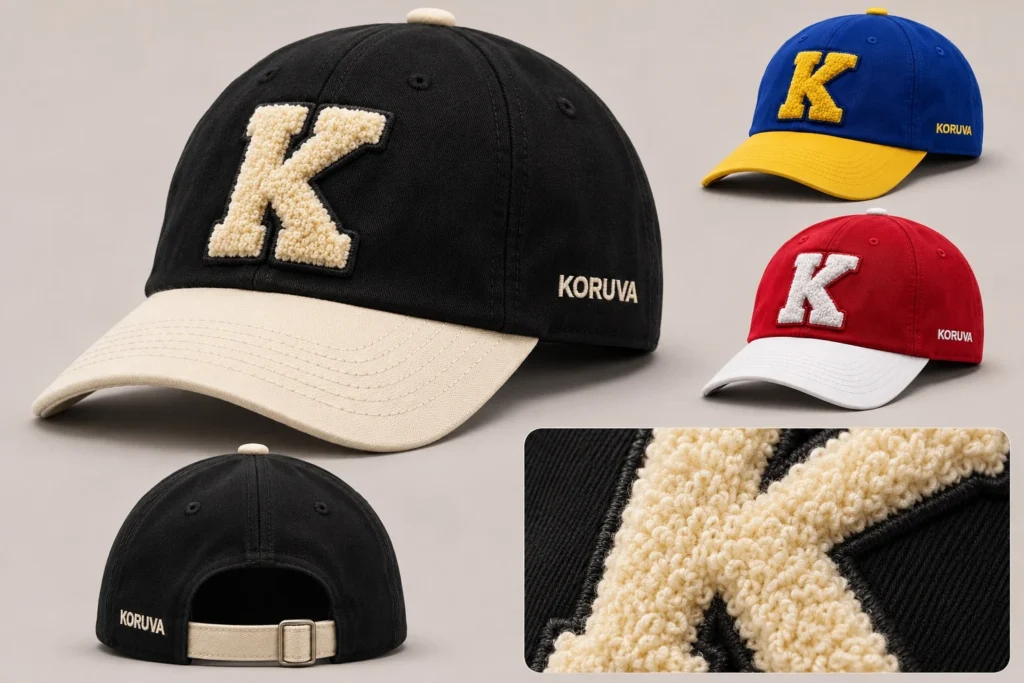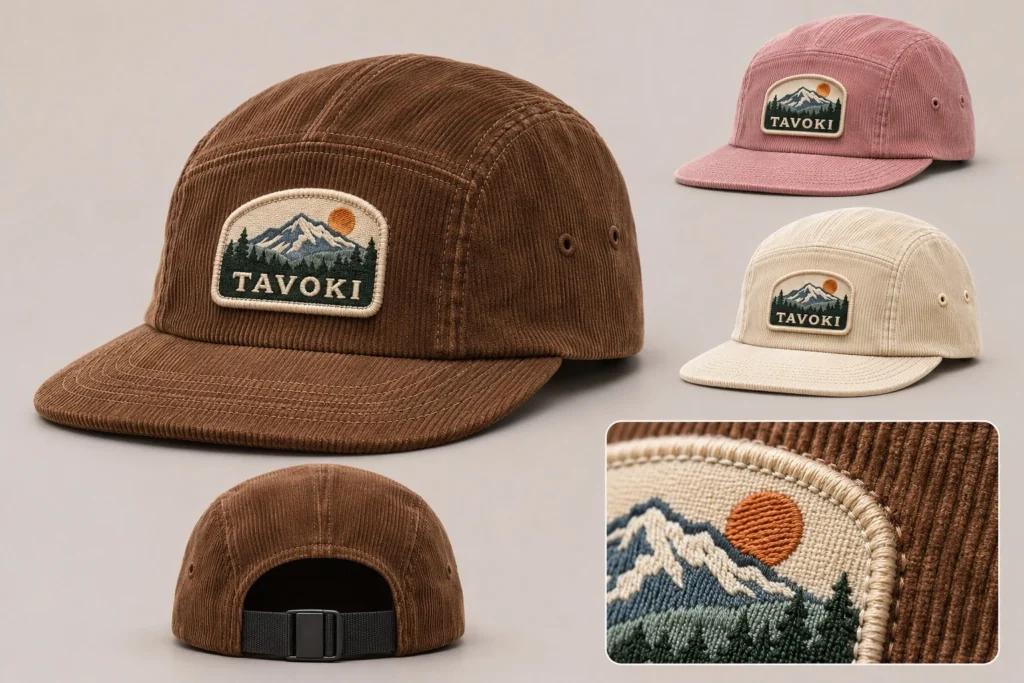
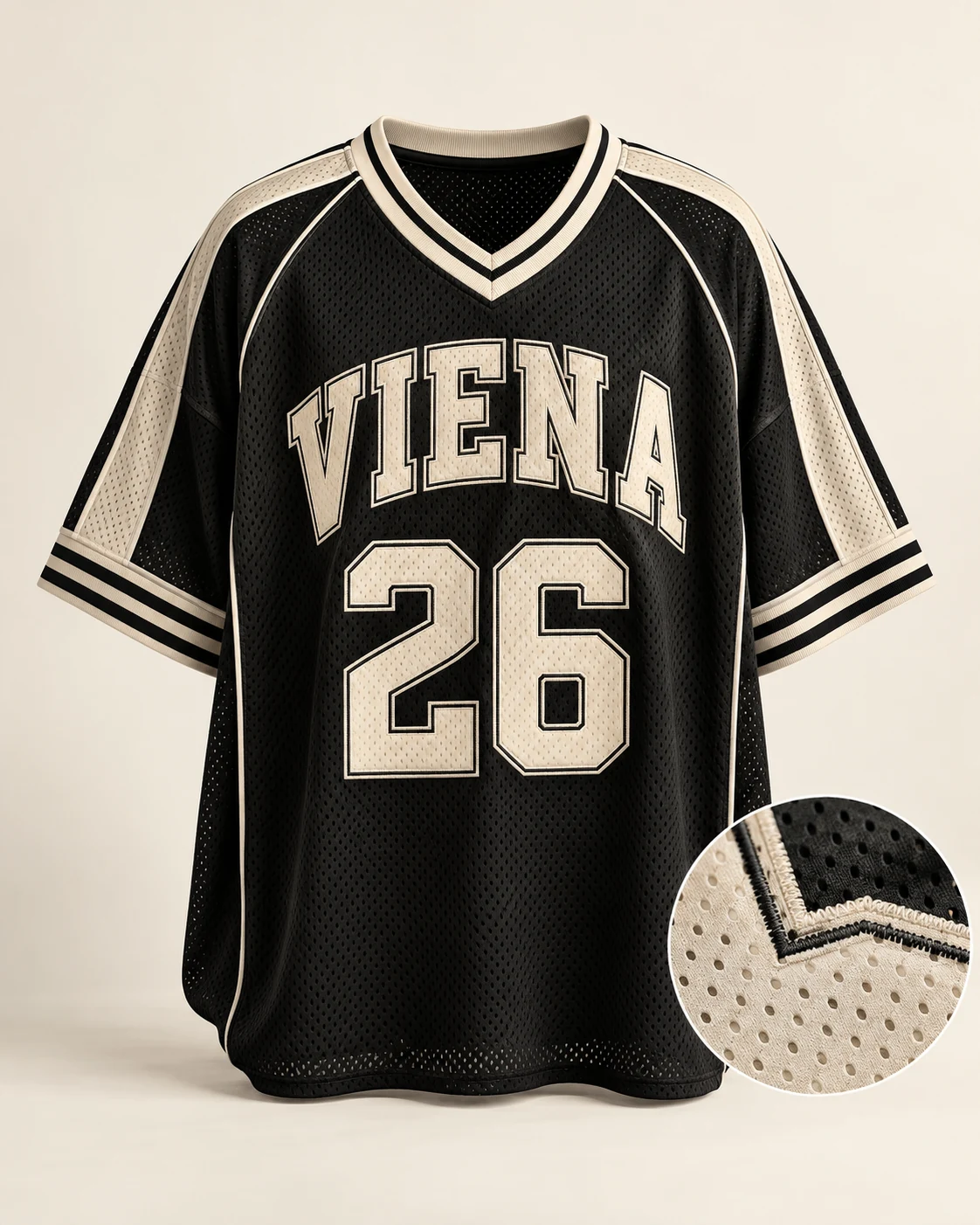
A mesh jersey brings texture and a different visual rhythm to a streetwear collection. The hole size, lining decision and graphic coverage influence both appearance and how the garment feels against the skin.
VIENA FACTORY develops samples and manufactures garments for this product direction through our specialised production units in Vietnam.
Start with the garment and fabric
Request a physical mesh swatch with its composition and construction stated. A mesh photograph cannot demonstrate breathability or durability. If the design includes embroidery or a large print, test the decoration on the actual mesh before approving it.
Approve the surface and the complete garment
Specify composition, opacity and stretch for the proposed mesh or jersey. Review the lining and bindings at the same time. An open surface can change how decoration, seams and pockets need to be handled. Approve those details on a physical sample and agree any performance testing that the final marketing claims require.
Build a reasonable price around a clear brief
Lining, contrast binding and large decorative numbers should appear as separate details in the brief. Compare a simpler binding solution and one artwork position with the full concept. This keeps the price discussion linked to specific choices.
Develop 1–2 pieces per style before bulk
Inspect the armhole and neckline binding for stretching or waviness. Try the sample over the intended base layer. Review how much the graphic blocks the open fabric and whether its edges remain neat when the garment is flexed.
Check mesh openness, coverage and logo application
Mesh is a structure description, not a fibre specification. Compare hole size, opacity, stretch and snagging concerns on a physical swatch. A large opaque transfer can cover the very openings that define the mesh look, while a small mark may need carefully controlled application support. Fit the jersey with its intended underlayer and review seams against the skin. For a launch budget, price lining, binding and decoration explicitly instead of comparing a lined garment with an unlined one.
| Decision | What to review | What to agree |
|---|---|---|
| Coverage | Review the body over the intended underlayer and in movement. | Decide whether lining is part of the design. |
| Decoration | Trial the final-size graphic on the chosen mesh. | Use a compatible system and inspect the reverse. |
| Finishing | Assess neck/armhole binding and seam comfort. | Record binding material separately from body mesh. |
Does polyester mesh automatically provide tested moisture management?
No. Fibre and visible holes alone do not prove a performance claim. Specify the required property and request evidence for the offered material.
Continue your product development
For the next decision, read PET and DTF Transfers for Streetwear Graphics, compare Heat Transfer Decals: A Guide for Cotton Streetwear, and use Graphic Cotton T-Shirts: Preparing Print Placement to complete the brief.
Send a brief that can be quoted
- Product reference, front/back artwork and a measurement guide.
- Preferred fabric construction, composition, weight and finish.
- Sample quantity, planned bulk quantity and size/colour split.
- Brand labels, packaging requirements and shipping destination.
Request a project quotation or email tomvo@vienafactory.com. Explore VIENA Streetwear concepts and fabric development options while preparing your first brief.